
Review · WORKSHOPS
Crafting Heritage Batik Painting Workshops
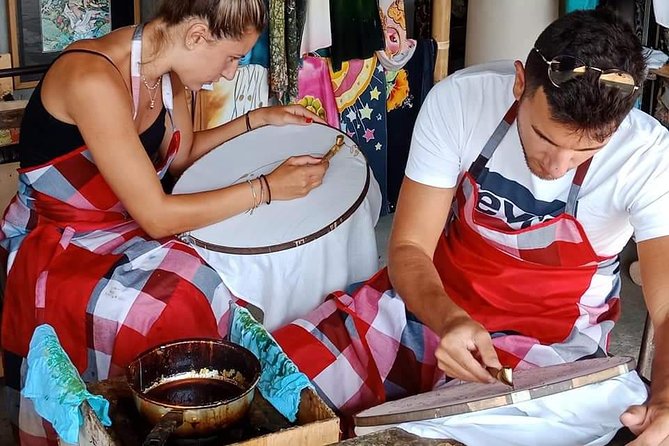
Batik looks simple, until you try it. In a mellow studio just outside Ubud, you learn the classic wax-and-dye method and bring home a one-of-a-kind piece you actually made yourself. You also get a peek at how Balinese artists work and live in their family compound, not in some shiny production line.
I really like two things about this workshop. First, the process is hands-on from the first sketch through the dye stage, so you do real making, not just watching. Second, the instructors keep it relaxed and supportive, with patient guidance that helps you succeed even if you are not a natural artist.
One thing to consider: batik takes patience. The hot wax details and careful dyeing can be trickier than you expect, so go in ready to slow down and accept a few happy accidents.
Key things to know before you go
- Wax-resist technique: hot wax protects areas so dye stays where you want it
- Guided, but flexible: you can work more independently or get closer help
- Family-compound studio setting: you see the craft in a real Balinese home workplace
- Materials and basics included: you get what you need, plus snacks, coffee or tea, and water
- Small-group feel: maximum 30 people keeps the class from feeling rushed
Other Ubud days people book alongside this one
- Crafting Heritage Batik Painting Workshops★ 5.0 · 164 reviews
- Ulun Danu Beratan Temple – Tanah Lot Temple Tour by UNESCO World Heritage★ 5.0 · 74 reviews
- BALI ATV Kuber Through Historic Tunnel and Scenic Waterfalls★ 5.0 · 34 reviews
- Private Jatiluwih Rice Terraces Heritage Site and Culture Tour★ 5.0 · 21 reviews
Why batik feels like more than a souvenir project
Batik is a quiet kind of creativity. You are not just painting a picture, you are building a design in layers using hot wax and dye. The magic trick is that wax blocks dye from reaching certain areas, so your final pattern comes from careful choices you make at the waxing stage.
This matters because it changes how you experience the class. Instead of thinking, I will finish a craft in a blur, you start thinking like a maker. You plan the design, sketch it out, draw the wax lines, then dye only selected areas. When the wax is washed off, the outlines keep the original color.
I also like the cultural context you get right in the room. The workshop is presented as a traditional art form tied to Indonesian culture, and the teaching includes a history background so you understand why the steps matter. You are not just copying a pattern, you are learning the logic behind it.
Price and value: what $29 buys you in real terms
At $29 per person for about 3 hours, this is strong value in Ubud for a few reasons. The biggest one is that the materials are included, so you are not paying extra once you are seated. And you go home with a finished, personal fabric artwork, not a vague souvenir bag full of things you did not make.
The second value point is time. Three hours is long enough to actually complete meaningful steps in the wax-and-dye process, not just get a taste of it. You get a full afternoon rhythm: sketch, wax, dye, then see how your choices turn into a result.
The third value point is the teaching style. You can do everything yourself with guidance, but the team is there to help when you get stuck. That combo can save your day. When you are working with wax and dye, one small mistake can happen fast, and having patient support makes the difference between quitting and finishing something you feel proud to take home.
Where it runs: Five Arts Studio in Keliki
Your start point is Five Arts Studio on Jl. Raya Keliki, Keliki, Tegallalang area (Gianyar, Bali 80561). The activity ends back at the same meeting point, so you are not dealing with complicated transfers or a long bus day.
I like this setup because it feels like you are visiting a working studio rather than a pop-up tourist workshop. The class happens in a casual, comfortable studio in a family home compound. That gives the afternoon a slower pace and a more real-world feel.
Also, group size is capped at 30 travelers. Even with a larger booking, the class is designed to stay manageable. On a practical level, that means you are more likely to get clear attention when you need it, instead of waiting your turn.
Your 3-hour flow: what happens from first sketch to final reveal
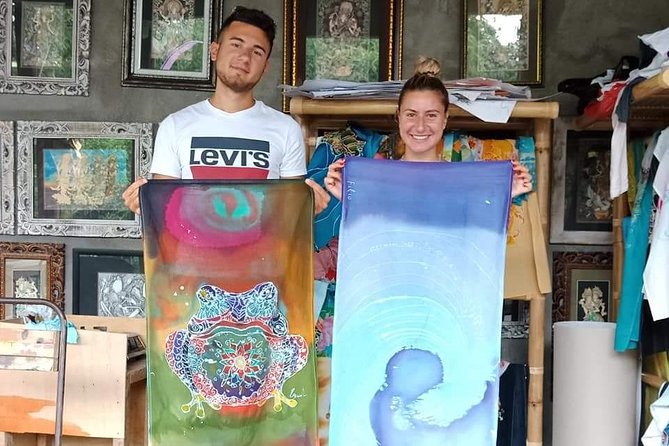
The workshop is built around the full batik process, not a simplified demo. Here is the sequence you can expect, and why each step matters.
Other things to make with your hands
1) Arrive, settle in, and get taught the basics
You start in the studio and are offered snacks, plus coffee and/or tea and mineral water. That sounds small, but it helps the mood. You are doing a detailed craft, and feeling fed and hydrated makes the tricky parts easier.
You will also get a background on batik so you connect the steps to the tradition. That context makes the rules feel less arbitrary. You understand why wax comes first and why dye happens in stages.
2) Sketch your design
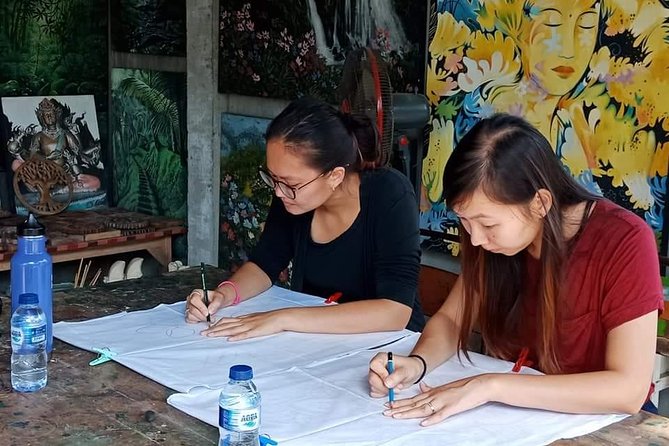
First you sketch out your design. This is your plan for the outcome. If you like to think before you act, this is your moment. You choose a motif concept, then translate it into a workable layout.
If you want structure, you can use stencil choices or suggestions provided by the team. The studio’s stencil options are described as hand drawn, with varying intensity and detail. That matters for first-timers because you can aim for something achievable while still getting a gorgeous result.
3) Draw the design in hot wax
Next comes one of the defining moments: you draw the design on the fabric using hot wax. This is where the workshop earns its name. You are not painting over your entire idea, you are drawing the parts that must resist dye.
This is also where patience shows up. Wax lines need care because they define the boundaries that dye will and will not cross. Expect that you may get a few imperfect spots. The good news is the instructors are there to help you work through it.
4) Apply dye to selected areas only
Then you apply dye to selected areas only. This is the step that makes batik different from regular fabric painting. You are making choices that will preserve the original color in wax-protected areas.
The team guides you so you understand which areas to dye and how to proceed without making the whole fabric look the same shade. Instructors also help with colors, and you can end up using a mix of techniques depending on the approach you choose.
5) Wash off the wax and reveal your outline
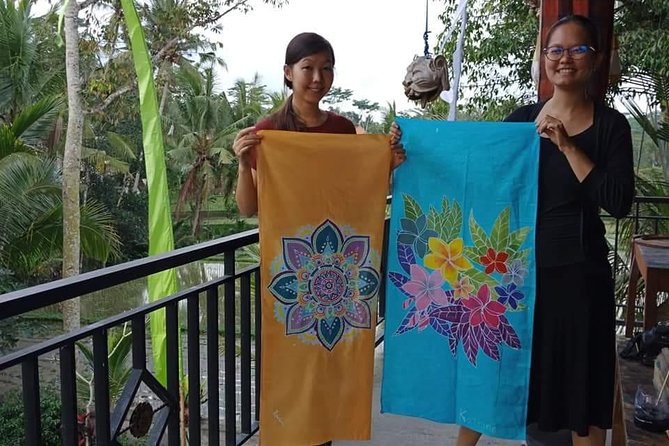
When the wax is washed off, the outlines remain in the original color. This is the reveal moment. You see your design emerge based on the wax resist pattern you built earlier.
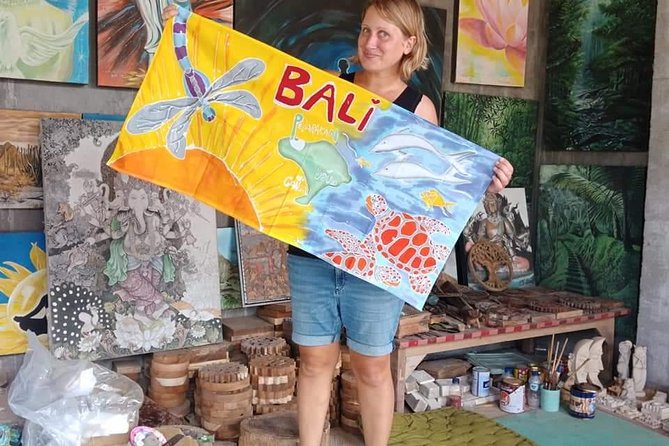
In the end, you take home your finished batik fabric art. In reviews, people describe the results as something they genuinely feel connected to, not just a project they survived.
The instructor experience: patient help without taking over
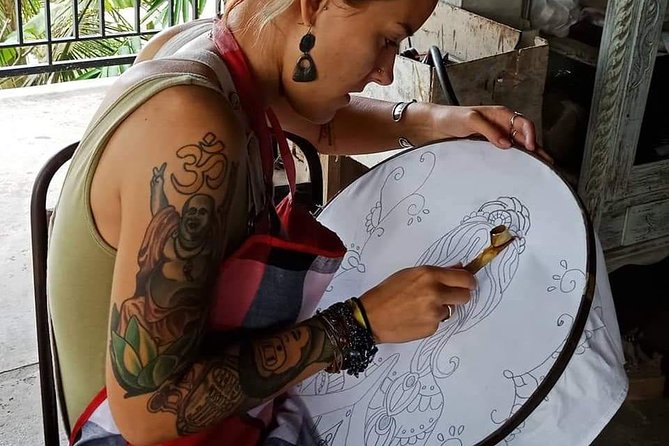
The workshop is run by a master artist and a team that gives supportive guidance. What stood out most in feedback is the patience and encouragement. People describe staff as helpful and calming, with clear step-by-step direction.
Two guide names come up directly: Dika and Agong. Knowing that helps you feel like there is a real teaching team behind the process, not just a single person repeating instructions.
Also, the teaching style is practical. You can work more independently if you want to try on your own, or you can get closer tutor support if you feel lost. That flexibility is ideal for mixed groups, including kids and adults with different confidence levels.
One more detail I appreciate: the instructors explain the process so you are not just following commands. The class includes batik history background and technique coaching, and that turns the craft into a skill you actually learn.
The family-compound studio vibe near Ubud
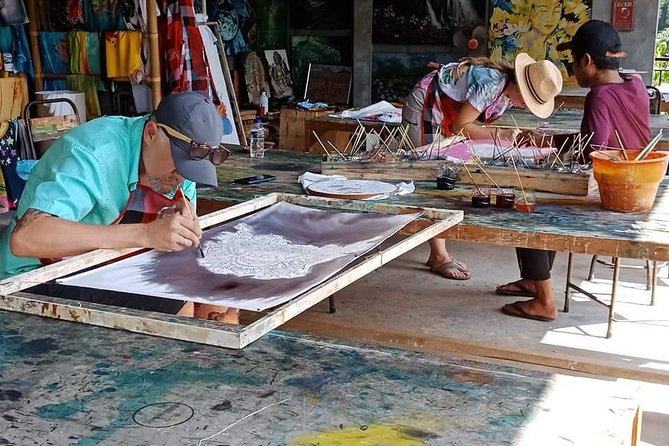
This is not just about technique. It is also about setting. The studio is located in a family home compound where Balinese artists live and work. That means you see the craft in context, with a working rhythm rather than a staged performance.
Reviews mention the studio feeling peaceful and dynamic, with a mix of people making batik, including expats, children, and local artists. That blend matters because it keeps the class from feeling like an adult-only art lecture. It feels like people are doing something practical with their hands, and the mood stays friendly.
If you like travel experiences that feel grounded in daily life, this one fits. You are not rushing through a checklist. You are spending a few hours in a place where batik is part of the environment.
How hard is it, really? The patience part
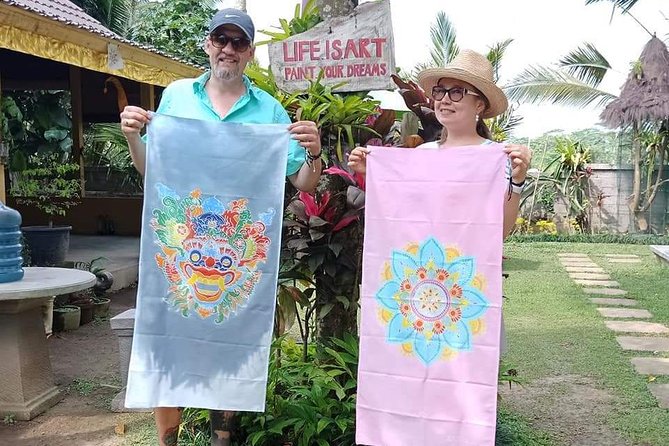
Here is the honest part: batik can be harder than you think. Hot wax needs steady control. Wax placement affects the final dye results. And dyeing selected areas takes a careful hand.
That is why the supportive teaching is so important here. Many people call out the patience of the staff and how they help you pivot when something goes wrong. Some learners mention happy accidents, and that is realistic. Your final piece can still come out great even if you are not perfect.
If you are the type who gets frustrated with mistakes, give yourself a mindset shift before you arrive. Treat it like a learning session. The goal is not to produce a flawless professional textile. The goal is to learn the method and take home something personal.
What you take home: a unique fabric artwork
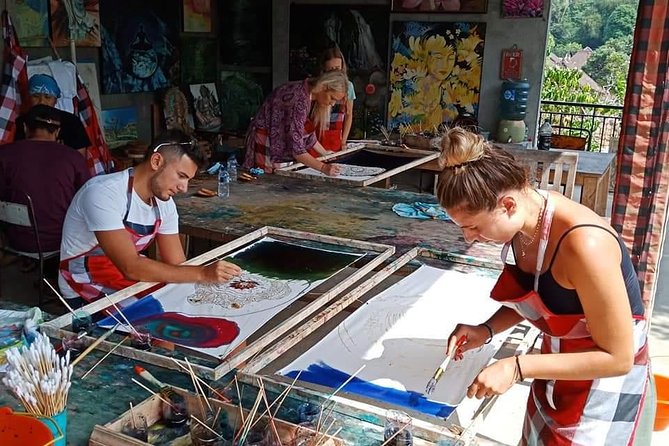
At the end, you leave with your batik creation. The reason it feels like a real souvenir is that you made it through the core method: sketching, waxing, dyeing, and washing off wax to reveal the pattern.
People describe the outcome as beautiful and memorable. They also note that the experience can change how you see batik, because you understand the time and care behind it. That is the best kind of souvenir effect: you value it more because you learned what it takes.
One practical thing to keep in mind: you are working in dye and wax stages. So plan for your piece to need a bit of handling care after the class. The data I have does not spell out drying time or transport method, so just treat it like artwork. Bring a plan to keep it flat and safe on the ride back.
Who should book this batik workshop?
This workshop is a great fit if you want a hands-on cultural craft in the Ubud area. It works well for first-timers because you get instruction and support. It also works if you already do art, because you can choose your motif and make decisions through the process.
It is also described as suitable for a wide range of ages. One review mentions that an instructor helped a 6-year-old through the whole process, which suggests the class can scale to different skill levels if you stay engaged.
I would also recommend it if you want something calmer than the typical Ubud day. The studio setting is described as peaceful, and the class is relaxed but structured.
Who might think twice? If you hate detailed, slow tasks, batik might feel like too much. The process asks for careful attention. It can be more challenging than a quick paint-and-go activity.
Small practical tips to get the most from your class
Based on how the workshop is run, here are smart ways to set yourself up for a smoother afternoon.
- Choose your comfort level with the guidance. The studio explicitly lets you work more independently or get closer help. Pick what matches your confidence.
- Start with a motif you can finish. If you want less stress, use stencil options or suggestions. The options vary in detail and intensity.
- Expect a learning curve with wax. You might make small mistakes, and that is part of the process. The key is to keep going, with help when you need it.
- Use the included refreshment window. Snacks and drinks are provided. Don’t skip them, it helps you focus during the technical stages.
- Ask questions during the steps. The class is guided step by step. If you are unclear about dye placement or the wax stage, ask early so you do not waste time.
Should you book this batik workshop near Ubud?
Yes, I think you should book it if you want a short, meaningful art experience that ends with a piece you can actually use as a memory of your trip. It is good value for the time, the materials, and the hands-on outcome. And the studio vibe, in a family compound setting outside Ubud, gives it a grounded feel that you just do not get from super generic craft tours.
Book it especially if you:
- like learning a traditional technique
- want a calming afternoon with clear instruction
- want a personalized souvenir that took real effort
Skip it if you are in a rush for a quick photo stop, or if you hate slow, careful work. Batik rewards patience. If you can bring that mindset, you will likely leave with both a new skill and a fabric artwork you genuinely like looking at.
FAQ
How long is the batik painting workshop?
The class runs for about 3 hours.
How much does it cost?
The price is $29.00 per person.
What is included in the workshop?
You get snacks, coffee and/or tea, mineral water, and all materials needed to make your own original batik.
What is not included, and what can I buy?
Lunch is not included, but local food is available to order. Alcohol is not included, but it is available to purchase.
Where do I meet for the class?
You start at Five Arts Studio, Jl. Raya Keliki, Keliki, Kec. Tegallalang, Kabupaten Gianyar, Bali 80561, Indonesia. The activity ends back at the meeting point.
What is the cancellation policy?
Cancellation is free if you cancel up to 24 hours in advance for a full refund. If you cancel less than 24 hours before the start time, you will not receive a refund.
Make Something to Take Home
- Ubud Cooking Class Bali with Balinese Chef
★ 5.0 · 1,609 reviews - Ubud Silver Class Jewelry making in bali
★ 5.0 · 978 reviews - PRIVATE Authentic Balinese Cooking Class in Ubud at Putu’s Home
★ 5.0 · 644 reviews - Balinese Farm Cooking Class by Pemulan Bali
★ 5.0 · 410 reviews
The Older Story
- Ulun Danu Beratan Temple – Tanah Lot Temple Tour by UNESCO World Heritage
★ 5.0 · 74 reviews - BALI ATV Kuber Through Historic Tunnel and Scenic Waterfalls
★ 5.0 · 34 reviews - Royal Karangasem Heritage Tour
★ 4.5 · 29 reviews - Private Jatiluwih Rice Terraces Heritage Site and Culture Tour
★ 5.0 · 21 reviews
More Tour Reviews in Ubud
- All-Inclusive Ubud Private Tour
★ 5.0 · 14,344 reviews - Best of Ubud Full-Day Tour with Jungle Swing
★ 5.0 · 8,571 reviews - Ubud: Monkey Forest, Jungle Swing, Rice Terrace, and Water Temple
★ 5.0 · 7,160 reviews - Best of Ubud 1-Day Private Tour
★ 5.0 · 4,451 reviews
Fresh on the Ubud pages





Workshops, compared.
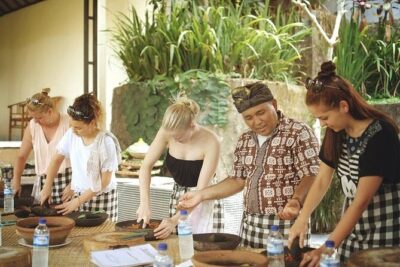 ★ 5.0Ubud Cooking Class Bali with Balinese ChefFrom $351,609 reviews
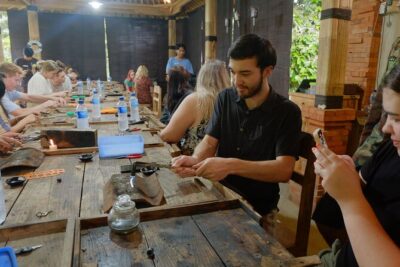 ★ 5.0Ubud Silver Class Jewelry making in baliFrom $36978 reviews
 ★ 5.0PRIVATE Authentic Balinese Cooking Class in Ubud at Putu’s HomeFrom $75644 reviews
 ★ 5.0Balinese Farm Cooking Class by Pemulan BaliFrom $39410 reviews
 ★ 5.0Learn to cook Indonesian food at Gili Cooking Classes TrawanganFrom $33352 reviews
 ★ 5.0Balinese Cooking Class in SeminyakFrom $66281 reviews
Ubud Monkey Forest Silver Class – Craft Your Own Silver JewelryFrom $41254 reviews
★ 5.0Balinese Cooking Class in SeminyakFrom $66281 reviews
Ubud Monkey Forest Silver Class – Craft Your Own Silver JewelryFrom $41254 reviews
 ★ 5.0Anggrek Putih Lombok Cooking ClassFrom $30253 reviews
More Kuta tours like this one