
Review · BALINESE COOKING CLASSES FROM KUTA
Balinese Cooking Class in Seminyak
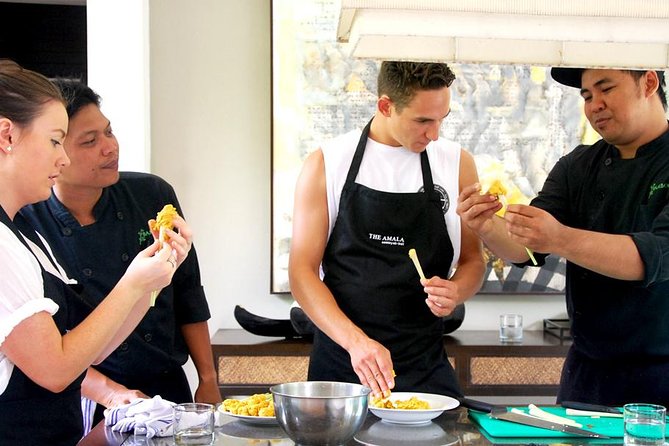
Cooking in Bali is a hands-on delight. In Seminyak, this Balinese cooking class at The Amala teaches you to prepare a 3-course meal, including dishes like coconut pancakes, papaya soup, and fried banana. You can go in the morning or afternoon, and add an optional chef-led trip to the Jimbaran fish market.
What I like most is the way the day is guided step-by-step by local chefs like Chef Putu and Evi, so you are not left guessing. I also love that you can pair cooking with real ingredient shopping, especially with the optional market stop led by the chef before you cook.
One thing to weigh: the menu choice is fixed for the whole group, so you cannot mix and match your favorites, and the market add-on has a minimum-2 requirement.
Key highlights at a glance
- Chef-led cooking with real participation, not a sit-and-watch demo
- Optional Jimbaran fish market trip (morning sessions) to buy ingredients
- 3-course menus with banana-leaf steaming and spice blends you can recreate
- Vegetarian menu option, including pepes tahu and black rice pudding
- Private Seminyak pickup and drop-off, plus a keepable apron and certificate
- Small group size (max 10) for a more personal pace
More kitchens that start at the market
- Nia Balinese Cooking Class★ 5.0 · 202 reviews
- Nia Bali Seminyak Cooking Class★ 5.0 · 127 reviews
- Cooking class in the comfort of your own personal villa. Yes, I’ll come to you!★ 5.0 · 80 reviews
- Balinese Cooking Class & Tanah Lot Temple Visit – Private & All-Inclusive★ 5.0 · 24 reviews
Seminyak at The Amala: what makes this cooking class feel real
This experience is built around one idea: Balinese food is not complicated because it is fancy, it is complicated because it is specific. Specific spices, specific textures, specific cooking methods, and a clear reason behind each step. That is why the best moments here are not just tasting the food, they are learning how the flavors get made.
The class happens at The Amala in Seminyak, a calm setting that helps you focus when you are chopping, mixing, and shaping. You get a true cooking workout without it turning stressful. And because the group is kept small, your chef can actually check what you are doing and help you adjust.
You are also eating what you made, which is a big deal. Many cooking classes end with a quick photo and a goodbye. Here, the payoff is the meal itself, served as lunch or dinner depending on your session.
Pickup, timing, and how the 3-hour format plays out
The total experience runs about 3 hours, and it includes round-trip private transfer within the Seminyak area. If you are staying in Seminyak, this matters because traffic and parking can drain time, and cooking classes leave you less patience than you think.
You will meet at The Amala Boutique Retreat, Jl. Kunti I No.108, Seminyak. From there, the schedule shifts depending on whether you choose the morning session (with an optional market add-on) or the afternoon session.
Typical flow:
- If you choose the morning option, the optional market time starts around 9:30 AM
- Around 11:00 AM, you meet the chef for an ingredient and equipment introduction
- Around 11:30 AM, you start prepping your first steps
- Around 1:00 PM, you finish and eat, then you receive a certificate
Afternoon sessions follow the same pattern, just later in the day:
- 4:00 PM introduction
- 4:30 PM cooking
- 6:00 PM finish and eat
The class is designed so you can actually taste the finished work, not just learn it.
Morning upgrade: Jimbaran fish market, what you learn and how it helps you cook
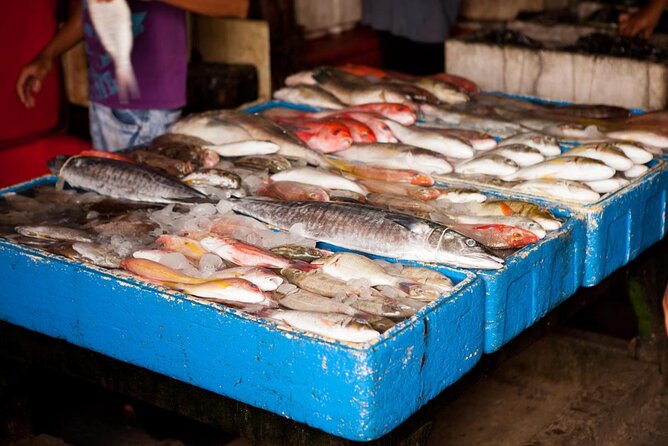
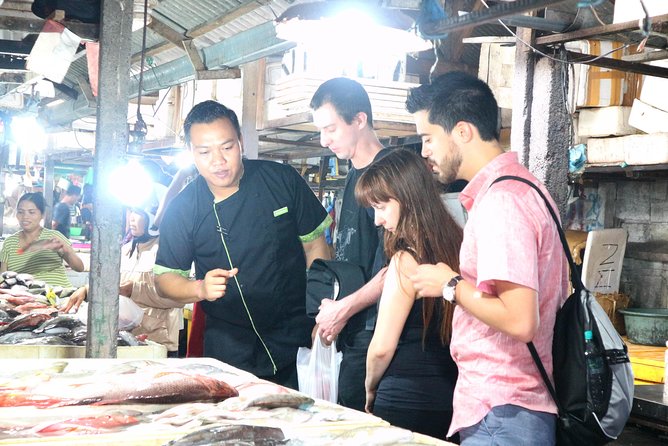
If you choose the morning session, you can add the Jimbaran fish market visit with your chef. This is the moment that turns the class from a cooking lesson into a food culture lesson.
Here is what the market time is for:
- You see how fresh fish and produce are selected
- You can purchase fresh ingredients and spices to use in your class
- You get chef guidance on what looks right for cooking
One practical tip that came up in guidance from the chef: for fish freshness, details matter, like how red the eyes look on red snapper. That kind of advice is exactly why a market stop is valuable. You are not just buying ingredients, you are learning the logic behind choosing them.
Drawback to consider: the market visit has a minimum-2 travelers requirement per booking. If you are traveling solo, there can be an extra charge if the market visit is available for your group size. So if you want this add-on, check that it fits your booking setup before you lock it in.
Your menu choices: fixed for the group, built for flavor
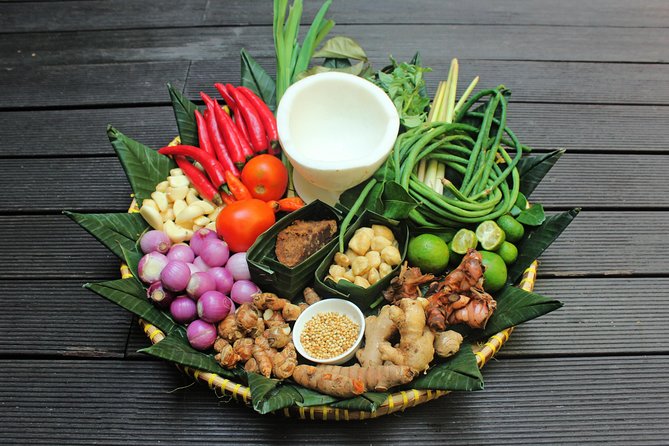
You choose one of three menus, but there is a catch: the same menu is used for all participants in that session. That is great for organization, but you should pick carefully because you cannot switch dishes mid-class.
More beach days up the coast

Menu 1 (meat and fish focus)
- Lawar salad: green bean, fresh coconut, and chicken salad
- Tum ikan: steamed fish in banana leaf
- Dadar gulung: coconut pancake with palm sugar and coconut
If you like a balance of cool crunchy salad, aromatic fish steamed in banana leaf, and a sweet pancake, this is a strong pick.
Menu 2 (more variety of seafood and grilled-style flavor)
- Jukut gedang mekuah: young papaya soup with seafood
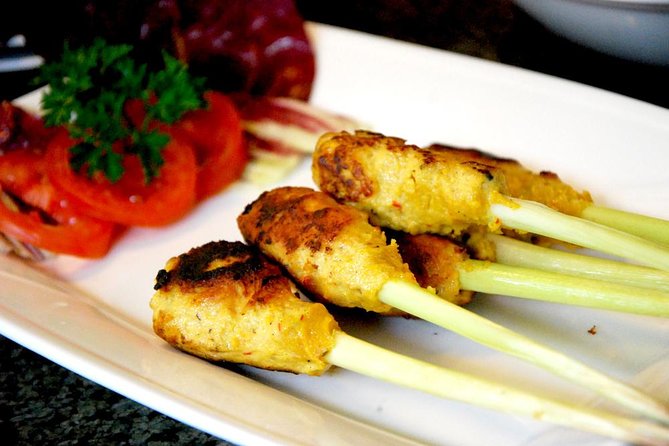
- Sate lilit ayam: chicken satay on lemongrass stick with steamed rice
- GodoH biu: Balinese fried banana
This menu is a good match if you want soups and satay-style flavors, plus a sweet finish that is distinctly Balinese.
Vegetarian menu (real cooking, not an afterthought)
- Gado-gado: vegetable salad with peanut dressing
- Pepes tahu: steamed bean curd in banana leaf
- Bubur injin: Balinese black rice pudding
Pepes tahu is a key highlight here because banana-leaf steaming gives you that fragrant, soft texture without needing meat. And bubur injin is a smart ending if you want something comforting rather than sugary-heavy.
What you actually do in the kitchen: the “hands-on” part
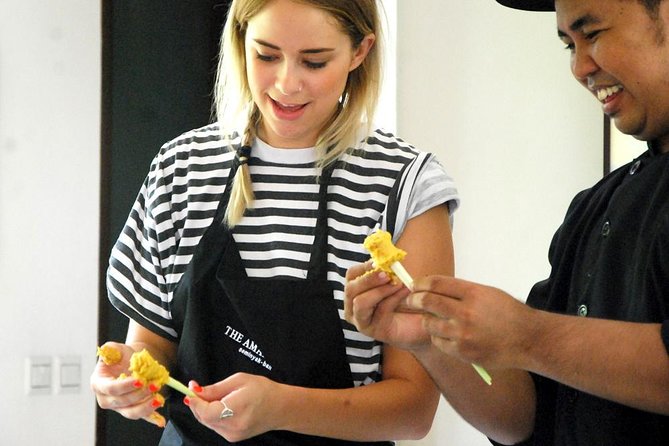
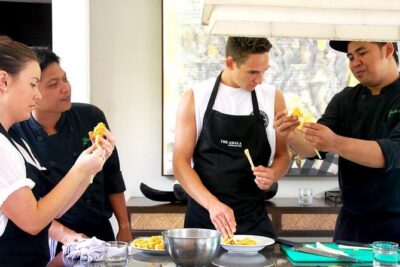
This class is not a performance. You get time at the prep stations, with a chef and staff keeping it moving. From the start, you meet the chef and get an introduction to the ingredients and equipment used for the day’s dishes. Then the real cooking begins, with you doing a mix of chopping, mixing, assembling, and learning how to guide cooking toward the right texture and flavor.
A big reason the class works is how the chefs teach. Chef Putu and Evi, along with other team members, were specifically praised for making steps easy to follow and keeping the class engaging. That kind of teaching is especially helpful if you are not comfortable with Southeast Asian cooking methods.
One thing to note: for some people, the class can feel chopping-heavy. That is not necessarily bad, it is often part of how Balinese dishes build flavor through fresh herb and spice prep. But if you are expecting constant grilling and dramatic cooking, your experience may feel more prep-focused than you planned. Keep that in mind when you choose your session.
The banana-leaf and spice lessons that you can take home
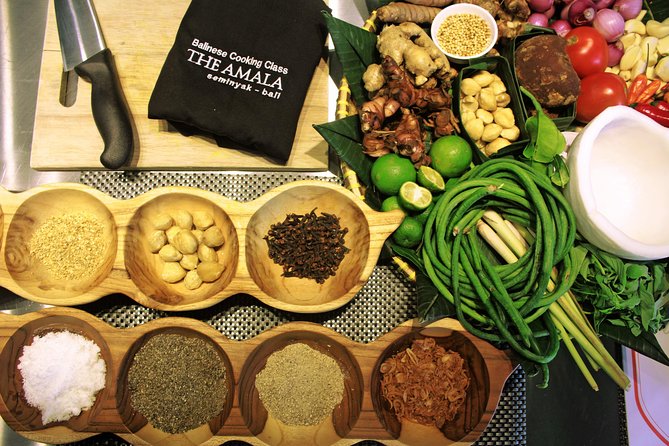
Even if you only cook at home occasionally, you will likely leave with a clearer sense of how Balinese flavors are structured.
A few techniques worth paying attention to during class:
- Steaming in banana leaf (used for tum ikan and pepes tahu): this keeps aroma close to the food and creates a fragrant finish
- Sweet-spice balance: palm sugar shows up in dadar gulung, and it teaches you how Balinese sweets are not just sugary
- Fresh herb and spice blending: salads and satay-style dishes rely on mixing and seasoning accuracy, not just heat
What you eat at the end is the proof. If the chef gives you guidance on how to combine ingredients, the final dishes will taste like they belong together, not like separate recipes pasted onto a plate.
Lunch or dinner: the best part is eating your work
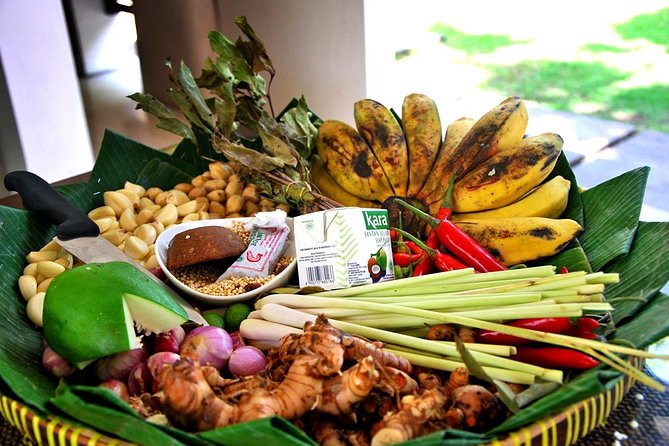
After your final prep step, you eat what you cooked. Lunch is served for the morning session and dinner for the afternoon session, so your meal timing will match the time of day.
A consistent theme in this kind of class is satisfaction: you come away full, and the food tends to be abundant. One reason is that these menus include multiple components in the same meal: salad or soup, a main dish with banana-leaf cooking or satay-style flavor, and a dessert that brings balance.
One practical consideration: because the group is cooking together and finishing at around the same time, food can sit briefly before everyone eats. If you tend to be sensitive to food temperature, ask staff when the meal is going to be served, and try to eat soon after it is plated.
The setting, the staff, and small-group energy
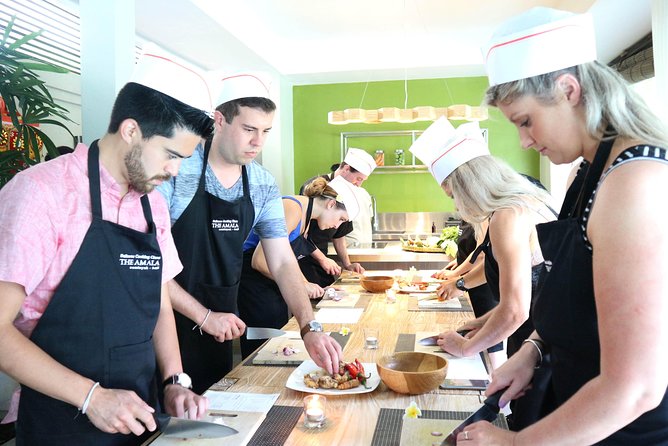
The Amala venue helps the class feel like a real experience, not just a kitchen room with tables. You are cooking in a calm space, which makes it easier to enjoy the process instead of rushing through it.
You also get personal attention because the group is kept small, with a maximum of 10 travelers. That changes the feel of the class. You are more likely to have a chef check your technique, explain why a step matters, and make sure you feel comfortable participating.
If you want a food day where you can actually talk, ask questions, and learn the “why” behind the flavors, this kind of small-group setup is a big advantage.
Price and value: is $66.67 actually fair in Seminyak?
At $66.67 per person, this class may look like a “nice add-on,” but it is not just paying for cooking. You are also getting:
- a guided 3-course meal
- chef instruction for multiple dishes
- round-trip private transfer within Seminyak
- a keepable apron souvenir
- a certificate
That is solid value when you compare it to paying for a restaurant meal plus paying for a food tour and then paying someone to teach you the cooking process. If you add the optional fish market trip, you also get the ingredient-buying lesson that makes the cooking feel grounded in where the food comes from.
One more value point: the vegetarian menu is built into the menus, not tacked on. If you have someone in your group who does not eat meat, you are not stuck hunting for separate options.
Who should book this cooking class?
Book this if you:
- want a hands-on Balinese food experience in Seminyak
- enjoy learning how dishes are built, not just eating them
- like the idea of banana-leaf steaming and real spice mixing
- want a vegetarian option that is part of the plan
- prefer small groups and a calm venue
You might choose differently if:
- you need the ability to switch dishes on the fly, because the menu is the same for the whole group
- you are traveling solo and specifically want the fish market add-on, because the market stop has a minimum-2 traveler setup
- you expect a lot of dramatic cooking moments and less prep work, since some classes can lean heavier on chopping and prep
Smart tips for your day (so it goes smoothly)
- Pick your menu based on your taste, not just photos. If you love seafood soups, Menu 2 fits. If you want dessert plus fish steamed in banana leaf, Menu 1 fits.
- Bring an open mind about textures. Banana-leaf steaming and papaya soup flavors can be unfamiliar if you usually stick to mild, western-style meals.
- For the market option, watch how the chef chooses ingredients. That’s where you pick up the real “how to decide” skill.
- Wear clothes you can get a little messy in. You will be prepping fresh ingredients.
- Ask questions while you cook. Chefs like Chef Putu and Evi are there to explain, and you will get more value if you ask why a step matters.
Should you book this Balinese Cooking Class in Seminyak?
If you want one memorable food day in Bali that does more than feed you, I think you should book it. The chef instruction, the 3-course menu structure, and the chance to pair it with the Jimbaran fish market make it a practical way to learn Balinese cooking with real takeaways.
My recommendation comes with two checks. First, choose your menu ahead of time because the group shares it. Second, if you care about the market visit, confirm your booking setup if you are solo, since the market add-on has a minimum-2 requirement.
If those fit your plans, this is a strong Seminyak value, and a genuinely enjoyable way to learn Balinese flavors beyond the restaurant menu.
FAQ
How long is the Balinese cooking class in Seminyak?
The class lasts about 3 hours.
Is hotel pickup included?
Yes. Round-trip private transfer within the Seminyak area is included.
Does the class include lunch or dinner?
Yes. After cooking, you enjoy what you made for lunch or dinner depending on the session you choose.
Can I choose a vegetarian menu?
Yes. There is a vegetarian menu option.
Is the Jimbaran fish market visit included?
It is optional and comes with the morning session only. The market tour is subject to a minimum of 2 persons per booking.
What souvenir do I get?
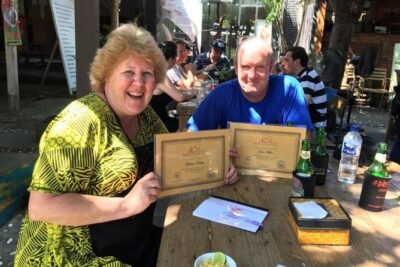
You receive a certificate from the chef and you can keep the class apron as a souvenir.
If you want, tell me which menu you are leaning toward (Menu 1, Menu 2, or vegetarian) and whether you prefer morning or afternoon, and I will help you pick the best fit.
More Tour Reviews in Seminyak
- Bali Full-Day Traditional Village Sightseeing Trip All Inclusive
★ 5.0 · 3,069 reviews - Experts Bali Driver : Best Bali Private Driver for Tour in Bali
★ 5.0 · 1,339 reviews - Bali Hai Sunset Dinner Cruise
★ 5.0 · 1,173 reviews - Mount Batur Sunrise Trekking
★ 5.0 · 947 reviews
Up the Coast to Canggu
- Canggu: Drag Show with Dinner
★ 5.0 · 414 reviews - Private Bali Horse Riding In Seminyak Beach
★ 4.0 · 171 reviews - Nia Bali Seminyak Cooking Class
★ 5.0 · 127 reviews - Canggu: Surfing lesson with ISA certified instructor
★ 5.0 · 102 reviews
Cook Another Balinese Lunch
- Nia Balinese Cooking Class
★ 5.0 · 202 reviews - Nia Bali Seminyak Cooking Class
★ 5.0 · 127 reviews - Cooking class in the comfort of your own personal villa. Yes, I’ll come to you!
★ 5.0 · 80 reviews - Balinese Cooking Class & Tanah Lot Temple Visit – Private & All-Inclusive
★ 5.0 · 24 reviews
Fresh on the Seminyak pages





Balinese Cooking Classes from Kuta, compared.
 ★ 5.0Ubud Cooking Class Bali with Balinese ChefFrom $351,609 reviews
 ★ 5.0PRIVATE Authentic Balinese Cooking Class in Ubud at Putu’s HomeFrom $75644 reviews
 ★ 5.0Balinese Ubud cooking school (9 Dish Cooking and Market Tour)From $58540 reviews
 ★ 5.0Balinese Farm Cooking Class by Pemulan BaliFrom $39410 reviews
 ★ 5.0Learn to cook Indonesian food at Gili Cooking Classes TrawanganFrom $33352 reviews
 ★ 5.0Anggrek Putih Lombok Cooking ClassFrom $30253 reviews
 ★ 5.0Balinese Authentic Cooking Class in UbudFrom $39239 reviews
 ★ 5.0PRIVATE Balinese Cooking Class in Ubud with Dewa with TransfersFrom $69213 reviews
More Kuta tours like this one