
Review · BALINESE COOKING CLASSES FROM KUTA
Balinese Cooking Class at Organic Farm
A farm day in Bali can be more than pretty photos. The best part here is the farm-to-table cooking on a traditional wood-fired setup, with you harvesting ingredients first and learning how the local subak system supports the island’s food.
I especially like the small group size, because it stays hands-on instead of watch-and-hope. I also like the community angle, since you’re not just touring a farm, you’re seeing how Mai Organic Farm supports farmers in Pejeng. A possible drawback: it’s an outdoors-first experience and runs best with good weather.
Key points at a glance
- Wood-fired, traditional cooking that feels practical, not staged
- Harvest your own ingredients right on the community farm
- UNESCO subak context (the water system behind Bali’s farming)
- Six Balinese dishes plus drinks like Balinese coffee and lemongrass tea
- Small group size capped at around eight, with a maximum of 10
A Balinese cooking class on an organic farm feels different when you start in the garden
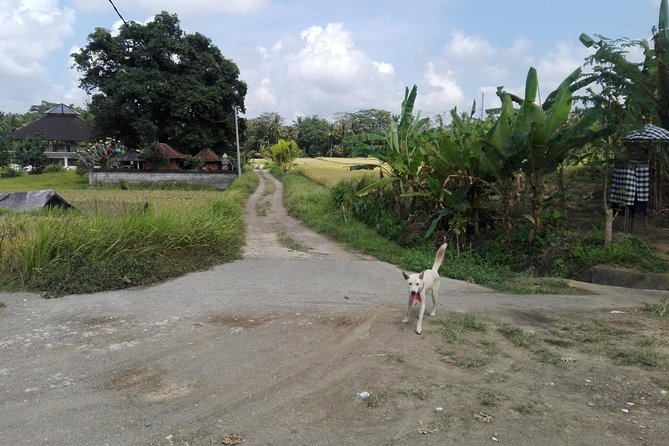
Most cooking classes teach recipes. This one starts with the source. You begin at Mai Organic Farm Bali, then spend time on the grounds learning how organic produce is grown and how the subak system fits into Bali’s agriculture. If you’ve ever wondered why Balinese food tastes so “alive,” this is one of the reasons.
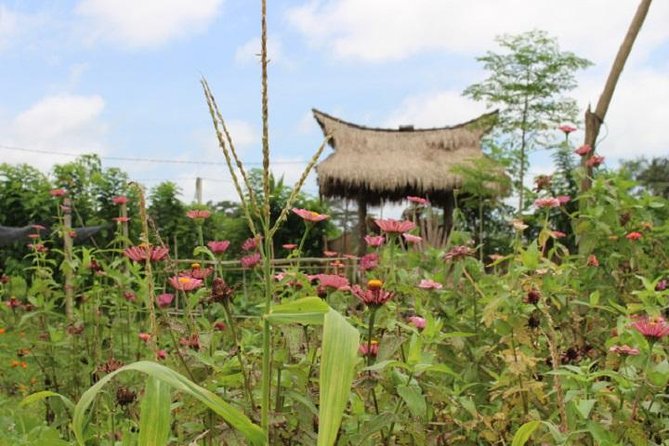
The setting also changes the vibe. You’re not squeezed into a kitchen while someone points from the sidelines. You walk through the community farm, get introduced to the farming approach, then pick ingredients for the dishes you’ll cook. That order matters, because it turns a meal into a story you can taste.
And yes, there’s real traditional cooking. The class uses a wood-fired stove (and an outdoor grill/fire setup), so the food isn’t just cooked, it’s cooked the Balinese way, with heat and timing that feel older than the recipe card.
More kitchens that start at the market
- Ubud Cooking Class Bali with Balinese Chef★ 5.0 · 1,609 reviews
- PRIVATE Authentic Balinese Cooking Class in Ubud at Putu’s Home★ 5.0 · 644 reviews
- Balinese Ubud cooking school (9 Dish Cooking and Market Tour)★ 5.0 · 540 reviews
- Balinese Farm Cooking Class by Pemulan Bali★ 5.0 · 410 reviews
Price and time: what $40 gets you in Ubud cooking-class value
At $40 per person for about five hours, this is priced like a midrange cooking activity, but it leans toward good value because it includes more than just lunch. You’re looking at:
- A farm tour component with ingredient picking
- A cooking session that produces six Balinese dishes
- Drinks during the day, including infused water, herbal drinks, Balinese coffee, and lemongrass tea
- Round-trip style convenience via pickup from central Ubud hotels and rentals
Time matters too. Five hours is long enough to do real prep and cooking, but short enough that you can still plan other Ubud stops that same day. With pickup offered, you’re not spending half your day figuring out rural transport.
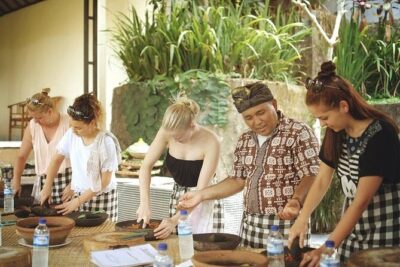
Two details also help you feel the value fast. First, the class is capped at just eight travelers (with an overall maximum of 10). Second, the instruction style is built for participation, so you’re not paying to stand back. You can jump in more or less as you like.
Getting to Mai Organic Farm Bali: pickup in central Ubud and rural Pejeng timing
The start point is Mai Organic Farm Bali in Pejeng, near Tampaksiring, in Gianyar. The activity ends back at the meeting point, which keeps the day simple.
You can usually expect pickup from central Ubud hotels and rentals, and you’re offered round-trip transfers. That’s a big deal here because the farm is not in the middle of Ubud traffic. You want the day to feel like a break, not a commute puzzle.
A practical timing note: since the tour begins at the farm and ends back there, build your schedule around a clean block of about five hours, plus extra buffer if you’re stacking other tours. The pickup is helpful, but farm days can run on calm local time.
Stop 1: Mai Organic Farm and the subak lesson that makes the food make sense
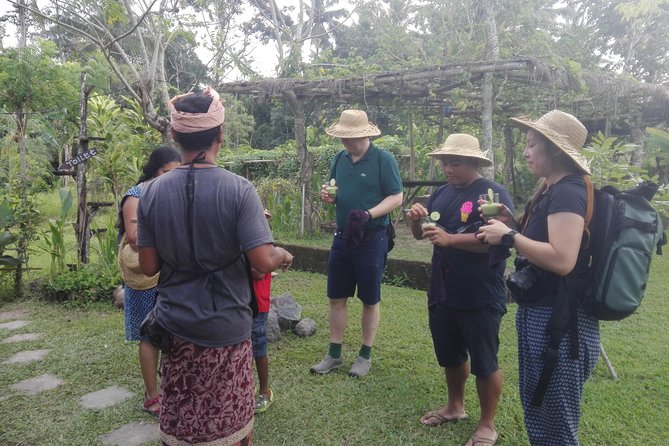
Your day kicks off on the farm with a welcome drink. Based on guest reports, this can include fresh coconut water, and it’s served as you relax in shaded farm space. That first pause is not filler. It sets you up for the walk and the explanations.
Next comes the farm introduction. You learn about organic farming and the community movement behind the farm’s work. Then you walk along the farm and connect it to Bali’s farming culture through the Subak System, which is protected and recognized with UNESCO World Heritage status.
Why does this matter for a cooking class? Because Balinese flavors are tied to what grows well, how water is managed, and how harvest cycles work. When you see the system explained in the place where it’s practiced, the ingredients stop being random items on a menu.
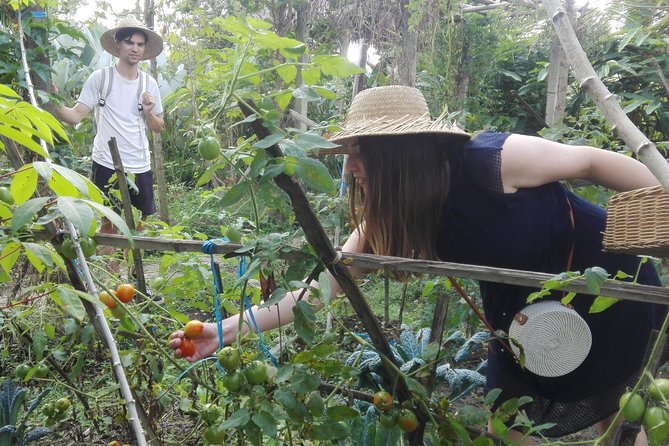
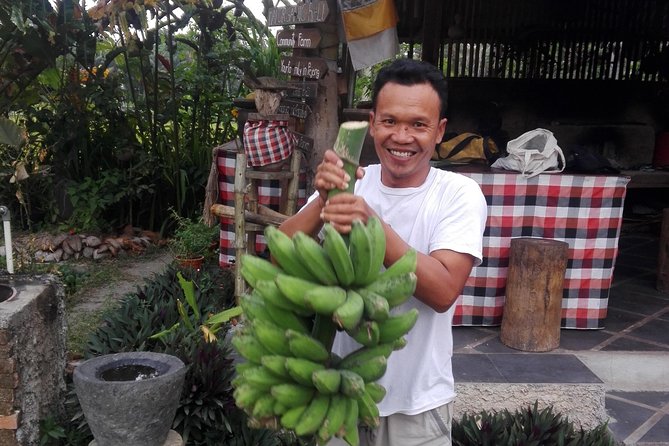
Then you move into the fun part: you pick ingredients right from the farm. Herbs, fruits, and vegetables become the base components and sauces you’ll later prepare. This is one of the most praised parts of the experience, and it’s easy to see why. You’re not just tasting food, you’re recognizing it by smell and shape before it ever hits the stove.
Harvest-to-stove cooking: what you’ll make, including sate lilit and corn fritters
After the farm walk, you gather at the community center at Mai Organic Farm. Here, you enjoy a refreshing juice made from vegetables and fruit grown locally. Then the cooking begins.
You’ll cook six different Balinese dishes. Some dishes are specifically called out, including:
- Sate lilit kebab (a classic Balinese minced-meat sate style)
- Tuna sate
- Corn fritters
The exact other dishes aren’t listed in the details I have, but you can count on a full meal worth of cooking, not just one small appetizer. This is a key reason the class feels complete: you’re not paying for a quick demo, you’re making the lunch you’ll eat.
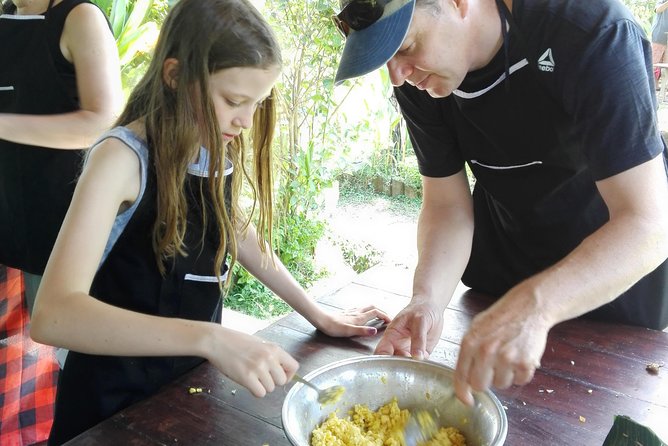
An extra plus: you can participate as much or as little as you want. That’s helpful if you’re traveling with kids, trying to learn without pressure, or just want to taste and observe without turning the day into a full-time kitchen job.
Other Ubud days people book alongside this one
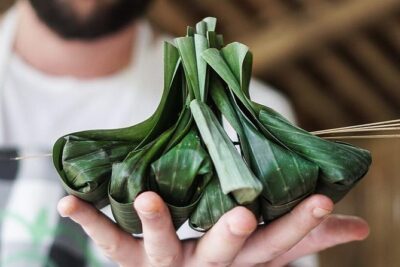
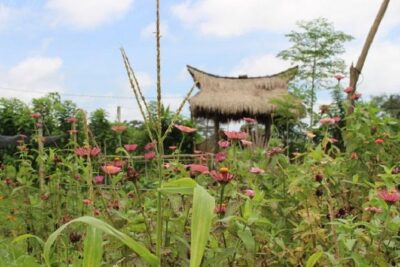
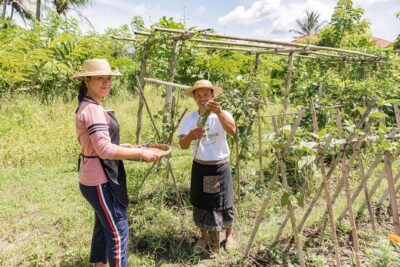
Cooking with wood-fired heat: why the method feels more authentic than most classes
This class uses traditional outdoor cooking equipment, including a wood-fired stove and an outdoor grill/fire stove approach. That changes the cooking rhythm. You’re dealing with heat that behaves differently than a flat electric burner, and it shows in how food browns, how sauces develop, and how quickly some ingredients respond.
The atmosphere also tends to be communal. You’ll work together to create the meal, then eat it together in a calm setting. Many people love cooking classes, but this one gets mentioned as a standout because it blends teaching with real doing, on real equipment, using ingredients you harvested earlier.
If you care about food technique more than just flavor, this part is worth it. Wood-fired cooking is not only a cultural detail. It makes the lesson more memorable because you notice what heat does, right in front of you.
The drinks round out the meal: infused water, herbal drinks, Balinese coffee, lemongrass tea
Food is only half the story. You also get a lineup of drinks that reflect what people actually drink in Bali, not just what tourists order to feel adventurous.
Included drinks and beverages described for the class include:
- Sip juice
- Infused water
- Herbal drinks
- Balinese coffee
- Lemongrass tea
You also get the farm-center juice made from local vegetables and fruit. That juice is a nice bridge between the garden and the cooking. It keeps the day feeling fresh and light, especially because you’re walking and harvesting earlier.
A small tip for enjoying this section: treat the drinks like part of your tasting plan. Start light, then move into the coffee and tea later with your meal. You’ll get a better sense of how the flavors change from drink to dish.
Lunch in a gubuk hut: communal eating, new friends, and a recipe book
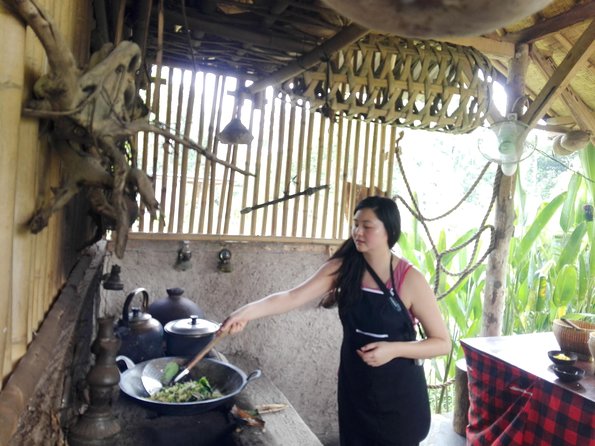
After cooking, you eat in a tranquil gubuk, which is a hut style dining space. The layout supports the social part of the class, because you’re not rushing off after plating. You sit with the group, eat together, and enjoy the result of your work.
This is also where the community tone shows. The class is designed around supporting local farmers from Pejeng, and it’s not presented as a charity pitch. It’s more practical than that, you’re literally helping put food and income into the local system by supporting Mai Organic Farm’s work.
Several guests also mention receiving a recipe book, which is useful if you want to recreate the flavors at home. Even if you never cook everything again, it’s still a nice way to remember what you made and how the class approaches each dish.
And if you’re the type who likes names and faces, guides were called out by guests, including Kadek and Korong. One guest even noted a moment where a guide asked how to improve the class, which says a lot about how the team thinks about quality.
Who should book this cooking class near Ubud?
This is one of those experiences that fits a lot of travel styles.
- Families: it’s built for hands-on participation, and guests specifically mentioned kids enjoying ingredient picking and the lunch together.
- Couples and friends: the small group size makes it easier to talk, not just cook.
- Solo travelers: with a capped group and communal dining, it’s an easy day to meet people without forcing conversation.
If you’re a serious home cook, the wood-fired method and ingredient harvesting are the headline. If you’re newer to cooking, the participation flexibility is what makes it comfortable. Either way, you’ll come away with a story attached to your meal, not just food.
Practical tips to make your farm day run smoothly
Here are a few common-sense tips based on what the class includes, walking, harvesting, and outdoor cooking.
- Wear comfortable shoes for garden paths and ingredient picking. Your feet will do more work than your hands at the start.
- Dress for hot, humid weather if you’re traveling during Bali’s warmer months. This is an outdoor farm experience first.
- Plan your day around weather. This experience requires good weather, and if it’s canceled due to poor conditions, you’ll be offered another date or a full refund.
- Bring your curiosity. When you’re harvesting spices and herbs, it helps to pause and smell things. That’s where the learning sticks.
Also check your confirmation timing. Confirmation is received within 48 hours of booking, based on availability, so don’t plan your day with zero flexibility if you’re close to travel dates.
Should you book the Balinese cooking class at Mai Organic Farm?
If you want a Ubud cooking class that feels rooted in agriculture, not just cuisine, I think this one is an easy yes. The strongest reasons to book are the small group size, the ingredient harvesting, and the wood-fired, traditional cooking that connects the lesson to the food.
I would skip it only if you want a fully indoor, classroom-style experience, or if you’re traveling when rain is a real concern and you prefer not to gamble on weather. Otherwise, this is one of the more “you’ll remember it later” meals you can do in the Ubud area.
Go for it especially if you like learning by doing, and if you want to understand Bali’s food through the people and farming system behind it.
FAQ
What is the location of this cooking class?
The class takes place at Mai Organic Farm Bali in Pejeng, near Tampaksiring, in Gianyar, Bali.
How long does the Balinese cooking class last?
It runs for about 5 hours.
How many dishes will I cook?
You will learn to cook six different Balinese dishes.
What drinks are included?
You’ll have drinks such as Sip juice, infused water, herbal drinks, Balinese coffee, and lemongrass tea. A refreshing juice made with vegetables and fruit is also included.
Is pickup available from Ubud?
Yes. Pickup is offered, and round-trip transfers are provided from central Ubud hotels and rentals.
How large is the group?
The group is capped at around eight travelers, with a maximum of 10 travelers.
What happens during the farm portion of the experience?
You start on the farm with a welcome drink, take a farm walk to learn about organic farming and the UNESCO-protected subak system, and pick ingredients to use in the cooking class.
Where do I meet, and when does it end?
You meet at Mai Organic Farm Bali (Subak Kana, Banjar Panglan, Pejeng) and the experience ends back at the meeting point.
How soon will I receive confirmation after booking?
Confirmation is received within 48 hours of booking, subject to availability.
What is the cancellation policy?
Free cancellation is available. You can cancel up to 24 hours in advance for a full refund, and the experience also requires good weather. If it is canceled due to poor weather, you will be offered a different date or a full refund.
More Farms in Ubud
- Balinese Farm Cooking Class by Pemulan Bali
★ 5.0 · 410 reviews - From Ubud: Authentic Bali Farm Cooking School & Organic Farm
★ 5.0 · 122 reviews - Small-Group Farm Tour & Balinese Cooking Class in Ubud with Kadek
★ 5.0 · 16 reviews
More Tour Reviews in Ubud
- All-Inclusive Ubud Private Tour
★ 5.0 · 14,344 reviews - Best of Ubud Full-Day Tour with Jungle Swing
★ 5.0 · 8,571 reviews - Ubud: Monkey Forest, Jungle Swing, Rice Terrace, and Water Temple
★ 5.0 · 7,160 reviews - Best of Ubud 1-Day Private Tour
★ 5.0 · 4,451 reviews
Cook Another Balinese Lunch
- Ubud Cooking Class Bali with Balinese Chef
★ 5.0 · 1,609 reviews - PRIVATE Authentic Balinese Cooking Class in Ubud at Putu’s Home
★ 5.0 · 644 reviews - Balinese Ubud cooking school (9 Dish Cooking and Market Tour)
★ 5.0 · 540 reviews - Balinese Farm Cooking Class by Pemulan Bali
★ 5.0 · 410 reviews
Fresh on the Ubud pages




Balinese Cooking Classes from Kuta, compared.
 ★ 5.0Ubud Cooking Class Bali with Balinese ChefFrom $351,609 reviews
 ★ 5.0PRIVATE Authentic Balinese Cooking Class in Ubud at Putu’s HomeFrom $75644 reviews
 ★ 5.0Balinese Ubud cooking school (9 Dish Cooking and Market Tour)From $58540 reviews
 ★ 5.0Balinese Farm Cooking Class by Pemulan BaliFrom $39410 reviews
 ★ 5.0Learn to cook Indonesian food at Gili Cooking Classes TrawanganFrom $33352 reviews
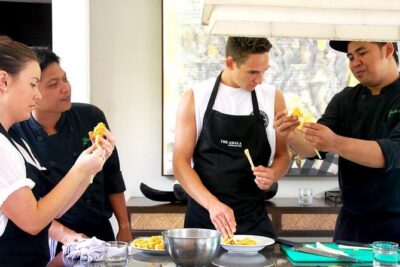 ★ 5.0Balinese Cooking Class in SeminyakFrom $66281 reviews
 ★ 5.0Anggrek Putih Lombok Cooking ClassFrom $30253 reviews
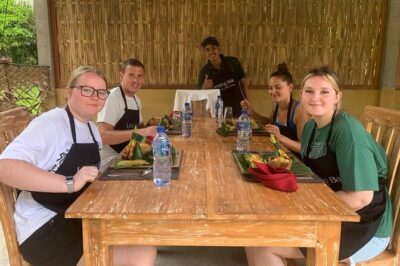 ★ 5.0Balinese Authentic Cooking Class in UbudFrom $39239 reviews
More Kuta tours like this one