
Review · HISTORICAL TOURS
Taste & Explore Bali: Denpasar Street Food & Historic Sites
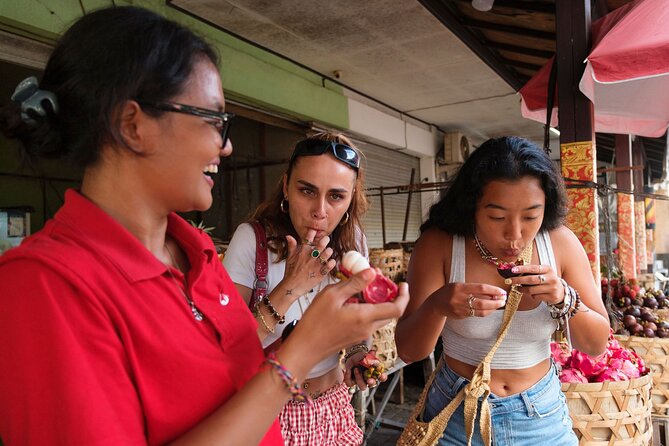
Street food in Denpasar comes with a story. This 3-hour walk pairs central Denpasar history with real night-market eating, starting at a sacred Hindu temple and ending with coffee in a heritage café area. You get a guided route through places locals use, not just a checklist of sights.
What I really like is the way the tour makes the food feel personal and local. You taste dishes that are part of daily life, plus you learn why some items, like Babi Guling, traditionally show up in ceremonial settings. I also love the small scale, with up to 12 people, which makes it easier to ask questions and get help ordering and choosing bites.
One thing to plan around: this is very authentic food, so vegetarian, vegan, and gluten allergy needs may not be accommodated, and kids under 6 are not permitted. If you are traveling with strict dietary requirements, this might be a tough fit.
Key highlights worth planning for
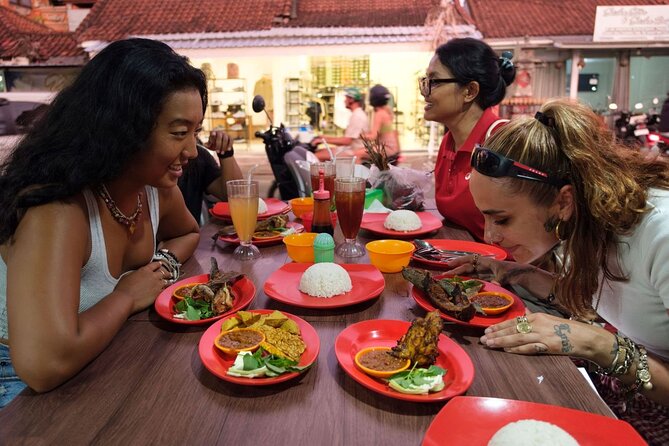
- Temple to market route: You start at Pura Agung Jagatnatha and finish with coffee, linking spirituality, history, and food in one loop.
- Babi Guling context: You’ll taste Bali’s roasted pork favorite, with the added cultural note that it is traditionally served for ceremonies.
- Classic Indonesian comfort food: Bakso meatball soup is on the list, so the menu mixes ceremonial and everyday flavors.
- Support goes to small stalls: The tour is designed to support 4 to 6 local food stalls and the vendors who sell food for a living.
- Local snacks like Jaje Bali: You sample colorful, traditional sweets and market bites at Badung Night Market.
- Coffee to close the night: You end with authentic Indonesian Arabica coffee, hot or iced.
Other Seminyak days people book alongside this one
- Bali Private Food Walking Tour With Locals: The 10 Tastings★ 5.0 · 243 reviews
- Bali Bites Food Tour with 15+ Tastings★ 5.0 · 114 reviews
- Taste & Explore Bali: Denpasar Street Food & Historic Sites★ 4.5 · 27 reviews
- Bali Must-Try Food Tour (Denpasar)★ 5.0 · 18 reviews
Denpasar after 4 pm: why this timing feels right
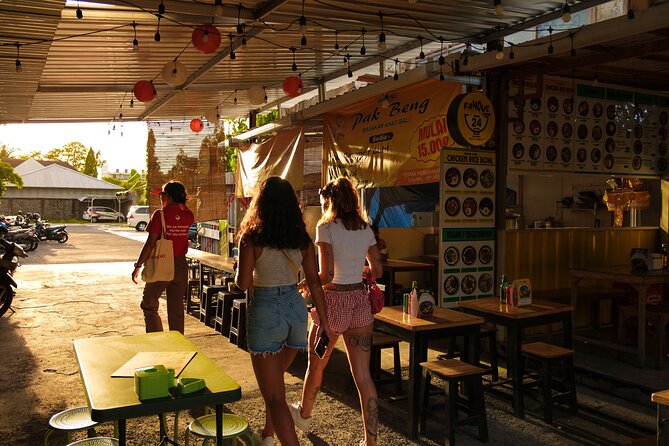
This tour starts at 4:00 pm, which is a smart time to visit Denpasar. Daylight makes the early history stops clear and easy to follow, then late afternoon turns into the kind of eating window where people are actually out and buying food.
The overall duration is about 3 hours, so you get a complete experience without losing your whole evening. And because it is a walking tour with short stops, you are not stuck watching long speeches or shuffling through huge museum halls. It feels more like a guided local evening out.
The other practical win is pacing. With limited time, the tour focuses on a short list of high-impact stops: one main temple, one history reflection area, one stretch of heritage streets with the core meal dishes, then a market segment and a coffee finish.
Pura Agung Jagatnatha: starting with sacred Denpasar
Your first stop is Pura Agung Jagatnatha, described as Bali’s central Hindu temple and a place full of local life. Admission is free, which helps make the early part of the experience feel accessible.
What you’re really getting here is a sense of how faith and daily routines overlap in Bali. A temple visit can be easy to treat as sightseeing, but starting the tour at Jagatnatha sets the tone that the food you’ll eat later is connected to culture, ritual, and community.
Even if you are not a temple expert, you can still read the atmosphere. Expect a peaceful, spiritual start, plus enough local activity around you that it feels lived-in rather than staged. This is also a good point to reset your mindset before you hit the markets, since the night-food portion is energetic.
Puputan Square and Patung Catur Muka: colonial-era landmarks with meaning
After the temple, the tour shifts to reflection at Puputan Square, including learning about Bali’s powerful resistance in 1906 against colonial rule. The square includes a symbolic 0 km landmark, which gives the area an “anchor point” feeling in the city.
Right after that, you’ll also pause at Patung Catur Muka and snap photos of a colonial-era setting plus Bali’s iconic four-faced god statue. The inclusion of colonial-era monuments helps you connect the city’s present layout to the historical layers behind it.
A helpful detail is that the tour mentions specific landmarks such as the Nederlandsch-Indië Sokkelklok and the Catur Muka monument. Even if you only catch fragments of the story, those names give you something concrete to remember later, like little labels for what you saw.
This is one of those parts where you might expect a simple photo stop. Instead, you get context that makes the later food tastes feel less random, because you’re learning how tradition and change coexist in Denpasar.
Jalan Gajah Mada: where the meal dishes turn the night into dinner
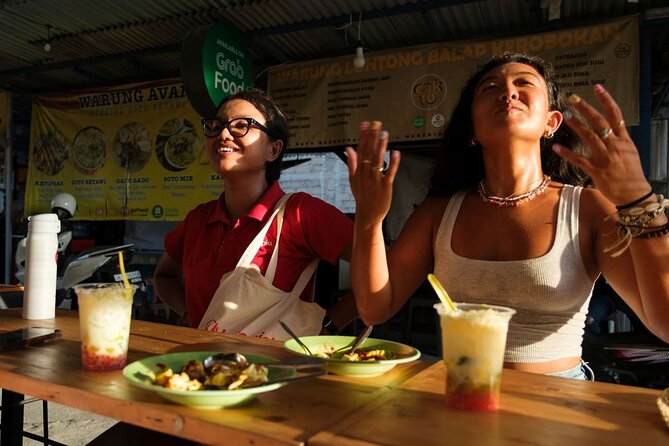
The heart of your eating is on Jalan Gajah Mada, with about 30 minutes here. The street is described as lined with heritage buildings and local shops, so it works as a transition from temple and monuments into real food time.
This is where you try Bali’s signature roasted pork dish, Babi Guling, plus Bakso meatball soup. The tour emphasizes Babi Guling as a dish that is traditionally served only at ceremonies, which is a big part of the value. You’re not just eating pork, you’re also learning why it holds a special place.
Babi Guling is typically cooked on a rotisserie, and the tour’s description points you toward the flavor packed, ceremony-style roast. For many first-time visitors, this dish is the moment the tour becomes memorable because it’s distinctively Balinese. Pork dishes across Indonesia can vary, but Babi Guling has its own identity.
Bakso is a comforting pairing: a familiar soup format with meatballs, so it balances the heavier richness you might expect from roasted pork. If you get full quickly, soup is also a practical choice, because it lets you slow down and savor without feeling like you have to power through.
One small consideration: the itinerary lists time at each area, and the meat dishes take some of that time. If you want extra time for photos on this street, you may need to keep your camera ready during the guided walk rather than planning a long solo photo break.
Other Seminyak days people book alongside this one

Badung Market: Jaje Bali snacks and local stall energy
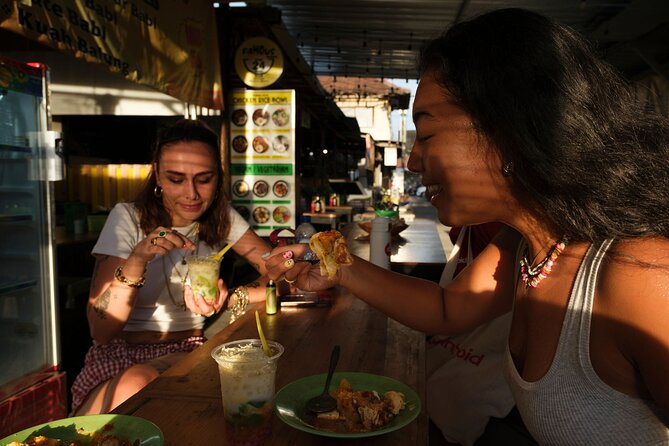
Next up is Badung Market Dempasar Bali, with another 30 minutes focused on street snacks and market vibes. The tour specifically highlights Badung Night Market as the place to try traditional Jaje Bali snacks.
Jaje Bali snacks are traditionally made with ingredients like rice flour and coconut, and they often come in colorful forms. Even without knowing the names ahead of time, this is the segment where you get to experiment, because snacks mean smaller portions and more chances to find a favorite.
You’ll also be surrounded by local vendors selling the food for a living. The tour’s emphasis on locally grown and locally bought ingredients matters here because it explains why the experience feels grounded. It is not “imported culinary entertainment.” It is urban Balinese food culture doing what it does every day.
A useful way to approach this part: let the guide steer the order and tasting logic. Markets can be overwhelming if you try to read everything at once, and your best move is to focus on what you are offered at the stalls the tour supports.
Also remember: the tour includes tasting, but it does not claim to cover every drink or extra snack you might want. If you have a sweet tooth, you might finish the included snacks and then decide you want more later. That is normal, just don’t assume everything beyond what’s listed is included.
NADHI Heritage coffee: ending with Indonesian Arabica, hot or iced
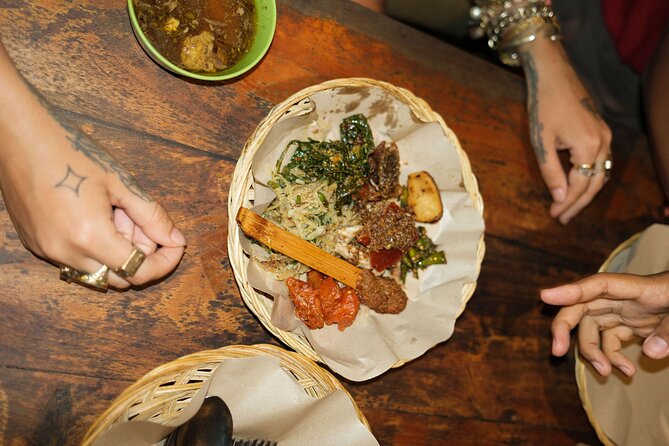
The tour wraps at NADHI heritage at Jl. Gajah Mada No.122, then gives you coffee time. You’ll have a cup of authentic Indonesian Arabica coffee, hot or iced, based on what you choose.
This ending matters more than it might sound. When you have been walking, tasting, and listening for a couple hours, you need a stopping point where you can breathe, sit down briefly, and let your food experience settle into something memorable.
Coffee also works as a sensory reset. You finish rich roasted flavors and savory soup, then move into something aromatic and familiar. It is a nice way to end a food tour that is heavy on meat and salt.
And since the tour mentions a heritage coffeeshop environment, it also keeps the “culture plus food” theme consistent, rather than turning the finish into a random pit stop.
Guides make it work: small group, real questions, better bites
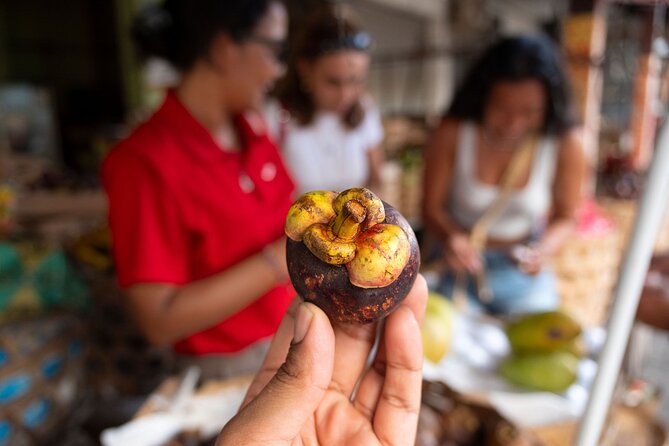
This experience is designed for up to 12 guests, which is a sweet spot. Big food tours can feel like you are sprinting from stall to stall while everyone else follows a script. Here, the group size makes the walk feel less chaotic and more conversational.
The guide experience comes through clearly in the feedback. Names you may hear include Putra, Lena, Srix, and Irfan. People appreciated that the guides were easy to talk to, offered clear guidance, and explained how to choose items like cakes and soups.
That advice matters at markets because you are not just picking food, you are picking your way through local taste logic. If you have never tried Jaje Bali snacks before, a little direction helps you avoid the two common mistakes: ordering something bland by accident, or skipping something you’ll regret later because it looked unfamiliar.
The tour also includes guide-led context around local customs as you move through the stops. You’ll likely find that the history and temple pieces stick better because the food has a cultural reason behind it.
What you eat and how much is included
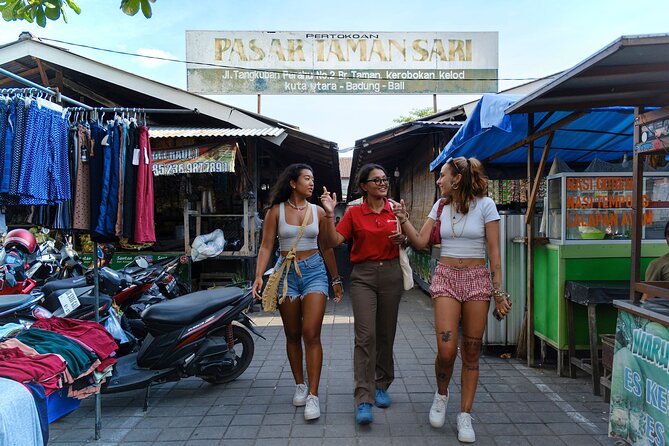
The food portion is built around a short but meaningful list, with included tastings rather than a full sit-down meal at one place. What you are guaranteed to try includes:
- Babi Guling and Bakso
- Traditional Jaje Bali snacks and street-food bites at the night market
- A cup of Indonesian Arabica coffee at NADHI Heritage
The tour also notes that it supports 4 to 6 local food stalls. So even though the tasting amounts vary by stall, the structure is meant to keep your money and attention spread across small vendors rather than concentrating everything at one restaurant.
What is not included is additional food and drinks, plus gratuities for your guide. That means you should bring a little extra cash or card space for anything beyond the tastings. It also means your included menu is not meant to fully replace dinner at a restaurant, more like a guided culinary sampling plus key dishes that define Denpasar street food.
Price and value: what $45 gets you in real terms
At $45.00 per person for roughly 3 hours, this tour is good value if you like two things: guided context and eating that feels local.
Here’s the value math in plain terms:
- You get a guided walking route across multiple points of interest.
- You get access to free-entry highlights like Pura Agung Jagatnatha and the nearby heritage areas (the tour lists admission ticket free for the temple stop).
- You get two signature food choices, Babi Guling and Bakso, plus market snacks and coffee.
If you tried to duplicate this on your own, you would likely spend more time figuring out where to go and what to order, especially for the ceremonial-style context behind Babi Guling. Paying for a guide is partly paying for local taste confidence.
Also, the small group size helps. With a larger group, the experience can feel rushed. Here, the limited capacity makes the tour more likely to deliver the kind of personalized attention the listing calls out.
Who should book this, and who should skip it
I think this tour is best for you if:
- You want street food that comes with cultural and historical framing.
- You enjoy guided walks and want a plan for where to eat in central Denpasar.
- You like tasting a mix of savory bites and sweet snacks, ending with coffee.
I would be more cautious if:
- You need vegetarian or vegan meals, or you have a gluten allergy or intolerance. The tour says it cannot cater for those needs.
- You are traveling with young children. Little ones under 6 are not permitted.
- You are hoping for a quiet, low-walking experience. This is described as a walking tour with multiple stops, so comfortable shoes matter.
Finally, consider the fact that Babi Guling is a pork dish. If you avoid pork, this likely becomes a mismatch, because it is one of the central included items.
Should you book Taste & Explore Bali in Denpasar?
If your ideal Bali evening is equal parts history, street food, and local guidance, I’d say this is worth booking. The combination of a sacred start at Pura Agung Jagatnatha, reflection at Puputan Square, then core tasting on Jalan Gajah Mada, market snacks at Badung, and coffee at NADHI heritage gives you a complete arc in one compact timeline.
It also feels like a practical way to spend your first evening in the area, because you cover a lot of ground without it turning into a marathon. And with the small group size, you’ll likely get more back-and-forth than on bigger tours.
Just be honest with your needs. If your dietary restrictions are strict, or if pork is a no-go, this tour will be frustrating instead of fun. But if you can enjoy the local classics, you’ll walk away with the kind of food memory that sticks, because you also learned why the dishes matter.
FAQ
What is the duration of the tour?
The tour runs for approximately 3 hours.
What time does the tour start?
The start time is 4:00 pm.
How many people are in the group?
The tour has a maximum of 12 guests, with a small-group format (or private option is mentioned).
What food is included?
You’ll taste Babi Guling and Bakso, plus traditional Jaje Bali snacks and street food at Badung Night Market, and you’ll have a cup of Indonesian Arabica coffee.
Does the tour accommodate vegetarian, vegan, or gluten allergy needs?
The tour says it does its best, but it cannot cater for vegetarian, vegan diets or gluten allergies/intolerances.
Are children allowed?
The tour is best suited for adults and older children, and children under 6 are not permitted.
Where does the tour meet and end?
It starts at Agung Jagatnatha Temple, Jl. Surapati No.7, Dangin Puri, Kec. Denpasar Tim., Kota Denpasar, Bali 80232. It ends at NADHI Heritage at Jl. Gajah Mada No.122, Pemecutan, Kec. Denpasar Bar., Kota Denpasar, Bali 80231 (Nadhi Heritage, at Jl. Gajah Mada No.122).
Is free cancellation available?
Yes. You can cancel for a full refund up to 24 hours in advance.
The Older Story
- Bali Unesco World Heritage Sites Tour (Private & All-Inclusive)
★ 5.0 · 91 reviews - Exquisite UNESCO World Heritage Sites in Bali
★ 5.0 · 9 reviews
Eat Your Way Through Seminyak
- Bali Private Food Walking Tour With Locals: The 10 Tastings
★ 5.0 · 243 reviews - Bali Bites Food Tour with 15+ Tastings
★ 5.0 · 114 reviews - Small-Group Denpasar Night Food Tour
★ 4.0 · 22 reviews - Bali Must-Try Food Tour (Denpasar)
★ 5.0 · 18 reviews
More Tour Reviews in Seminyak
- Bali Full-Day Traditional Village Sightseeing Trip All Inclusive
★ 5.0 · 3,069 reviews - Experts Bali Driver : Best Bali Private Driver for Tour in Bali
★ 5.0 · 1,339 reviews - Bali Hai Sunset Dinner Cruise
★ 5.0 · 1,173 reviews - Mount Batur Sunrise Trekking
★ 5.0 · 947 reviews
Fresh on the Seminyak pages




Historical Tours, compared.
 ★ 5.0Crafting Heritage Batik Painting WorkshopsFrom $29164 reviews
 ★ 5.0Bali Unesco World Heritage Sites Tour (Private & All-Inclusive)From $11791 reviews
Ulun Danu Beratan Temple – Tanah Lot Temple Tour by UNESCO World HeritageFrom $2274 reviews
★ 5.0Bali Unesco World Heritage Sites Tour (Private & All-Inclusive)From $11791 reviews
Ulun Danu Beratan Temple – Tanah Lot Temple Tour by UNESCO World HeritageFrom $2274 reviews
 ★ 5.0Private Tour: Bali UNESCO World Heritage SitesFrom $6562 reviews
 ★ 5.0Mataram Lombok Historical City tourFrom $4937 reviews
 ★ 5.0BALI ATV Kuber Through Historic Tunnel and Scenic WaterfallsFrom $3334 reviews
 ★ 4.5Royal Karangasem Heritage TourFrom $6929 reviews
 ★ 4.5Tanah Lot & UNESCO Heritage Small Group TourFrom $2021 reviews
More Kuta tours like this one