
Review · WORKSHOPS
Surfing Group Lesson Level 1 Beach Surfer
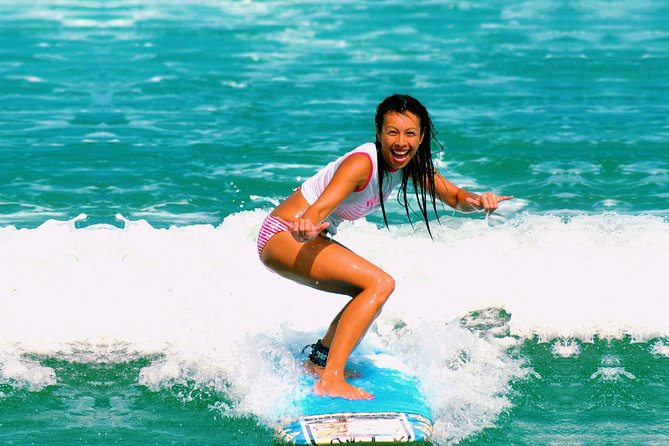
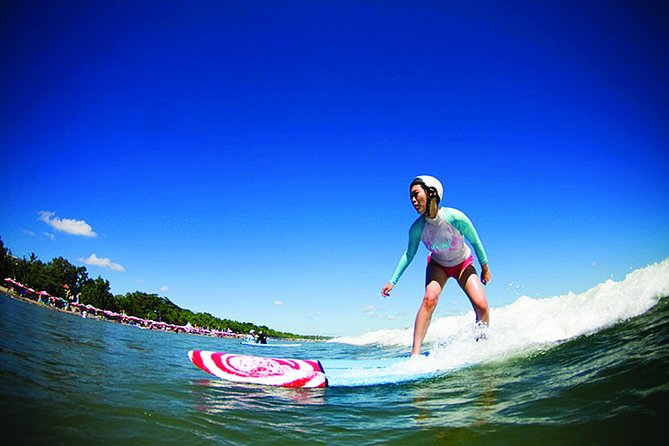
Your first wave can start with real structure. This Level 1 Beach Surfer course at Legian’s Double Six Beach turns total beginners into confident paddlers with five, 2-hour sessions run by a pro surf team at Rip Curl School of Surf. What makes it feel different from casual lessons is the small 5:1 student-to-instructor setup plus ocean-safety coaching baked into the syllabus.
I also love how much the course covers for you. You get the full surf package including board, leg rope, helmet, rash guard and leggings, plus zinc, towel, changing rooms, showers, and even sealed drinking water. On top of that, there’s $1 million USD liability insurance and a study book you can use during your program.
One thing to consider: you may need an early start, and wave conditions can be big depending on tides, wind, and the day’s schedule. It’s still Level 1, but this is real ocean time, so come with a moderate fitness level and expect to learn fast.
Key things that make this course work
- 5:1 coaching ratio so you get more turns at the board and less waiting
- All equipment included, from board and leg rope to rash guard, zinc, and showers
- Five 2-hour lessons across five days, mixing theory, practice, and practical sessions
- Multiple daily lesson slots at 8 am, 10 am, 1 pm, and 3 pm, with timing set one day ahead
- Door-to-door transfers from many South Bali areas so you can focus on surfing
Other things to make with your hands
- HOT PROMO. Beginner Surf Lessons in Bali★ 5.0 · 193 reviews
- Surf Lesson with a Personal Instructor at Kuta Beach★ 4.5 · 192 reviews
- Chef Bagus Balinese Indonesian Food Cooking Class★ 5.0 · 89 reviews
- Kuta Bali Silver Jewelry Making Class Near Kuta Beach★ 5.0 · 57 reviews
Double Six Beach for Level 1, and why small-group coaching matters
Legian’s Double Six Beach is a well-known surf zone, which means you’re learning where other surfers already test their legs. For a beginner course, that matters. Better conditions and a surf-forward setup help you spend more time learning and less time figuring out logistics on your own.
The biggest “value lever” here is the small group size, capped at five students per coach or assistant. That ratio changes everything. When you’re on the beach, instructors can watch your stance, notice when you’re dragging your feet, and correct your timing before you pick up bad habits. With a crowd, you often get general feedback. With a tight group, feedback becomes immediate and specific.
This program also leans into ocean safety, not just popping up. You get the fundamentals that let you read what’s happening out there, and that’s a huge difference if you want to keep surfing after your first week. In other words, you’re not only learning how to ride a wave. You’re learning how to be a safer surfer in real conditions.
Five days of 2-hour sessions: what your days actually look like
The course runs for five days, with a 2-hour lesson every day. Lessons are scheduled daily at 8 am, 10 am, 1 pm, and 3 pm, depending on the day’s wave and wind conditions. You won’t be guessing either. The exact schedule is confirmed one day in advance.
Here’s what that usually means in practice. Your day has a “lesson block,” then you’re back to shore work: rinsing off, taking a breather, and absorbing what you learned. The course format is theory, practice, and practical, so you’re not stuck doing one thing the whole time. You’ll get instruction, then you’ll apply it right away.
Between sessions, the vibe matters. The on-site facilities include private changing rooms, personal lockers, and fresh water showers with soap and shampoo. That’s not just comfort. It’s how you keep energy up for a second or third run, especially in Bali’s heat.
One extra detail I like: Rip Curl School of Surf photographers take photos during the lessons, and those are available for purchase after the program. Even if you don’t buy them, it signals the school is set up for proper instruction, not casual drop-off learning.
The equipment list is the real starter kit
Some surf lessons tell you gear is included, then you show up with a bare board and a borrowed life jacket. This course is more “ready to go.” You’re provided with surfing equipment that includes the surf board plus a leg rope and a gath surf helmet. You also get protective and comfort wear like a Rip Curl rash guard and leggings.
You’ll also receive imported zinc, which is key in the sun intensity around Kuta and Legian. Lip service about sunscreen is common in tours. This one actually builds it into the course. You bring less with you and get less wiggle room for excuses.
Comfort details add up too. You get a towel, plus sealed drinking water throughout the course. There’s even fresh fruit after the lesson, and the overview notes tea, coffee, and fruit as part of the experience. After a wet, sandy, sun-baked session, that kind of recovery snack is practical.
The facility setup helps you reset quickly. Off-street parking, changing rooms, locker space, and towel use make it easier for you to focus on surfing rather than tracking your stuff. If you’re learning with a friend or partner, you’ll also appreciate that the school is close to restaurants where they can wait nearby if needed.
Picking up speed: turning, wave basics, and ocean safety
This is a beginner course, but it’s not “sit and watch” training. The whole promise is to go from zero to confident control through repetition plus coaching.
From the syllabus structure, you should expect:
- Theory that explains what you’re doing, not just what to copy
- Practice time to work technique in small steps
- Practical time where you apply it in the surf
Early on, instructors usually focus on fundamentals like paddling timing and how to position your body before you try to stand. Then comes turning, which is where beginners often get stuck after their first successful pop-up. The course explicitly targets turning and turning control, not only catching a first wave.
Ocean safety is a core part of the program. That means you’re not only learning how to chase waves, but how to make smart choices in a lineup. For your future surf sessions, that’s one of the most important takeaways. It’s also where instructors earn trust fast.
The feedback you’ll see tends to highlight safety and welcome. Names like Budi and Gung come up in instructor praise, and that tells you something practical: these are the kinds of teachers who stay patient while you figure things out. When you’re brand-new, patience is not a nice-to-have. It’s the difference between learning and quitting.

Transfers around South Bali, and why timing matters
The course includes door-to-door round-trip transfers from a long list of South Bali areas: Legian, Seminyak, Oberoi, Canggu, Kuta, Jimbaran, Uluwatu, Nusa Dua, and Sanur area. That is a big value point if you’re staying outside the center of things and don’t want to figure out taxi math for five separate mornings or afternoons.
The meeting point listed starts at Rip Curl School of Surf, with the specific start address at Hotel Prama Sanur Beach, Jl. Cemara, Sanur Kauh. The activity ends back at the meeting point.
In plain terms, this is the sort of tour where your biggest time risk is lesson timing. Since lessons run at multiple times during the day and the final schedule is set one day ahead, build flexibility into your Bali calendar. The ocean controls the lesson plan more than your hotel wake-up alarm does.
A useful tip: plan to be ready early. Even if your transfer arrives close to the start time, you’ll still want time for changing, sunscreen, and a calm warm-up before you head down to the sand.
Who should book, and who should think twice
This course fits best if you are:
- A total beginner or still very new to surfing
- Looking for structured learning with theory and technique practice
- Someone who wants small-group coaching rather than feeling lost in a bigger class
- Comfortable doing moderate physical activity, like paddling, getting up repeatedly, and carrying your gear
If you’re comfortable with the basics of physical effort but not yet athletic, Level 1 is still the right place to start. The course is built for that early learning stage, and it includes equipment and staff support to keep you progressing.
If you have any mobility concerns, you’ll want to consider the physical requirements of paddling and repeatedly getting on the board in water. The course notes a moderate fitness level expectation. Also, since wave conditions can vary by tide and wind, some days can feel more intense than others, even within Level 1.
If you’re traveling with teens or a small group, this kind of setup is also a good match. The course caps the experience at a small number of students per coach, and the school environment is set up for safe learning and repeat attempts.
Price and value: is $155 fair for five days?
At about $155 for five days of lessons, this is in the “serious beginner training” range rather than a casual sampler. Here’s why it can be good value.
You’re getting:
- Five lessons at two hours each (about ten hours of instruction time)
- A 5:1 student-to-instructor ratio
- Full equipment, including rash guard, zinc, and helmet
- Showers, changing rooms, towel, and storage
- Sealed drinking water and fresh fruit after lessons
- A study book for learning between sessions
- Door-to-door transfers from many South Bali locations
- $1 million USD liability insurance
For many people, the transfer and equipment pieces are the hidden costs. If you were to add a surfboard rental, a sunscreen and rash guard setup, plus taxis for five sessions, the price starts to look more reasonable. On top of that, small-group coaching is harder to “buy later.” You either get it during the early learning stage, or you spend months struggling with technique that could have been corrected sooner.
Is it perfect value? The only limitation is that you might still need to bring a swimsuit and plan for early lesson times. Also, the course requires good weather, so if the sea changes plans, rescheduling may happen. But weather-based changes are normal in surfing.
Your best game plan before you go
Since the course provides a lot of gear, your prep is mostly about comfort and mindset.
Bring:
- Your swimsuit (bikini or board shorts), since it’s not included
- Any personal items you like for sun and comfort beyond the provided zinc
Expect:
- Early mornings sometimes, because the best conditions often fall earlier in the day
- Scheduling that depends on tides, wave size, and wind, with course efforts to match your lesson accordingly
- Real ocean learning, meaning your progress will come from repetition
You’ll also enjoy the week more if you treat it like skill practice. Don’t judge yourself after one failed wave. The course is built around multiple attempts and corrections over five days.
A final practical tip: take your study book seriously during the week. The soft copies are available online, but using the on-hand materials can help you remember what you were taught between sessions.
Should you book Rip Curl School of Surf’s Level 1 Beach Surfer course?
If you want a beginner surf program that takes safety seriously and gives you real coaching attention, I’d say yes. The small 5:1 ratio, the included gear and zinc, and the fact that you get five structured 2-hour lessons across five days make this a smart choice for first-timers.
Book it if:
- You’re new to surfing and want immediate feedback while you learn
- You’d rather be picked up and dropped off than plan transport daily
- You like the idea of clean facilities, showers, and lockers after wet sessions
- You want ocean-safety training, not just standing up once
Think twice if:
- You can’t do early starts or unpredictable timing due to tide and wind
- You prefer ultra-flexible schedules with no daily rhythm
- You’re not comfortable with moderate physical effort in the surf
If you’re ready to learn the basics properly, this course is the kind of start that sets you up for future sessions, not just a one-day story.
FAQ
How many lessons are included?
You get five surf lessons, each lasting about 2 hours, across five days.
What group size should I expect?
The course runs with a regular 5:1 ratio of student to instructor or assistant, with no more than five students per coach.
What surf gear is included?
Included gear covers a surf board, leg rope, and a gath surf helmet. You also get a Rip Curl rash guard and leggings, plus imported zinc, towel use, showers, and lockers/changing room access.
Do I need to bring a swimsuit?
Yes. Your swimsuit (bikini or board shorts) is not included.
Where does pickup and drop-off work?
Pickup and transfer back are offered from South Bali areas including Legian, Seminyak, Oberoi, Canggu, Kuta, Jimbaran, Uluwatu, Nusa Dua, and the Sanur area. The activity also lists Hotel Prama Sanur Beach as the start and end meeting point.
What times are lessons scheduled?
Daily lesson times are scheduled at 8 am, 10 am, 1 pm, and 3 pm, depending on conditions. Your exact schedule is confirmed one day in advance.
Is food included?
Food is not included, but the overview notes tea, coffee, and fruit as part of the experience. Fresh fruit is included after the lesson.
Are photos taken during the course?
Yes. Rip Curl School of Surf photographers take photos during the lessons, and the photos are for sale after you complete the program.
What happens if weather is bad or I need to cancel?
The experience requires good weather. If it’s canceled due to poor weather, you’ll be offered a different date or a full refund. For cancellations, you can cancel for a full refund up to 24 hours in advance. Cancellation less than 24 hours before the start time is not refunded.
Make Something to Take Home
- HOT PROMO. Beginner Surf Lessons in Bali
★ 5.0 · 193 reviews - Surf Lesson with a Personal Instructor at Kuta Beach
★ 4.5 · 192 reviews - The best surf lessons in Kuta
★ 5.0 · 144 reviews - Chef Bagus Balinese Indonesian Food Cooking Class
★ 5.0 · 89 reviews
More Tour Reviews in Kuta
- Nusa Penida day trip: boat, 4 snorkeling, Manta rays & Land tour
★ 5.0 · 2,033 reviews - Bali Nusa Penida West Private All-Inclusive Tour
★ 5.0 · 1,277 reviews - Mount Batur Sunrise Trekking Private Tour with Breakfast and Hotel Transfer
★ 5.0 · 885 reviews - Individual Bali Day Trip with Private Driver and Free WiFi
★ 5.0 · 755 reviews
Fresh on the Kuta pages





Workshops, compared.
 ★ 5.0Ubud Cooking Class Bali with Balinese ChefFrom $351,609 reviews
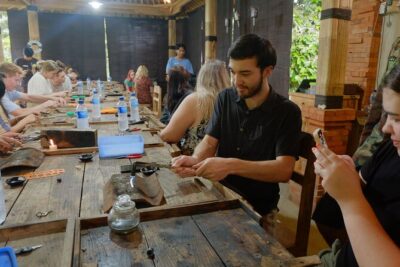 ★ 5.0Ubud Silver Class Jewelry making in baliFrom $36978 reviews
 ★ 5.0PRIVATE Authentic Balinese Cooking Class in Ubud at Putu’s HomeFrom $75644 reviews
 ★ 5.0Balinese Farm Cooking Class by Pemulan BaliFrom $39410 reviews
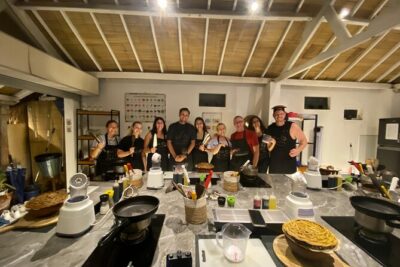 ★ 5.0Learn to cook Indonesian food at Gili Cooking Classes TrawanganFrom $33352 reviews
 ★ 5.0Balinese Cooking Class in SeminyakFrom $66281 reviews
Ubud Monkey Forest Silver Class – Craft Your Own Silver JewelryFrom $41254 reviews
★ 5.0Balinese Cooking Class in SeminyakFrom $66281 reviews
Ubud Monkey Forest Silver Class – Craft Your Own Silver JewelryFrom $41254 reviews
 ★ 5.0Anggrek Putih Lombok Cooking ClassFrom $30253 reviews
More Kuta tours like this one