
Review · BALINESE COOKING CLASSES FROM KUTA
Exclusive Authentic Balinese Cooking Class at Family home
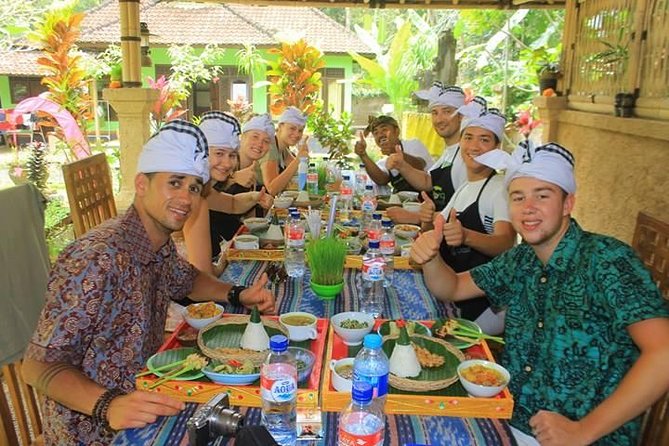
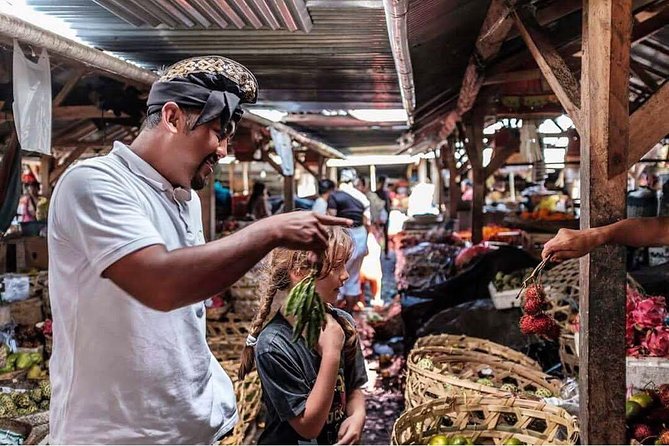
Cooking in a real Balinese home beats tours. I love how the class starts at the Payangan market and then moves into a family compound so you learn ingredients first, and then use traditional hands-on cooking techniques to turn them into a real meal.
I also love that you do the work yourself. You chop, pound, pestle, grill, and finish the feast at your own station, then you go home with a recipes book and a culinary workshop certificate. The only real consideration is that it depends on good weather, so plan to be flexible.
Key things to know before you go
- Payangan Market, then straight to the kitchen: you see the ingredients before you cook them
- Open kitchen inside a family compound: this is a home-based setup, not a showroom
- Stone mortar and wooden chopping block: you practice the paste and sauce prep that defines Balinese flavor
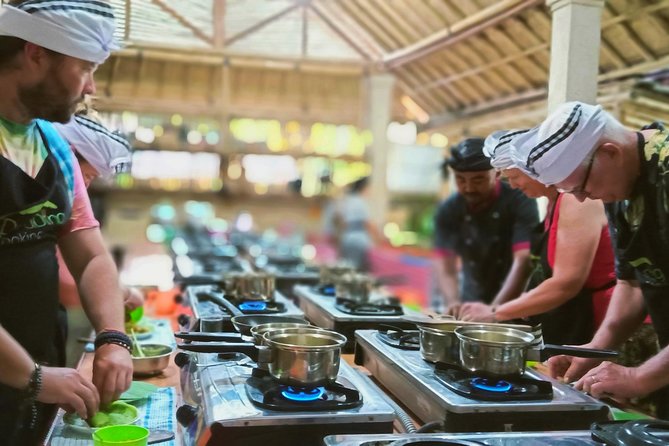
- You cook from start to finish: chopping, grilling, and feasting are all hands-on
- Vegetarian options are built in: you can request vegetarian tofu-based or plant-forward versions
- Made for small groups up to 12: private experience, with tools and ingredients provided for each person
More kitchens that start at the market
- Ubud Cooking Class Bali with Balinese Chef★ 5.0 · 1,609 reviews
- PRIVATE Authentic Balinese Cooking Class in Ubud at Putu’s Home★ 5.0 · 644 reviews
- Balinese Ubud cooking school (9 Dish Cooking and Market Tour)★ 5.0 · 540 reviews
- Balinese Farm Cooking Class by Pemulan Bali★ 5.0 · 410 reviews
A family-home Balinese cooking class near Ubud
This is the kind of cooking class that feels like learning from real life. In Ubud, a lot of experiences are staged, but this one is built around a Balinese compound house and an open kitchen where you cook alongside the family’s rhythm of daily food prep.
The value is in the sequence. You do not just show up, wear an apron, and watch someone else move fast. You start at Payangan Market, come back, get welcomed with Bali coffee or tea plus Balinese cake, then spend hours doing prep the old way and eating what you make.
For reference, the class runs about 6 hours and is priced at $75. In that time you get market time, transport, snacks, tools, ingredients, and a meal you cook yourself, plus a recipes book and a culinary workshop certificate. It is a lot to pack into one outing, and it is also a good way to spend time in Ubud beyond another waterfall line.
Payangan Market: where the flavors start (and why it matters)
The first stop is Payangan Market, and it is a smart move. Balinese cooking depends on specific spice blends, fresh vegetables, and ingredients that taste different when you understand where they come from.
At the market, you will spend time with local produce and food staples that you will later turn into dishes. You also get a sense for how spices and vegetables are chosen, which helps the class make more sense when you are standing at your station later.
There is also a practical upside. Market time sets your pace for the kitchen session. By the time you begin cooking, you are not learning names and ingredients in theory. You already saw them, so your chopping and paste-making feels connected to something real.
If you are picky about food, the market step also helps you notice what you can and cannot substitute. And if you asked for vegetarian versions, you will have a clearer picture of how the chef expects you to swap ingredients like meat for tofu or plant-forward options.
Morning lunch vs afternoon dinner: pick your vibe
This class runs in two formats. The morning class pairs the traditional morning market with lunch, and the afternoon class pairs a night market visit with dinner.
That choice matters more than it sounds.
- If you go morning, you usually get a calmer start and lunch built around dishes you cooked yourself, with a less rushed feel for the whole day.
- If you go afternoon, you still get the same hands-on cooking focus, but the market energy is different, since it is a night market.
Either way, the meal is part of the learning. The dishes you make are not a side task. They are the point, and you finish by eating what you cooked.
The Balinese compound house open kitchen setup
After the market, you head to the family compound. This is one of the most praised parts of the experience, because it is not locked behind a glass wall.
You start with a warm welcome, Bali coffee or tea and Balinese cake, then you get introduced to the compound and the home environment around the kitchen. The kitchen itself is an open-air traditional setup, which means you can feel the temperature and the air movement while you cook.
What I like about this setup is that it keeps the class grounded. You see cooking happen in the spaces where it would happen anyway, with the family home context doing real work in the experience, not just decoration.
In reviews tied to this class, people also mention small family details during the compound tour, like honey kept from native bees and even rescued animals. You should not count on a specific pet or animal being present on your day, but it gives you an idea of the personal, home-based atmosphere you are walking into.
Other things to make with your hands
Hands-on cooking, not a demo show
This is hands-on from the start. You will be taught to process food using traditional utensils and techniques, and the class is designed so that you do the prep work and cooking.
That means you should expect:
- chopping and prepping ingredients
- pounding and pestling spices
- making paste and sauces
- cooking dishes and then eating the results
The best part is the paste work. Balinese cuisine leans heavily on spice pastes and sauce bases, and the class specifically teaches two preparation styles:
1) chopping spices on a wooden chopping block
2) grounding spices in a stone mortar before cooking
You learn this because it is not just about flavor. It is about texture and timing. The moment your paste hits heat can change how it tastes, and if you understand the process, you can recreate at home with fewer guesses.
The pace is also very human. You can ask questions while you work, and the chef guidance is there to keep you on track, not to take over your station. Some class moments feel like tutoring, not entertainment.
What you cook: the Balinese dishes you’ll make
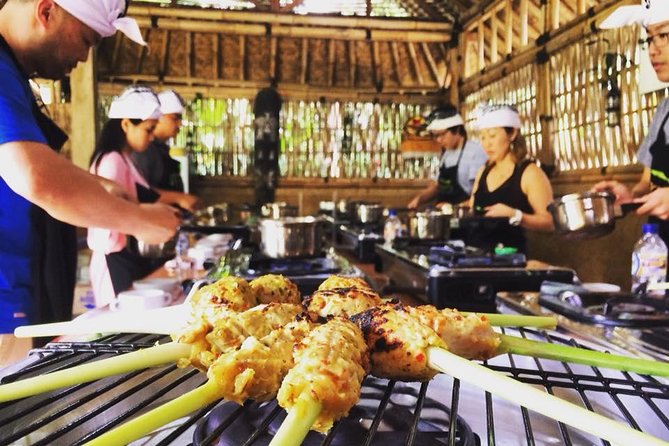
The menu includes multiple dishes, with options that can be vegetarian or adapted using tofu. Exact menus can vary by schedule, but the class offers examples like these:
- Jukut Urab (V)
- Sate Lilit Ayam (V/TOFU)
- Calon Be Siap with Chayote Soup (V/TOFU)
- Tahu Mesanten (V)
- Dadar Gulung (V) ala kdongding
A few notes that help you plan your expectations. The dishes cover a mix of savory mains, sauce-based flavors, and a sweet ending. If you think you will only cook one thing, you will likely be surprised by the number of courses in the session. You should also expect the vegetarian versions to be real food, not a last-minute swap.
If you have allergies or dietary restrictions, message in advance. The class asks you to share specific requirements at booking time so they can prepare appropriately.
Vegetarian options: how to make sure you get what you want
Vegetarian is available, and the class tells you to let them know in advance so they can prepare. The dish list explicitly includes multiple vegetarian items and also offers tofu-based options where meat is usually involved.
My practical advice: when you book, be specific about what vegetarian means for you. The class provides vegetarian applicable options, but you will get the best results if you clearly state your preferences and any allergies.
Also, do not wait until you arrive to explain needs. This is a cooking class where prep happens early. The earlier you communicate, the smoother your station setup will feel.
Coffee, snacks, and the meal you finish
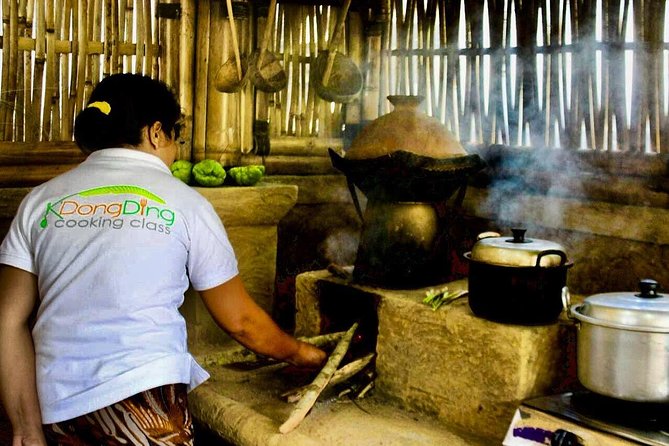
This class does not just start with coffee and cake. It also includes snacks during the session, and you get water access during the class.
One small but thoughtful instruction: the class asks you to bring your own bottle water to reduce single-use plastic, while they allow you to refill your bottle for free during the session.
For me, the meal part is the biggest payoff. You cook, you eat, and you understand what you just made. That is the difference between a souvenir photo and a skill you can use later.
Price and value in Ubud: why $75 can make sense
At $75 for an about 6-hour private cooking class near Ubud, the price is easier to justify than many short classes. You are not paying only for cooking instruction. You are paying for the full arc:
- market visit
- family compound and kitchen time
- teaching from a certified local cook
- cooking tools, kitchen set tools, and ingredients
- lunch or dinner, depending on morning or afternoon
- snacks and coffee or tea
- recipes book and culinary workshop certificate
- air-conditioned vehicle and free pickup within Ubud and Payangan area
The class also caps groups at 12 people, with a strong focus on each participant having their own station. Smaller groups usually mean better hands-on attention, especially with paste and sauce prep.
Transport matters too. The class offers free pickup and drop-off in the Ubud area, but there is extra cost if you stay outside Ubud and Payangan. If your hotel is in Sanur, there is an additional fee per booking, and if you are in Kuta, Seminyak, Legian, Nusa Dua, or Jimbaran area hotels, the additional return transfer fee is higher.
If you are traveling as a group, check vehicle capacity. The car can fit up to 6 passengers, so if your party is larger than that, extra costs apply for guests seven to twelve.
Group size and what private really means here
This is a private tour or activity. Your group cooks together, and the class limits participants to a maximum of 12.
For most people, that is the sweet spot. You get the energy of a group cooking experience, without it turning into a factory where you are just waiting your turn. And since you each have your own station and ingredients, you can actually practice the techniques rather than standing around.
Minimum age is 12, and children must be accompanied by an adult. If anyone in your group is under 12, you may not be able to join.
Who should book this class
I recommend this class if you want more than a Ubud activity. It is a great fit for people who:
- love cooking or want a real cooking skill, not just a meal
- want to understand Balinese spice paste techniques
- enjoy market wandering that actually connects to what you eat
- prefer a family-run feel over a staged studio
It is also a strong choice if you care about vegetarian food options that are built into the plan, not tacked on.
If you hate hands-on work, or you want purely sightseeing time, this might feel too active. But if you are willing to get your hands on real ingredients, you will probably have one of the more satisfying days on your trip.
Quick checklist before you go
- Decide morning or afternoon based on whether you want lunch or dinner.
- Tell them you are vegetarian or share allergies at booking time.
- Expect stone mortar and wooden chopping block spice work, plan to learn textures and timing.
- Bring a water bottle you can refill on site.
- Wear clothes you are okay getting splashed with kitchen ingredients.
Should you book Nipala cooking class by Kedongding?
Book it if you want an actual food lesson in Balinese cooking, tied to a market visit and a family home kitchen. The hands-on focus, the traditional spice preparation, and the fact that you eat what you cook make it a high value use of a day in Ubud.
I would not prioritize it if you are mainly chasing big scenic tours and you do not want to spend hours chopping, pounding, and cooking. Also, keep your schedule flexible because the experience depends on good weather.
If you want a day that gives you both culture and a practical takeaway you can recreate, this is the kind of class that delivers.
Make Something to Take Home
- Ubud Cooking Class Bali with Balinese Chef
★ 5.0 · 1,609 reviews - Ubud Silver Class Jewelry making in bali
★ 5.0 · 978 reviews - PRIVATE Authentic Balinese Cooking Class in Ubud at Putu’s Home
★ 5.0 · 644 reviews - Balinese Farm Cooking Class by Pemulan Bali
★ 5.0 · 410 reviews
More Tour Reviews in Ubud
- All-Inclusive Ubud Private Tour
★ 5.0 · 14,344 reviews - Best of Ubud Full-Day Tour with Jungle Swing
★ 5.0 · 8,571 reviews - Ubud: Monkey Forest, Jungle Swing, Rice Terrace, and Water Temple
★ 5.0 · 7,160 reviews - Best of Ubud 1-Day Private Tour
★ 5.0 · 4,451 reviews
Cook Another Balinese Lunch
- Ubud Cooking Class Bali with Balinese Chef
★ 5.0 · 1,609 reviews - PRIVATE Authentic Balinese Cooking Class in Ubud at Putu’s Home
★ 5.0 · 644 reviews - Balinese Ubud cooking school (9 Dish Cooking and Market Tour)
★ 5.0 · 540 reviews - Balinese Farm Cooking Class by Pemulan Bali
★ 5.0 · 410 reviews
Fresh on the Ubud pages




Balinese Cooking Classes from Kuta, compared.
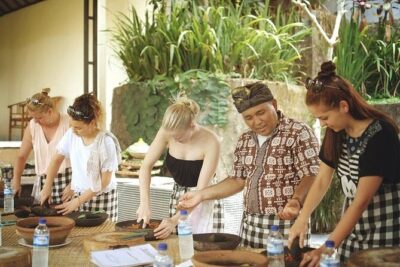 ★ 5.0Ubud Cooking Class Bali with Balinese ChefFrom $351,609 reviews
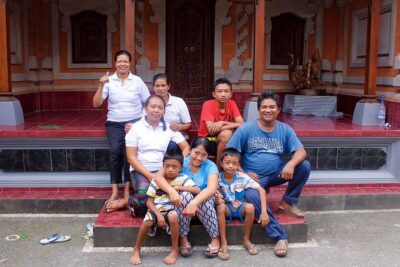 ★ 5.0PRIVATE Authentic Balinese Cooking Class in Ubud at Putu’s HomeFrom $75644 reviews
 ★ 5.0Balinese Ubud cooking school (9 Dish Cooking and Market Tour)From $58540 reviews
 ★ 5.0Balinese Farm Cooking Class by Pemulan BaliFrom $39410 reviews
 ★ 5.0Learn to cook Indonesian food at Gili Cooking Classes TrawanganFrom $33352 reviews
 ★ 5.0Balinese Cooking Class in SeminyakFrom $66281 reviews
 ★ 5.0Anggrek Putih Lombok Cooking ClassFrom $30253 reviews
 ★ 5.0Balinese Authentic Cooking Class in UbudFrom $39239 reviews
More Kuta tours like this one