

Review · BALINESE COOKING CLASSES FROM KUTA
Authentic Balinese Cooking Classes
A good Balinese cooking class should teach more than recipes. This one mixes market bargaining with hands-on cooking you do yourself, so you leave knowing how the flavors get built. I like that the class is set up as small-group and English-led, with lots of attention while you shop, chop, grind, cook, and eat.
The possible catch is timing. If you book the early slot, keep your expectations flexible because pickup can run late, and markets can vary by morning hours and freshness.
You can pick a start time, morning through afternoon (within the stated hours), and the experience includes round-trip transfers from much of south Bali and Ubud. Just plan for a bit of drive time, because the cooking location is in Bakas (Klungkung), not right in your hotel zone.
Key things I’d watch for before you book

- Small group size (maximum 10) means you are not stuck waiting for the chef
- English instruction with your own station and utensils while you cook
- Morning market tour is included for morning bookings, where you learn selection and bargaining
- Round-trip transfers cover many major areas (Ubud, Seminyak, Jimbaran, and more)
- Signature dishes like satay, nasi goreng, and black rice pudding are part of the menu
Other ways to spend a day out of Jimbaran:
- Private Uluwatu Temple and Kecak Fire Dance Evening Tour in Jimbaran Bay★ 5.0 · 1,199 reviews
- Uluwatu Temple Entry and Kecak Fire Dance Ticket★ 5.0 · 479 reviews
- Kecak and Fire Dance Ticket at Uluwatu Temple★ 4.0 · 222 reviews
- Bali Instagram Tour: The Most Popular Spots ( Private All-Inclusive )★ 5.0 · 162 reviews
Cooking at Bakas in Klungkung: views, tools, and a true classroom feel
The cooking takes place around Bakas in Klungkung, and the whole day feels like a local cooking rhythm instead of a show. If you’re lucky with where you’re seated, the setting can include countryside views, including rice fields and even rainforest views that make the work break feel like a mini pause in the middle of your meal.
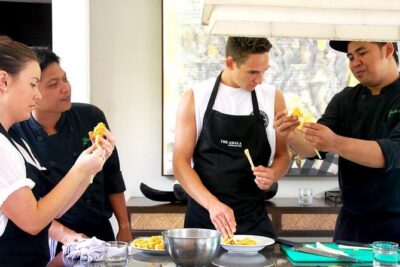
What I like is the structure. You’re not just watching someone else cook. You get a station and utensils and you prepare and cook the dishes yourself, with the chef guiding you and correcting technique as you go. That matters in Bali, because a “spice recipe” is not really a list, it’s a method, from what you choose at the market to how you grind aromatics.
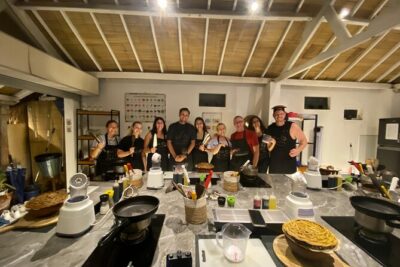
You’re also getting the class in English, and the vibe is described as fun and hands-on. With a maximum of 10 participants, the chef can actually answer your questions instead of saving advice for the end.
Price and value: what $65 buys when transfers are included

At around $65 for about six hours, this is one of those deals that feels fair when you look at what’s bundled. The big value driver is the round-trip transfer coverage from many areas in south Bali and Ubud, including places like Seminyak, Legian, Kuta, Nusa Dua, Jimbaran, Sanur, Denpasar, and Benoa Harbor.
In practical terms, that means you spend less mental energy figuring out getting there and back. You also arrive with enough energy to cook, not exhausted from negotiating rides right before your meal.
You’re also eating what you make, and the menu is built around real everyday Balinese flavors you can reproduce later. The dishes mentioned include satay, nasi goreng, and black rice pudding. A class that teaches you how to buy ingredients and then cook them yourself is usually better value than a class that only gives you a tasting and a printed recipe.
Pickup, timing, and how to pick the right start time
This experience is designed so you pick the start time that works for you, with classes running between 7:00 AM and 3:00 PM. Morning bookings are where the market tour fits in, so if you want that ingredient-shopping portion, you should aim earlier.
Here’s the practical thing: even when the tour is marketed around a 7:00 AM start, pickup can be late in the real world. One traveler described being notified for an 8:00 AM pickup, but then seeing the driver arrive at 9:00 AM, which affected the market portion. That doesn’t mean it will happen to you, but it does mean you should treat early starts as “early, but not guaranteed.”
My advice: if you have another commitment the same morning, give yourself buffer time. If you want the best experience flow, choose a start time that gives you breathing room.
Also, because transfers cover a large area, your drive could be longer depending on where you’re picked up. One traveler noted about 1.5 hours of driving, so bring water and accept that Bali traffic is part of the day.
Morning market tour: bargaining skills and ingredient selection that actually matters

For morning start times, your day begins with a trip to a local market. Bali markets open early, and this portion is meant to teach you how ingredients connect to flavor. The chef explains Balinese tastes and customs, and you learn about local meat, fish, and produce, along with unique ingredients you might not spot in a supermarket.
The key skill here is learning what to select and what to reject. That sounds simple until you’re standing in front of unfamiliar produce and trying to decide what’s ripe, fresh, or right for a specific dish. The market tour guides you through that thinking, so you understand the “why” behind the final taste.
You also get practice at bargaining. This is not taught as a game. It’s taught as part of choosing produce and learning what fair looks like. If you go into it expecting a strict script, you’ll miss the real lesson. Go in ready to ask questions, point at ingredients, and learn what the chef looks for.
A practical caution: market conditions can vary by day and time. If you arrive late, you might find the market portion is shorter than planned or that some stalls are less active. This is another reason to avoid stacking other tight plans on the same morning.
Other things to make with your hands


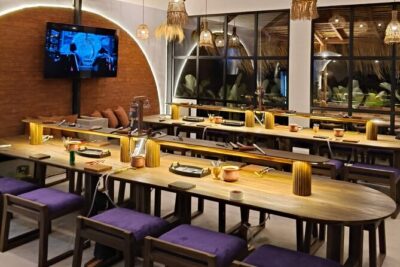
Back to the kitchen: hands-on Balinese cooking you do yourself

Once you’re at the cooking location, the class shifts into full action. Everything is hands-on. You get to prepare and cook all the dishes yourself, with English instructions and close guidance.
The class is built around classic Balinese comfort and feast foods. The menu elements specifically called out include:
- Satay, where flavor comes from the balance of aromatics and the way spices are built
- Nasi goreng, fried rice style, where timing and heat control matter
- Black rice pudding, where texture and sweetness come into focus
The most useful part is that you’re not only learning what ingredients go in. You’re learning how they turn into the taste. Grinding spices and chopping aromatics are not background tasks here. They’re part of the flavor system.
If you like food learning that sticks, this is the style that tends to stick. After you’ve ground spices and cooked from scratch yourself, you can recreate the process later without relying on a vague memory.
Grinding, chopping, and tasting as you go: the real learning loop

A good cooking class has a feedback loop, and this one is designed that way. As you chop and cook, you can adjust as the chef corrects you. That gives you a feel for how Balinese flavors should look and smell while they’re in progress, not just when they hit the plate.
You’ll also notice how selection at the market affects the final dish. If you picked ingredients with the chef’s help, you’ll see how freshness and correct choices impact texture and flavor. This is where the morning market tour earns its place, even if you only care about one dish on the menu.
Also, because it’s small-group, the chef can spend time with each person. If you have questions about spice balance or technique, you’re more likely to get an answer right when you need it.
Eating what you cooked, then leaving with recipes to use

The day ends with eating the Balinese treats you cooked. You’re not stuck with samples only. You get to feast on the results, which is part of why this feels like a real meal day, not a short demo.
The experience also says you can bring home recipes to impress friends. What’s valuable about that is not just having a list. If you remember how you built the flavors during the class, the recipe becomes usable instead of theoretical.
My suggestion: take notes as you go, especially on the stage where the chef says something is ready. Cooking cues like that are often more useful than ingredient quantities.
Who this class suits best, and who should think twice

This cooking class is a great match if you want:
- A hands-on Bali food experience where you cook yourself
- Real ingredient education, especially if you love markets and spices
- A small-group class in English
- A packaged day with transfers handled from many hotels areas
It’s also a good fit if you’re traveling with friends and want a shared activity that ends in a meal.
You might think twice if:
- You have strict time constraints early in the morning, since pickup and market timing can vary
- You prefer purely observational tours where you don’t cook much
If you’re the type who likes to taste, learn, and then repeat at home, you’ll likely enjoy this more than a quick “try some foods” stop.
Should you book the Bakas Balinese Cooking Class in Jimbaran?
I’d book it if you want a real skills-based cooking day, not just food tasting. The value is strong because the price includes round-trip transfers from many areas, you cook your own meal, and the menu is built around iconic Balinese dishes.
Before you book, do two things. First, pick a start time that gives you buffer time, especially if you’re early-riser planning. Second, come ready to participate in bargaining and ingredient selection, since that’s a major part of what makes the day feel authentic.
If that sounds like your kind of Bali, this is the kind of class you’ll talk about long after you’ve left the kitchen.
FAQ
What dishes are included in the cooking class?
The class focuses on Balinese dishes such as satay, nasi goreng, and black rice pudding. You cook and eat the food as part of the experience.
Is there a market tour during the class?
Yes. For morning bookings, the experience starts with a trip to a local market where you learn how to choose ingredients and practice bargaining.
How long is the experience?
It runs for about 6 hours (approx.).
Does the class include transfers from my hotel area?
Pickup and round-trip transfers are offered from many areas, including Ubud and much of south Bali. Areas mentioned include Seminyak, Legian, Kuta, Nusa Dua, Jimbaran, Sanur, Denpasar, and Benoa Harbor.
How many people are in the class?
The class is limited to a maximum of 10 participants.
Is the class taught in English?
Yes. The cooking class is conducted in English.
What are the available start times?
The experience has opening hours of 7:00 AM to 3:00 PM, Monday through Sunday, for the listed operating period.
Make Something to Take Home
- Surfnesia Surf Lesson and Guiding
★ 5.0 · 46 reviews - Private Surf Lessons in Padang Padang – Uluwatu – Bali
★ 4.0 · 30 reviews - Bali Jewelry Silver Class in Uluwatu with Gold Plating Option
★ 5.0 · 27 reviews
More Tour Reviews in Jimbaran
- Private Uluwatu Temple and Kecak Fire Dance Evening Tour in Jimbaran Bay
★ 5.0 · 1,199 reviews - Uluwatu Temple Entry and Kecak Fire Dance Ticket
★ 5.0 · 479 reviews - Kecak and Fire Dance Ticket at Uluwatu Temple
★ 4.0 · 222 reviews - Bali Instagram Tour: The Most Popular Spots ( Private All-Inclusive )
★ 5.0 · 162 reviews
Fresh on the Jimbaran pages


Balinese Cooking Classes from Kuta, compared.
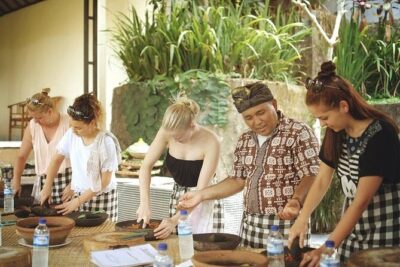 ★ 5.0Ubud Cooking Class Bali with Balinese ChefFrom $351,609 reviews
 ★ 5.0PRIVATE Authentic Balinese Cooking Class in Ubud at Putu’s HomeFrom $75644 reviews
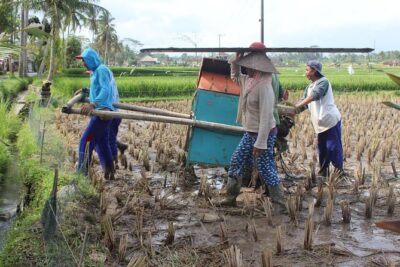 ★ 5.0Balinese Ubud cooking school (9 Dish Cooking and Market Tour)From $58540 reviews
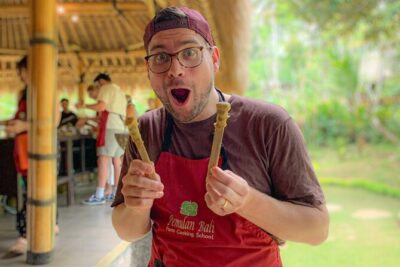 ★ 5.0Balinese Farm Cooking Class by Pemulan BaliFrom $39410 reviews
 ★ 5.0Learn to cook Indonesian food at Gili Cooking Classes TrawanganFrom $33352 reviews
 ★ 5.0Balinese Cooking Class in SeminyakFrom $66281 reviews
 ★ 5.0Anggrek Putih Lombok Cooking ClassFrom $30253 reviews
 ★ 5.0Balinese Authentic Cooking Class in UbudFrom $39239 reviews
More Kuta tours like this one