
Review · DENPASAR CITY TRIPS FROM KUTA
Well-Guided Local Textile Tour of Denpasar
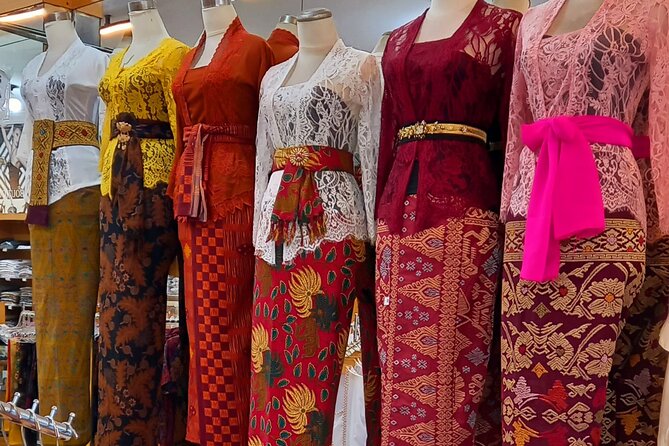
Balinese fabric has a way of catching your eye fast. This 2 hour Denpasar textile tour turns a simple walk into an education on Indonesian cloth, from hand painted batik to ikat and endek weaving. I especially liked the chance to meet Pak Rayyis on Jl. Gajah Mada and hear how local collectors think about textiles, plus the variety at Jalan Sulawesi, where affordable everyday batik sits next to modern materials. The one drawback is simple: it is a walking tour, and good weather matters, so plan for the afternoon heat.
What makes it feel worth the $25 price is the mix of places. You are not stuck in one shop, and you get a small group size (up to 10), so the guides can adjust the stops to what you care about. Ayu, along with Ngurah, also brings strong English and genuine enthusiasm, which makes the technical parts of textiles easier to follow.
Key things to know before you go
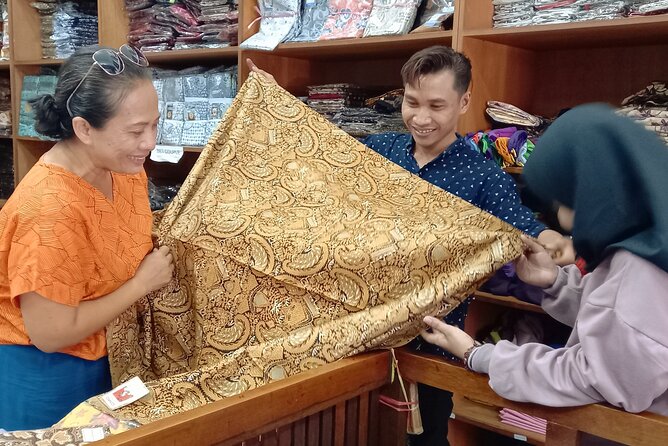
- Small group, local pace: Up to 10 people, with a guide who can adjust stops based on your textile interests
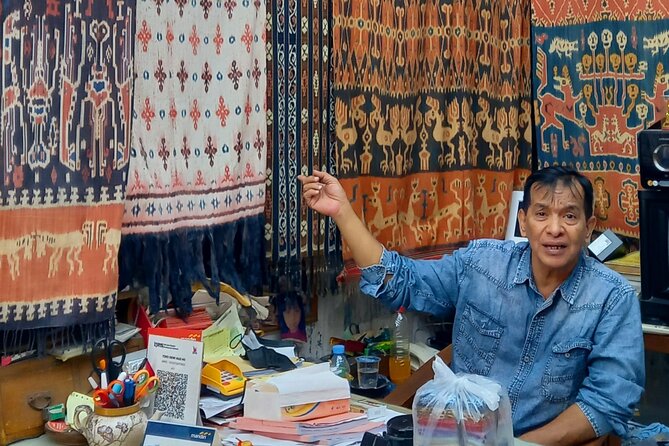
- Start on Jl. Gajah Mada with Pak Rayyis: A direct look at how a local collector talks about his collections
- Kumbasari Market for traditional specialities: Shops focused on Batik, Ikat, and Weaving
- Jalan Sulawesi for choice and price variety: Affordable daily wear batik plus fabrics for dressmaking and interiors
- 2 hours, walking style: Plan comfortable shoes and bring sun protection for the afternoon
Other Seminyak days people book alongside this one
- Ubud Hot Springs and Waterfall Private Guided Tour★ 5.0 · 719 reviews
- Ubud Waterfalls, Temple & Rice Terrace Guided Tour★ 5.0 · 238 reviews
- Bali Private Car Charter with English Speaking Driver Or Guide★ 5.0 · 200 reviews
- Half Day Tanah Lot Temple Private Guided Tour★ 5.0 · 126 reviews
Why a Denpasar textile walk beats shopping by yourself
If you have ever tried to buy batik or woven cloth in Bali, you know the pattern problem. Everything looks beautiful, but it is not always clear what you are looking at, what is truly traditional, and what is mainly for tourists. This tour fixes that by helping you slow down and look the right way, in the right neighborhoods.
I like that it is focused on textiles as a local craft, not just as merchandise. You learn what makes different types of fabric distinct, then you see them in multiple settings: market shops, fabric streets, and small retail corners. For me, that context is what makes later shopping easier. You start to spot quality cues and understand why some pieces cost more.
One more practical reason I would choose this format: it compresses a lot of fabric browsing into a short 2 hour window. At 2:00 pm, you still have time to enjoy the rest of your day in Seminyak without turning your afternoon into a full day mission.
Meeting Pak Rayyis on Jl. Gajah Mada, and why it sets the tone
The tour starts back at the meeting point on Jl. Gajah Mada No. 1, Dauh Puri Kangin, Denpasar Utara, Bali. From there, you meet Pak Rayyis, and this is the part that makes the whole experience click. He is not presenting textiles as random patterns, he is connecting them to collecting, selection, and the way local people think about cloth.
What I found valuable here is the mindset shift. Instead of asking only Is this pretty?, you start asking questions like: What technique is this using? Does it look like traditional batik work, or something more modern? Is the weaving style showing its structure and rhythm in the way you would expect from endek weaving?
If you are the kind of person who likes to learn before buying, this stop is a strong primer. You also get a chance to get your questions answered early, which helps you shop with more confidence later at the busier fabric areas.
Practical note: because you are meeting early in the walk, you can get your bearings fast. That matters in Denpasar side streets, where fabric shops can feel like a maze if you go in without a plan.
Kumbasari Market stop for batik, ikat, and weaving specialists
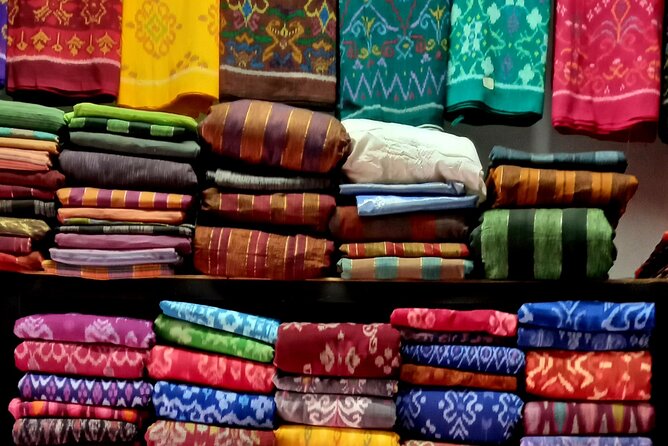
After Jl. Gajah Mada, you head toward Kumbasari Market, where you visit two shops that specialize in traditional Batik, Ikat, and Weaving. This is where the tour turns from general fabric talk into hands-on comparison.
Kumbasari Market is a smart choice because it is a supply zone as much as it is a shopping zone. You are seeing the types of cloth locals look for when they need something for everyday use, gifting, or craft related needs. That changes the vibe. It feels less like a display window and more like a working fabric environment.
At this stop, I recommend slowing down and doing simple visual checks. Look closely at how patterns repeat, how the colors are layered, and whether the fabric surface looks smooth and uniform or textured and structured. For ikat, pay attention to how the pattern aligns and how the dyed areas sit against the weave. For weaving, notice the density and the way threads create the fabric personality.
The tour format also helps because you are not guessing alone. Having a guide who can connect what you see to what it is supposed to be makes the learning feel practical, not academic.
Possible drawback to consider: market stops can be visually intense. If you hate feeling rushed or crowded, go in with a calm plan, and focus on just a few items you genuinely want to compare.
Jalan Sulawesi, where affordable batik meets modern fabric needs
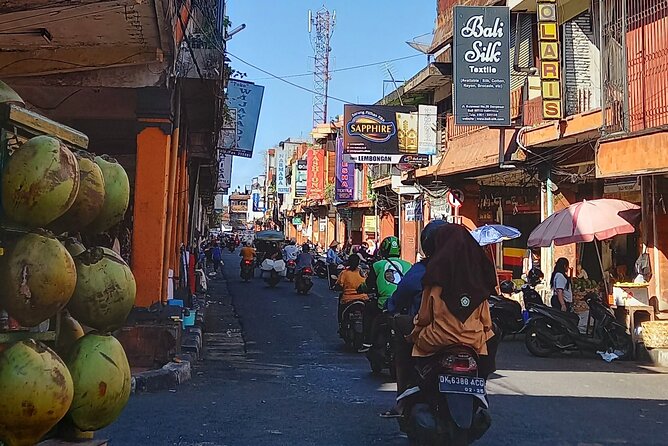
Next comes Jalan Sulawesi, a well-known fabric haven area in Denpasar. This is the stop where you get serious variety. You can find print batik for everyday use, and then you can shift your attention to modern fabrics meant for different projects and household uses.
The range here is the real payoff. You will see options like linen, brocade, cotton, lace, quilting materials, dressmaking supplies, interiors fabrics, silk, rayon, and more. The point is not that you will buy everything. The point is that you can compare textile types in one walk without bouncing between unrelated stores.
This is also where smart shoppers do best. If you are thinking about buying cloth for a specific purpose, bring a clear target. For example:
- If you want dressmaking fabric, you can focus on how the cloth hangs and its feel in hand.
- If you want something for interiors, you can prioritize texture and how it looks in daylight.
- If you are buying batik for wear, you can compare print types and how heavy or light the fabric feels.
One thing I like about this stop is the mix of affordability and options. Affordable everyday batik is available, so you can pick up something without turning your budget into a stress test. At the same time, modern fabric choices mean the tour is not only for people hunting for traditional motifs.

The old streets of Denpasar beyond the big signs
After Kumbasari and Jalan Sulawesi, the tour keeps moving through Denpasar on foot, along older streets and local shopping lanes. Even though this part is shorter, it matters because it helps you understand how the textile scene fits into daily life.
Instead of treating textile buying as a single destination, you see it as a network. Shops cluster, styles overlap, and you start noticing patterns in what different streets specialize in. That helps when you decide what to buy during your remaining time in Bali.
The tour is also designed for a small group, up to 10 people, so you are not trapped in a long line at every shop. You can actually look at fabrics, not just pose for photos.
What makes the guides matter, Ayu and Ngurah style
Ayu and Ngurah lead the tour, and that is not a small detail. The review feedback around English and flexibility is something you feel immediately in the way the walk flows. Ayu is especially noted for being happy to modify stops to match your interests, and that makes the difference between a generic fabric walk and something that feels tailored.
If you are more into traditional techniques, you will likely spend more time focusing on batik and weaving. If you are more into materials for projects, you will likely zero in on the modern fabrics at Jalan Sulawesi. Either way, you still cover the main areas, but you get more of what you came for.
Also, a guide who can explain textile differences matters because textiles can look similar from a distance. Color and pattern can fool you. With direction, you learn what to check up close, and you shop with better judgment.
Price and value: why $25 for 2 hours can make sense
At $25 per person for about 2 hours, this tour sits in the budget-friendly zone. The value comes from two things: access and guidance. You are paying for local direction, not for exclusive treatment.
You get:
- A focused walk with multiple textile-focused areas
- Time with a local collector at Jl. Gajah Mada, meeting Pak Rayyis
- A structured route with an end back at the meeting point
- Tips for smart shopping, plus an option for the guides to adjust stops to your interests
If you were to do this solo, you could probably find shops on your own. The question is whether you would know what you are looking at, and whether you would feel confident enough to buy without second guessing. This tour helps you shop smarter inside a short time block.
One more subtle value point: small group size. When you are among up to 10 people, you have more chance to ask questions without the tour turning into a shuffle.
Practical shopping tips that help in these fabric streets
You will likely want at least one fabric purchase, even if it is just a small piece. Here are practical checks that work well in places like Kumbasari and Jalan Sulawesi, where you can compare many options quickly.
First, inspect the fabric feel. Cotton and linen behave differently, and even within cotton, thickness can vary a lot. If the fabric is for clothing, how it drapes matters as much as the pattern.
Second, look at finish and consistency. For batik, pay attention to how the design sits on the surface. For woven pieces, look at how clean and even the weave looks, especially at edges and borders.
Third, think in measurements. If you want to sew or make something specific, mentally note the size you need before you fall in love with a print. It is easy to get carried away, because yes, the colors and styles can overwhelm you in a good way.
Finally, if you are comparing prices, compare comparable items. Similar looking batik can differ by thickness, quality, and the way the cloth is constructed.
Weather, timing, and what to wear for a 2:00 pm walk
This is a good afternoon plan, starting at 2:00 pm. The tour runs about 2 hours, on foot, and it depends on good weather. If the weather is poor, the experience can be rescheduled or you can get a full refund.
Because you are walking through markets and fabric streets, wear something that lets you stand comfortably and move fast when you need to. Comfortable shoes matter more than you think, and sun protection helps since your time is in the afternoon window.
You will also get a mobile ticket, so you can keep things simple on your phone instead of worrying about paper.
Who should book this Denpasar textile tour
This tour fits best if you fall into one (or more) of these groups:
- You love fabric, batik, ikat, or weaving and want to learn while shopping
- You want to buy textile in Bali but feel overwhelmed by too many choices
- You prefer a small-group local walk over big group shopping circuits
- You have only a short time window in the afternoon and want a focused plan
It may not be ideal if you dislike walking, if you want a quiet, sit-down museum style experience, or if you only want high-end boutique brands. This is local market and fabric street energy, and that is the point.
Should you book this Denpasar textile tour?
Yes, book it if your goal is to understand textiles and shop with more confidence in a short time. The combination of meeting Pak Rayyis, visiting Kumbasari Market specialist shops, and then hitting Jalan Sulawesi for both everyday batik and modern fabric choices makes the route efficient and genuinely useful.
I would also book it if you like clear explanations and want a guide who can adjust the stops to your interests. With Ayu and Ngurah, the tour feels personal enough to matter, without getting so slow that you lose the afternoon.
If you are on the fence, ask yourself one question: do I want textile guidance, not just textile browsing? If the answer is yes, this is a strong value for a $25, 2 hour Denpasar fabric education.
FAQ
How long is the Well-Guided Local Textile Tour of Denpasar?
The tour lasts about 2 hours.
Where is the tour meeting point?
The meeting point is Jl. Gajah Mada No. 1, Dauh Puri Kangin, Kec. Denpasar Utara, Kota Denpasar, Bali 80232, Indonesia.
What time does the tour start?
The start time is 2:00 pm.
How much does the tour cost?
The price is $25.00 per person.
What stops are included during the tour?
The tour includes Kumbasari Market, Jalan Sulawesi, and additional time in Denpasar, and it begins and ends back at the meeting point.
Will I receive a ticket on my phone?
Yes, the tour uses a mobile ticket.
What is the group size limit?
The maximum group size is 10 travelers.
Is the tour near public transportation?
Yes, it is near public transportation.
What happens if the weather is bad?
The experience requires good weather. If it is canceled due to poor weather, you will be offered a different date or a full refund.
What is the cancellation policy?
Free cancellation is available. You can cancel up to 24 hours in advance for a full refund. If you cancel less than 24 hours before the start time, the amount paid is not refunded. If booked within 2 hours of travel, confirmation is received as soon as possible, subject to availability.
With a Guide Who Knows It
- Ubud Hot Springs and Waterfall Private Guided Tour
★ 5.0 · 719 reviews - Ubud Waterfalls, Temple & Rice Terrace Guided Tour
★ 5.0 · 238 reviews - Bali Private Car Charter with English Speaking Driver Or Guide
★ 5.0 · 200 reviews - Half Day Tanah Lot Temple Private Guided Tour
★ 5.0 · 126 reviews
More Tours in Seminyak
- Experts Bali Driver : Best Bali Private Driver for Tour in Bali
★ 5.0 · 1,339 reviews - Ubud Hot Springs and Waterfall Private Guided Tour
★ 5.0 · 719 reviews - Bali Secret Waterfall Tour – Private and All-Inclusive
★ 5.0 · 688 reviews - Bali Instagram Tour: The Most Scenic Spots
★ 5.0 · 634 reviews
More Tour Reviews in Seminyak
- Bali Full-Day Traditional Village Sightseeing Trip All Inclusive
★ 5.0 · 3,069 reviews - Experts Bali Driver : Best Bali Private Driver for Tour in Bali
★ 5.0 · 1,339 reviews - Bali Hai Sunset Dinner Cruise
★ 5.0 · 1,173 reviews - Mount Batur Sunrise Trekking
★ 5.0 · 947 reviews
Fresh on the Seminyak pages




Denpasar City Trips from Kuta, compared.
 ★ 4.5Denpasar Arrival Transfer: Airport to HotelFrom $25105 reviews
 ★ 4.0Fast Boat Transfer: Sanur to Nusa Penida by PenidagoFrom $986 reviews
 ★ 5.0One-way Ticket Fast Boat from Sanur Bali or Nusa PenidaFrom $1257 reviews
 ★ 5.0One-way Ticket Fast Boat from Sanur Bali or Nusa LembonganFrom $1247 reviews
 ★ 5.0Private Arrival Transfer: Denpasar International Airport to Nusa Dua AreaFrom $1546 reviews
 ★ 4.5Denpasar Departure Transfer: Hotel to AirportFrom $2537 reviews
 ★ 4.5Taste & Explore Bali: Denpasar Street Food & Historic SitesFrom $4527 reviews
 ★ 4.0Small-Group Denpasar Night Food TourFrom $3922 reviews
More Kuta tours like this one