
Review · WALKING TOURS
Myth of Pejeng Walking Tour
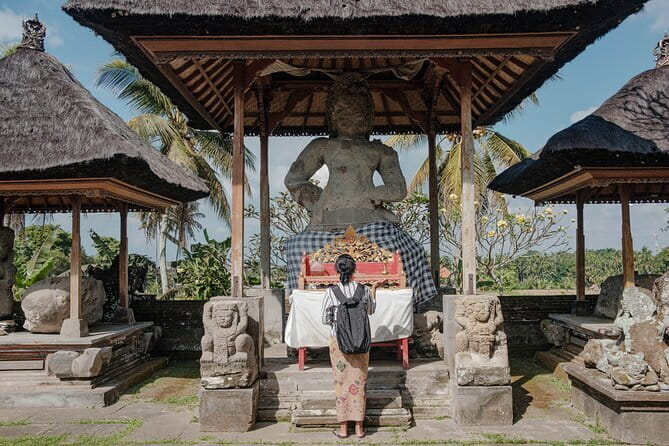
Pejeng myths are carved in stone and story. This 2 hour walking tour strings together four meaningful stops around historic landmarks, with special access to a legendary bronze kettle drum and a focus on how locals connect religion, art, and everyday life.
I love that the tour handles the practical stuff for you, especially sarong and sash needs at temples. One drawback to plan for: the route includes uneven temple stairs, steep gradients, and patchy sidewalks, so you should be physically comfortable walking through an urban area for up to 2 hours.
Key things you will notice on this Pejeng walk
- Exclusive bronze kettle drum access at Pura Penataran Sasih
- Four stops in about two hours, with short, story-driven visits
- Temple etiquette is taken seriously, with sarong and sash provided
- A mix of Hindu-era temples and pre-Hindu artifacts, ending at Arca Building
- Small group size (maximum 8) that keeps the walk calm and question-friendly
- Low plastic mindset, with a prompt to bring a reusable bottle
Other Ubud days people book alongside this one
- Sidemen Trekking: A Walk from a Different Perspective★ 5.0 · 94 reviews
- Ubud Guided Walking Tour★ 5.0 · 79 reviews
- Ubud Countryside Tour: Campuhan Ridge Walk and Rice Terrace★ 5.0 · 72 reviews
- Hikaria: Bali’s First Immersive Night Walk★ 5.0 · 16 reviews
A short myth walk through real temple life in Pejeng
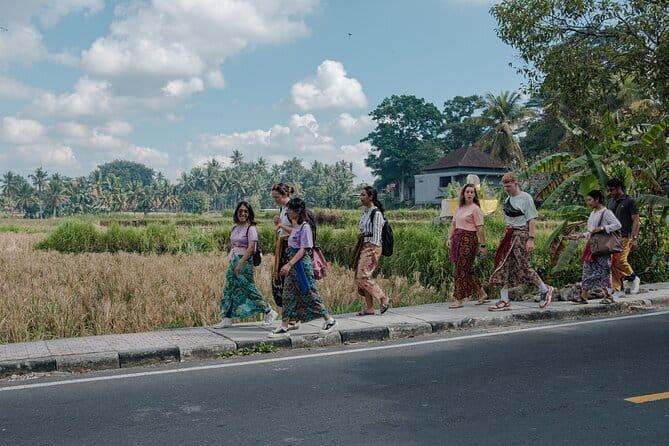
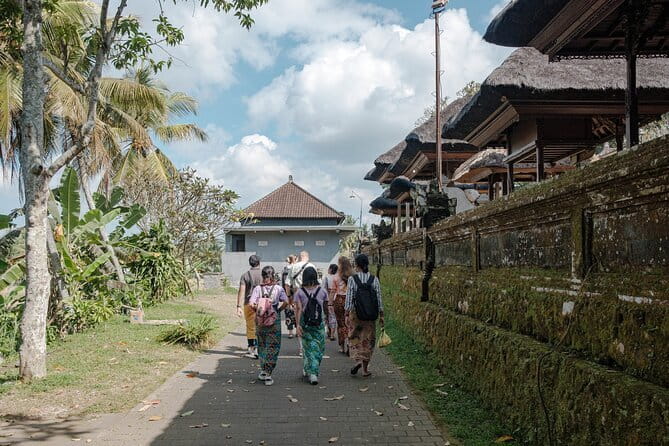
This tour is built for people who like their Bali less about Instagram backdrops and more about meaning. You will walk between sacred sites in Pejeng, then hear how myths explain why these places matter. It is also a nice change of rhythm from the Ubud main drag, since the route stays focused on the landmarks themselves.
The vibe is small group and story-forward. Guides work with the space, so you spend most of your time looking, listening, and walking short distances rather than getting stuck in one loud, crowded room.
Price-wise, $21.40 per person is not huge, but it is not only about the walk. Temples donations are included (Rp 60,000), plus you get coffee, tea, and a snack, sarong and sash, and access items that make a big difference at religious sites.
Price and value, what you actually get for $21.40
At this price point, the best value is what is included that you would otherwise pay for or manage yourself. Here is what matters most for your day:
- Local English-speaking guide (plus an Indonesian guide available)
- Admission included at each stop
- Temples donations are handled as part of the tour
- Balinese coffee, tea, and snack after or during the temple time
- Sarong and sash for temple entry
- Special access to a Balinese compound
If you hate the DIY hassle, this package makes sense. You show up, get the attire sorted, and move through four stops with clear timing.
The main “cost” is effort. You are outdoors, walking between sites, and visiting sacred places where you need modest dress. If you are expecting a totally flat stroll, adjust your expectations.
Your route, four stops that move from myths to artifacts
The tour runs from 8:30 am and ends at Museum Arkeologi (F7JV+563). You start at Indomaret Pejeng, Jl. Raya Dr. Ir. Sukarno No.552, Bedulu. Expect it to feel like one connected walk, not four separate mini excursions.
The tour time is listed as about 2 hours, and each stop is short: three stops around 20 minutes, then a final 30 minutes at the archaeological museum. That structure helps you see a lot without burning your whole morning.
Also, the group limit is up to 8 travelers, which is a big deal if you like asking questions and not getting shuttled along like luggage.
Stop 1: Pura Penataran Sasih and the bronze kettle drum legend
Your first stop is Pura Penataran Sasih, one of Bali’s oldest temples. You enter wearing traditional sarongs and sashes, and the guide sets the context before you step into the sacred space.
The headline here is the Southeast Asia’s largest bronze kettle drum and the stories tied to it. This is where Pejeng mythology starts to feel tangible, not just like a romantic idea. Instead of reading about symbols later, you get to see how the local spiritual world uses sound, metalwork, and sacred objects as carriers of meaning.
A good practical point: this is a temple setting, so the atmosphere is part of the lesson. Take it slower than you would on a normal sightseeing stop. You are there to understand why the artifacts matter to believers, not just to photograph them.



Stop 2: Pura Pusering Jagat, one temple with directional symbolism

Next you head to Pura Pusering Jagat. This is one of Bali’s six main Kahyangan (directional) temples, and it is believed to be at the island’s center.
What you will enjoy most at this stop is the explanation of how sacred geography works. The guide helps connect carvings and temple layout to a larger idea of balance and orientation. You will walk through a sacred complex and get the “why” behind what you are seeing, not just a list of names.
Timing is short here, so if you love details, ask a question early. The small group format makes it easier to get your curiosity answered without everyone falling behind.
Stop 3: Kebo Edan Temple and the Crazy Buffalo statue story
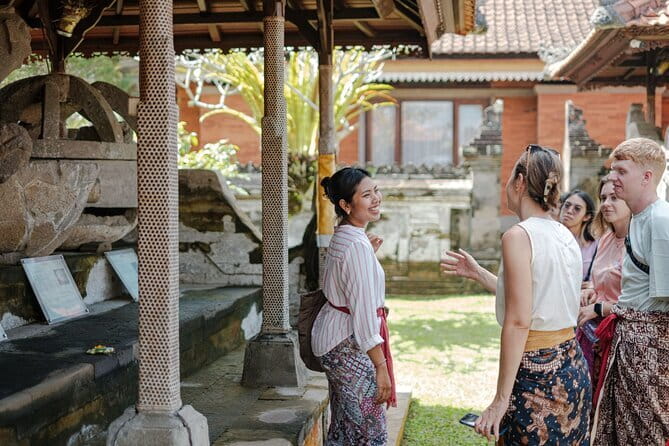
At Kebo Edan Temple, the tone shifts to a more unusual character. The name translates as the Crazy Buffalo temple, and the focus is a powerful 13th-century Bhairawa statue.
This statue has an origin story tied to nearby rice fields, and the guide discusses theories about where it came from and what makes the story so striking. That combination of age, location, and mystery is what makes this stop memorable.
Also, this is a “small temple” experience, not a massive tourist complex. You can feel the intimacy, which makes it easier to hear the explanations and reflect on why people treat these places as living spiritual sites.
Stop 4: Arca Building Archaeological Museum and giant sarcophagi

The walk ends at Arca Building Archaeological Museum. Here you get a time shift, stepping back before the more familiar Hindu era. The museum shows giant sarcophagi in an open courtyard, with explanations that connect the artifacts to ancient Balinese life and customs.
This stop is the payoff if you like seeing how different eras overlap in Bali. You start with myths attached to temple objects, then you end with pre-Hindu burial-related relics, all on the same morning.
Because this portion lasts 30 minutes, you get enough time to look carefully. If you are the type who reads labels and then asks questions, this is where your brain will feel satisfied.
Coffee, tea, snack, and why it matters on a temple day

A Balinese coffee, tea, and snack are included. You might not think this matters until you are walking in the morning heat with temple etiquette demands and a full attention schedule.
This small break helps you keep your energy for the last stop, especially if you tend to run on caffeine. It also gives you a more grounded sense of local routine, not just a procession of buildings.
Temple etiquette, sarongs, and how to avoid awkward moments
Temple etiquette is part of the experience, and it is clearly defined. Both men and women must dress modestly by wearing a sarong that covers the legs below the knee. You can bring your own sarong, or use one provided by the tour.
The tour also includes a sarong and sash, so you do not have to scramble before you start. That is a big relief in Bali, where dress codes are real but the logistics are often on you as a visitor.
One more small tip: wear something you can adjust comfortably. The goal is respectful coverage, not fighting your clothes while you are trying to concentrate on what the guide is saying.
Walking comfort: steps, uneven ground, and a realistic pace
This is a walking tour around historic landmarks, which comes with real-world terrain. The tour notes include uneven temple stairs, steep gradients, and patchy sidewalks.
So here is the honest planning advice: choose this tour only if you are comfortable climbing steps and walking around an urban environment for up to 2 hours. If your mobility is limited, you might find the route more tiring than the short itinerary suggests.
There is also a weather component. The tour runs rain or shine. If conditions are severe, such as an intense downpour, they will call you before the start. In other words, do not assume you can sleep in and stay dry.
If you like numbers, one guide story style comment you might hear on the same route is that it can add up to around 4,000+ steps. The good news is that it is not usually endless stair climbing, but it still counts as real walking.
Guides you might meet, from Joe to Bagus to Win
This tour is led by a local guide and is taught in a friendly, conversational way. In past experiences, names like Joe, Bagus, and Win have shown up.
What I like about this is the question time. One of the most useful parts of a story-based tour is when the guide can answer your personal curiosity, not just recite facts. If you care about moon myths, temple art, or why certain objects are treated as sacred, you will likely get satisfying explanations.
Why the small group format changes everything
With a maximum group size of 8, you are not constantly waiting for people to catch up. That matters when you move in and out of temples and when photos are tempting but not always appropriate.
Small groups also help with timing. Short stops stay short, and the guide can keep the pace without rushing your attention. It feels controlled rather than chaotic.
If you like slower cultural walking, this is the sweet spot. You get movement, but you also get time to take in what is in front of you.
Start early, then use Pejeng’s quiet streets to your advantage
Start time is 8:30 am, and that is not accidental. Morning is usually kinder for walking and it helps you avoid the midday squeeze that hits a lot of Bali sightseeing.
One smart move is to get a little breakfast and browse the local market before the tour starts if you have the time. It helps you understand daily Pejeng life while you are also learning temple context.
Even if you do not shop, the calm feel of the area before the day warms up can make the whole morning more pleasant.
Getting there and what not to expect
There is no pickup or drop off from your accommodation. You will meet at Indomaret Pejeng and finish at Museum Arkeologi.
The tour is near public transportation, so you have options. If you are building a day plan, treat this as a self-contained morning walk, then regroup afterward near the museum area.
Service animals are allowed, which is a helpful note if that affects your planning.
A note on the tour’s environmental mindset
The provider has an environmental commitment that is refreshingly practical. They ask you to bring a reusable bottle for water refills to help reduce plastic in Bali’s rivers.
That is easy to do and it fits the tone of the tour. You are walking through sacred spaces and learning local values, so it feels right that the day also nudges you toward a small, concrete habit.
Should you book Myth of Pejeng Walking Tour?
I would book this if you want a morning in Pejeng that mixes sacred storytelling with real artifacts, and you like the idea of short temple stops instead of long museum marathons. The bronze kettle drum access, the blend of temple visits with the pre-Hindu museum ending, and the included sarong setup all add real value at the price.
Skip it, or at least think twice, if you cannot handle uneven temple stairs, steep gradients, and patchy sidewalks. Also skip it if your idea of a “walking tour” means flat sidewalks only and minimal step climbing.
If you want a more grounded Bali morning, with guides like Joe, Bagus, or Win (depending on the day) explaining what you are seeing and why it matters, this is a strong pick.
FAQ
How long is the Myth of Pejeng Walking Tour?
The tour lasts about 2 hours.
What time does the tour start?
The start time is 8:30 am.
What is included in the price?
Included are a local English-speaking guide, guided walking tour, temple donations (Rp 60,000), Balinese coffee, tea and a snack, special access to a Balinese compound, sarong and sash, and Indonesian guide availability. Admission tickets are included at each stop.
Do I need to wear a sarong or can I use one provided?
You need modest dress with a sarong that covers the legs below the knee. You can bring your own sarong or use one provided by the tour, and both men and women are required to follow this rule.
Is the tour affected by rain?
The tour operates rain or shine. If conditions are severe, such as an intense downpour, the provider will call you before the start.
Does the tour include pickup or drop-off from your accommodation?
No. The tour does not provide pickup or drop-offs from your accommodation. The meeting point is Indomaret Pejeng, and the tour ends at the archaeology museum in Bedulu.
On Foot Instead
- Sidemen Trekking: A Walk from a Different Perspective
★ 5.0 · 94 reviews - Ubud Guided Walking Tour
★ 5.0 · 79 reviews - Ubud Countryside Tour: Campuhan Ridge Walk and Rice Terrace
★ 5.0 · 72 reviews - Hikaria: Bali’s First Immersive Night Walk
★ 5.0 · 16 reviews
More Tours in Ubud
- All-Inclusive Ubud Private Tour
★ 5.0 · 14,344 reviews - Best of Ubud Full-Day Tour with Jungle Swing
★ 5.0 · 8,571 reviews - Best of Ubud 1-Day Private Tour
★ 5.0 · 4,451 reviews - Tanah Lot and North Bali Tour: Scenic Journey
★ 5.0 · 3,620 reviews
More Tour Reviews in Ubud
- All-Inclusive Ubud Private Tour
★ 5.0 · 14,344 reviews - Best of Ubud Full-Day Tour with Jungle Swing
★ 5.0 · 8,571 reviews - Ubud: Monkey Forest, Jungle Swing, Rice Terrace, and Water Temple
★ 5.0 · 7,160 reviews - Best of Ubud 1-Day Private Tour
★ 5.0 · 4,451 reviews
Fresh on the Ubud pages





Walking Tours, compared.
 ★ 5.0Tetebatu Walking Tour – Rice Terraces, Waterfall & Monkey ForestFrom $68349 reviews
 ★ 5.0Bali Private Food Walking Tour With Locals: The 10 TastingsFrom $56243 reviews
 ★ 5.0Sidemen Trekking: A Walk from a Different PerspectiveFrom $1394 reviews
 ★ 5.0Ubud yoga, rice terrace walk and floating Breakfast tourFrom $2585 reviews
 ★ 4.5Bali Sea Walking ExperienceFrom $3582 reviews
 ★ 5.0Ubud Guided Walking TourFrom $2879 reviews
 ★ 5.0Ubud Countryside Tour: Campuhan Ridge Walk and Rice TerraceFrom $4072 reviews
Ubud Tour : Jungle Swing – Campuhan Ridge Walk – Tegenungan WaterfallFrom $2719 reviews
★ 5.0Ubud Countryside Tour: Campuhan Ridge Walk and Rice TerraceFrom $4072 reviews
Ubud Tour : Jungle Swing – Campuhan Ridge Walk – Tegenungan WaterfallFrom $2719 reviews
More Kuta tours like this one