
Review · BALINESE HEALING & VILLAGE CULTURE FROM KUTA
Day with a Balinese Family in a Village
Rice fields, family stories, and hands-on craft.
I love the rice field walk and learning how Balinese farming is done day to day, and I also love the practical stop where you help with coconut oil production and go home with new skills and scents in your memory. One drawback to consider: this is a walking, outdoors-focused half day, so comfortable shoes and sun protection matter.
This is the kind of Ubud experience that feels more like being invited into daily life than ticking boxes. The home setting also makes the small details land, like learning the meaning behind the offerings and sharing lunch prepared the family way over a wood fire.
Quick take: what makes this village day so special
- Small group size (max 5 people) means more time for questions and real conversation, not a quick photo line.
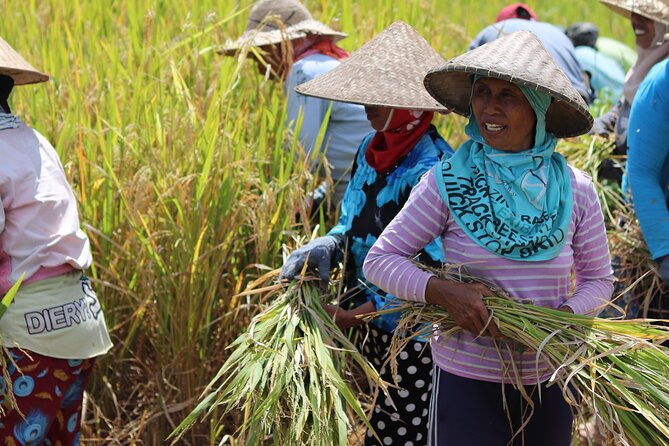
- Rice cultivation observations give context for how Balinese daily routines connect to the land.
- Coconut oil production shows how something ordinary becomes useful for cooking and massage.
- Offerings making with leaves and plant fibers turns belief and tradition into something you can touch and understand.
- Lunch at the family home plus homemade coffee makes it a full day of senses, not just a workshop stop.
Other ways to spend a day out of Ubud:
- All-Inclusive Ubud Private Tour★ 5.0 · 14,344 reviews
- Best of Ubud Full-Day Tour with Jungle Swing★ 5.0 · 8,571 reviews
- Ubud: Monkey Forest, Jungle Swing, Rice Terrace, and Water Temple★ 5.0 · 7,160 reviews
- Best of Ubud 1-Day Private Tour★ 5.0 · 4,451 reviews
Why a Balinese family village day beats a standard Ubud outing
Ubud is full of tours, but this one stays closer to real life. You’re not just watching from a distance. You’re moving through a village rhythm with a Balinese family, seeing how work, faith, and food flow together.
Two parts tend to make people feel it most. First is the walk through rice fields and plantations, where the landscape is not just scenery, it’s the backdrop to farming decisions. Second is the way the day turns practical, from coconut oil to weaving fibers for offerings.
The group stays small, and that helps a lot. When your guide is French or English speaking, the pace fits a conversation, not a lecture. You’ll also get a driver for the transport leg, and drivers like Sywa are noted for being punctual and adding a light, friendly tone to the day.
Morning logistics: meeting near Coco Supermarket and a relaxed 6-hour flow
You start at Coco Supermarket on Jalan Raya Pengosekan, Ubud, with pickup offered. The start time is 8:30am, and the day runs about 6 hours, ending back at the same meeting point.
It’s built for an easy start. You board an air-conditioned vehicle, then you’re out walking and learning for most of the core time. If you like a day with structure but not stress, this schedule tends to fit well.
You’ll also want to have your mobile ticket ready, since that’s part of how you enter the experience. Confirmation happens at booking, so you can plan around it instead of wondering.
Rice field walk: watching Balinese rice cultivation in real time
The day begins with a village walk through rice fields, where you observe daily life and different rice cultivation methods. This part matters because rice is not a single activity in Bali. It’s a system tied to water, timing, and care.
As you walk, watch for small signs of how the fields are tended. You’re looking at more than plants. You’re looking at routine, tools, and the way people fit farming into their day.
This is also the part where comfort counts. Even if the pace is relaxed, you’ll be outside and moving between areas. I’d plan for sun and heat, wear closed-toe shoes you can trust on uneven ground, and bring water if you run hot.
Coconut oil production: from coconuts to cooking and massage
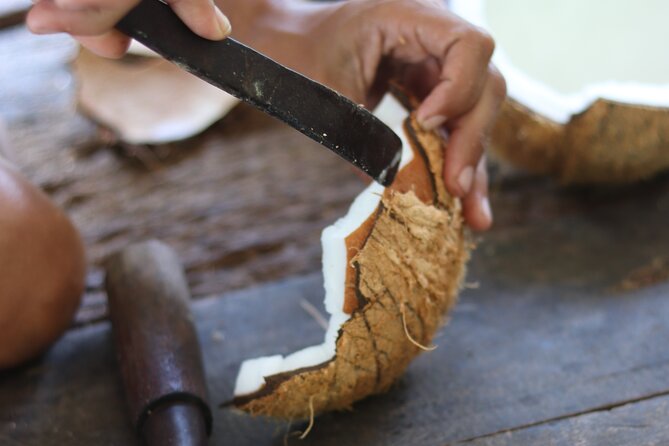
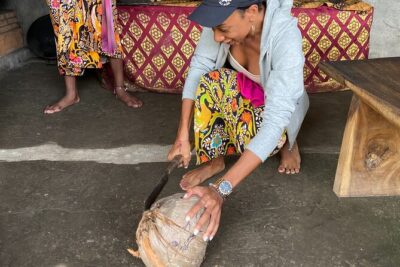
Next comes artisanal production of coconut oil. This is one of the most practical stops of the day, because it turns a common product into a process you can actually picture.
Coconut oil in Bali often shows up in cooking and in massage traditions, so learning how it’s made gives you more than a souvenir story. It helps you understand why the process is worth the effort in a place where home remedies and everyday cooking meet.
In the experience, you learn how the oil is made and why it matters. It’s the kind of activity that works well even if you’re not a hands-on craft person, because the smell and visuals carry the learning.


Lunch at the family home: wood-fire cooking and a real pause
Lunch is included, and it’s served at the inhabitant’s house. The food is traditional and prepared over a wood fire, which means it tastes different from many restaurant meals you’ll have in Ubud.
You’ll also get coffee and/or tea as part of the lunch break. Some days are great because they feed you, and this one tends to do that in a home setting instead of a staged setting. Homemade coffee is mentioned as part of the experience, and that’s often the moment where the day feels grounded.
A small planning note: since lunch is part of a family routine, it’s best to go hungry and ready to slow down. If you have strict dietary needs, the safest approach is to tell your guide in advance so the family can guide you appropriately.
Offerings workshop: intertwining leaves and fibers with meaning
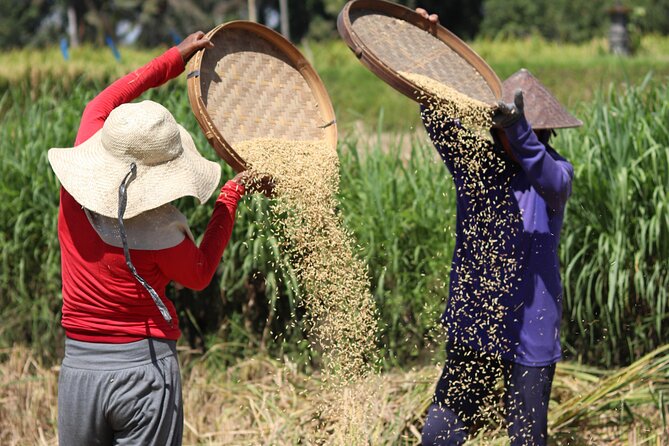
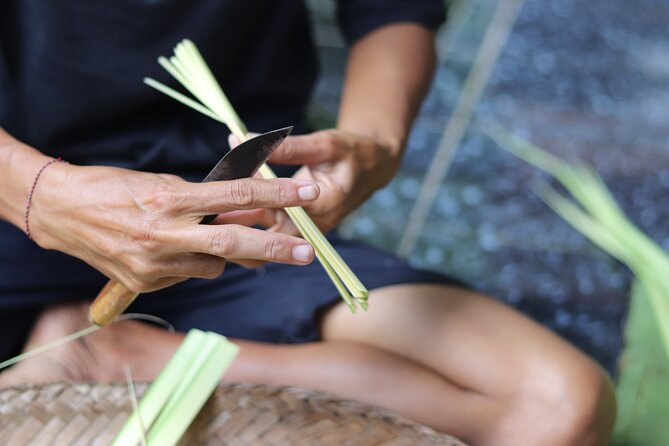
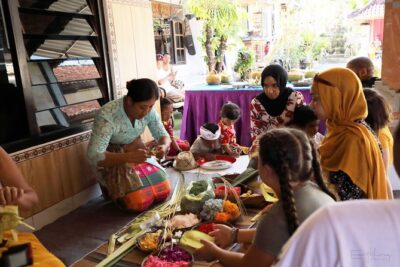
After rice and oil, the day shifts into a craft and a belief system. You learn how to make offerings and discover their meanings, using leaves and plant fibers to create colorful forms.
This is where the experience becomes memorable in a different way. Crafts like this can be teachable in a classroom, but it changes when it’s tied to daily life and explained by the people who actually make them.
You should expect the tone to be proud and attentive. Hosts tend to guide you through the process, and guides like Gaia have been specifically praised for bringing culture and humor into the explanation, plus speaking French clearly enough to answer lots of questions.
If you like learning symbols and the “why” behind traditions, this part is the payoff. If you prefer pure sightseeing and minimal participation, this workshop might be the most demanding segment, because it asks you to focus and try.
Guide and driver quality: where the day gets its rhythm
The experience includes a French or English speaking guide, and the day is capped at a maximum group size of 5 people. That combination tends to create a better day, because you don’t get stuck waiting for your turn to ask something.
In real terms, it means more time for you to understand the meaning behind what you’re seeing. And it means the guide can adjust the pace when a question sparks curiosity.
There’s also the transport layer handled by an air-conditioned vehicle, and a good driver makes the day feel smoother. Sywa, for example, is highlighted in feedback for punctuality and humor, which matters when you’ve got a start time at 8:30am and you want the day to stay comfortable.
Price and value: what $72.08 covers in a small-group day
At $72.08 per person, the price can look “normal” on paper, but the value comes from what’s included. You get lunch, coffee and/or tea, an air-conditioned vehicle, a guide, and all fees and taxes. There’s also a donation included, so the price isn’t just paying for logistics.
You also get a day that includes multiple activities, not just one workshop and a quick walk. Admission is listed as free for the day, which removes a common surprise cost.
One more practical value factor: the average booking window is about 36 days in advance. That’s a sign the slots are popular, especially for people who want a family-home type of experience and a small group size.
Tip is not included, so if you want to support the guide or family host, plan for that extra at the end. It’s the only missing piece, since everything else core to the day is accounted for in the listed price.
Things to consider before you book (so it fits your style)
This experience works best if you’re comfortable with hands-on learning and an outdoors morning. You’ll walk in rice fields and plantations, then switch to coconut oil and offering-making in a home setting. If your idea of a perfect Bali day is mainly short stops with lots of sitting, you might want to balance it with a less active activity.
Weather matters too. Bali heat can hit fast between 8:30am and late morning, so consider sun protection and breathable clothing. Closed-toe shoes will save you discomfort on uneven ground.
Also keep expectations realistic about what you’re getting. This is not a museum tour or a performance. It’s a day of real routines, and you’ll get the most out of it by going with curiosity.
Finally, this experience allows service animals, and most people can participate. Still, it’s wise to think about your own comfort with short walking segments and time on your feet.
Should you book this Ubud Balinese family day?
I think you should book it if you want a Ubud experience that feels human, not scripted. The mix of rice cultivation observations, coconut oil production, wood-fire lunch, and offering-making gives you multiple ways to learn in one day. The small group size also makes it easier to ask questions and get explanations that match your pace.
You might skip it if you mainly want passive sightseeing, because the day includes walking and hands-on craft participation. But if you enjoy cultural exchange and you like leaving with stories you can explain, this is a strong fit.
If you do book, go in with two mindsets: respect the home setting, and lean into the questions. That’s the best way to turn a half-day activity into a Bali memory that lasts.
FAQ
How long is the day with a Balinese family in a village?
It runs for about 6 hours.
What time does the experience start?
The start time is 8:30am.
Where do we meet, and how does the tour end?
You meet at Coco Supermarket on Jalan Raya Pengosekan, Ubud. The activity ends back at the same meeting point.
Is pickup included?
Pickup is offered, and you return to the meeting point at the end.
What is included in the price?
Lunch is included, plus coffee and/or tea. You also get an air-conditioned vehicle, all fees and taxes, a donation, and a French or English speaking guide.
Is there a mobile ticket?
Yes, the experience uses a mobile ticket.
Do I need to pay an admission fee?
Admission is listed as free for this activity.
How big is the group?
The maximum group size is 5 people.
What languages are available for the guide?
You’ll have a French or English speaking guide.
What about tipping?
Tip is not included.
Can I cancel for a full refund?
Free cancellation is available up to 24 hours in advance of the experience start time for a full refund.
More Tour Reviews in Ubud
- All-Inclusive Ubud Private Tour
★ 5.0 · 14,344 reviews - Best of Ubud Full-Day Tour with Jungle Swing
★ 5.0 · 8,571 reviews - Ubud: Monkey Forest, Jungle Swing, Rice Terrace, and Water Temple
★ 5.0 · 7,160 reviews - Best of Ubud 1-Day Private Tour
★ 5.0 · 4,451 reviews
Fresh on the Ubud pages



Balinese Healing & Village Culture from Kuta, compared.
 ★ 5.0Bali Full-Day Traditional Village Sightseeing Trip All InclusiveFrom $683,069 reviews
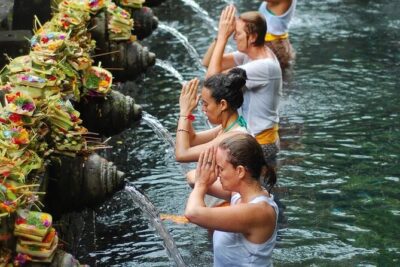 ★ 5.0Ubud Tour – Balinese Healing By Shaman And Self PurificationFrom $74236 reviews
 ★ 5.0Bali Cultural ExperienceFrom $5992 reviews
 ★ 5.0Meditate with a ShamanFrom $9977 reviews
 ★ 5.0Balinese Village ExperienceFrom $7049 reviews
 ★ 5.0Make Traditional Bali Coconut Oil with a Balinese FamilyFrom $2739 reviews
Balinese Healing ExperiencesFrom $5038 reviews
★ 5.0Make Traditional Bali Coconut Oil with a Balinese FamilyFrom $2739 reviews
Balinese Healing ExperiencesFrom $5038 reviews
 ★ 5.0TULA Wellness Balinese Exotic Fruit RitualFrom $14235 reviews
More Kuta tours like this one