
Review · TEGALALANG RICE TERRACE TRIPS FROM KUTA
Sidemen Trekking Through Rice Terraces and Villages
One morning hike can make Bali feel real, fast. This Sidemen rice terrace trek takes you from the village market area into working rice paddies, past temples, and toward viewpoints with Mount Agung in the mix. What I really like is the way you walk right alongside the Subak irrigation system, not just look at it from afar, and the simple fact that it is a short, local-feeling adventure at a budget-friendly price.
The one thing to keep in mind is timing. Rice fields can be harvested depending on the day, and that can change the “wow factor” if you were hoping for lush, full terraces the whole way.
Key highlights you will care about
- Local guide with real rice know-how, especially about how the fields work and what plants you might see
- Subak of Ogang irrigation passing through your route, so you understand the water story, not just the views
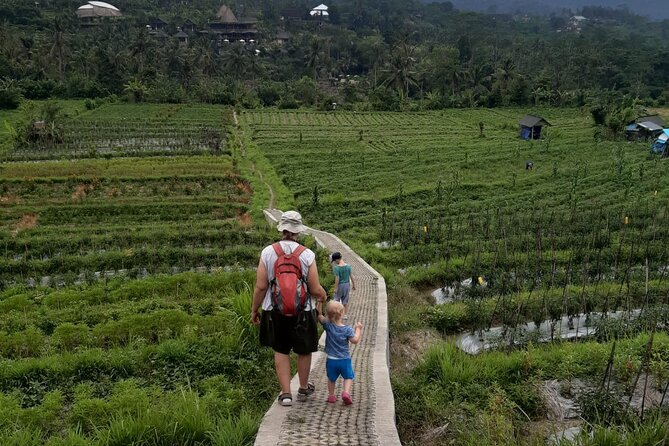
- Wooden bridge shared by locals and motorbikes, a memorable slice of everyday village life
- Temples and village routines along the path, from planting and field work to harvesting activities you may spot
- Private tour for your group, which makes it easier to keep a relaxed pace and ask questions
The terraces turn up on these days too
- Ubud: Monkey Forest, Jungle Swing, Rice Terrace, and Water Temple★ 5.0 · 7,160 reviews
- Full-Day Tour to Water Temples and UNESCO Rice Terraces in Bali★ 5.0 · 2,539 reviews
- Ubud: Downhill Cycling with Volcano, Rice Terraces and Meal★ 5.0 · 536 reviews
- Ubud eBikes Tour to Tegallalang Rice Terrace★ 5.0 · 507 reviews
Sidemen Trekking Through Rice Terraces, Villages, and Subak Water
If you want the Bali that feels lived-in, Sidemen is a strong start. This trek in the Sidemen area (listed as an experience tied to Ubud, but centered on Sidemen) is built around a simple idea: walk through the rice terraces the way locals do, then learn why those terraces look the way they do.
The route is short and focused. You start near the Sidemen rice terrace area at 7:00 am, with the trek ending back at the same meeting point. It is designed to be doable for most people, and it moves at a friendly pace with a guide to keep you oriented, answer questions, and point out details.
Price-wise, it is also easy to like. At $9.80 per person, you are paying for a guided walk, bottled water, and optional hotel pickup and drop-off. For Bali, that is the kind of rate that works well when you want a “real morning out” without spending your whole trip budget.
Where the walk starts, and why the timing matters
Your morning begins at 7:00 am at the meeting point near SIDEMEN RICE TERRACE (GCJP+77P). If you are staying around Ubud, many people choose the optional hotel pickup. If you are already near Sidemen, you can plan to use public transportation since the meeting point is described as near it.
Why go early? Because mornings tend to feel quieter in rural areas, and you often get a clearer look at the terraces and the hills behind them, including Mount Agung when the sky cooperates. Also, if your day is packed with other Ubud sights, this gives you a peaceful, active counterpoint: less traffic, more walking, and a close-up look at how rice culture fits into daily life.
Just remember this: the state of the rice fields can vary. One disappointed experience centered on arriving when a lot of fields were already harvested, which reduced the “rice field” visuals that people come for. The good news is that even in harvest or between stages, you can still learn a lot about the system, the plants, and the work cycle.
The first stretch: village center to irrigation channels
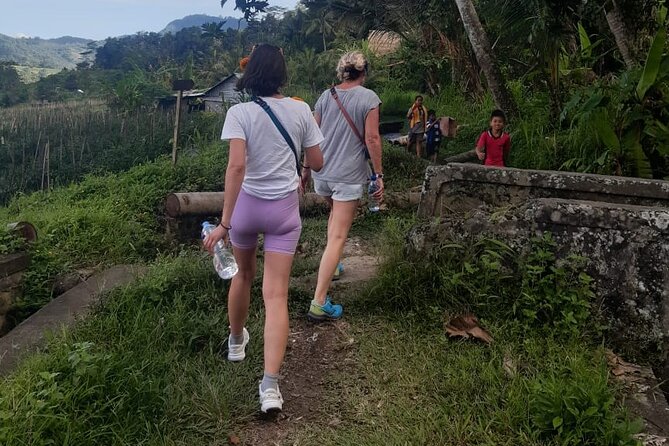
The trek starts from the traditional market and village center area and quickly turns into the countryside. Right away, you shift from shops and people to paths that run alongside irrigation channels. That change matters because the terraces are not just scenery. They are engineered farmland, and the water flow is the backbone.
On this walk, you will follow irrigation paths toward rice paddies, and you will see how the fields are connected. This is where the guide’s explanations can make a huge difference. People often think a rice terrace is just a nice pattern on a hillside. But when someone points out how water is shared and managed, the whole place feels more logical and more impressive.
You also start to get glimpses of the bigger geography. The route is described as leading toward Mount Agung, and along the way you can look for viewpoints that open up the valley and show how steep and layered the paddies are.
Crossing the wooden bridge, and sharing space with motorbikes
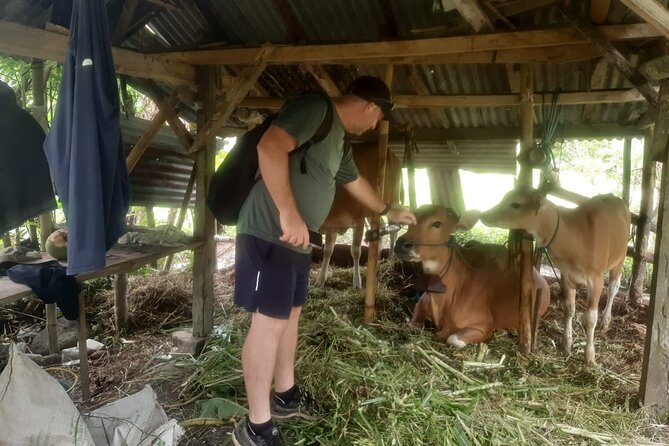
One of the most memorable parts of the trek is the wooden bridge crossing. This is not a tourist bridge. It is shared by locals and motorbikes, which means you experience a real working route rather than a staged walkway.
These crossings tend to slow you down in a good way. You look down at the water, you notice how close everyday traffic runs to farm life, and you realize the village routines are still in motion while you are there taking photos and learning. It is one of those moments where the “Bali is picturesque” idea turns into “Bali is practical.”
If it has been raining, expect the ground to be muddy in places. One guide-smart tip from a prior experience: the guide checked that coats would help and assisted people through tricky sections. So if you are traveling in the rainy season, wear shoes that can handle wet paths, not just sidewalks.
More walking, less driving

Temples on the route: when farming and faith meet
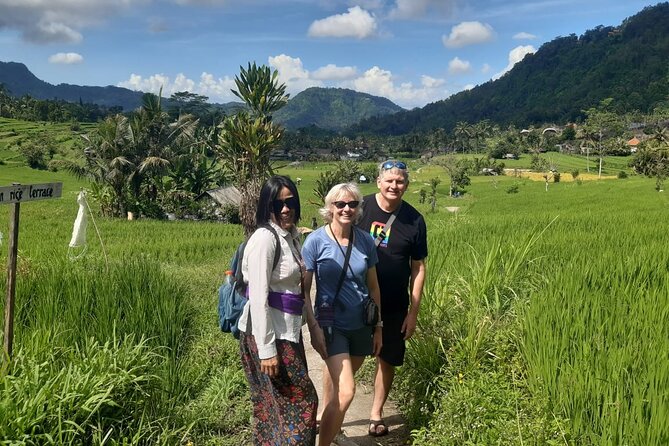
As you walk through Sidemen village surroundings, you pass by temples. That matters because Balinese rice culture is not separate from daily spirituality. In many areas, irrigation and agriculture are tied into temple rhythms and community responsibilities.
Even if you do not go inside every structure, the fact that you encounter temples along a working trek keeps the story grounded. You are not just looking at terraces as a backdrop, you are seeing how a community organizes its life around land, water, and worship.
Subak of Ogang: the irrigation system you will actually understand
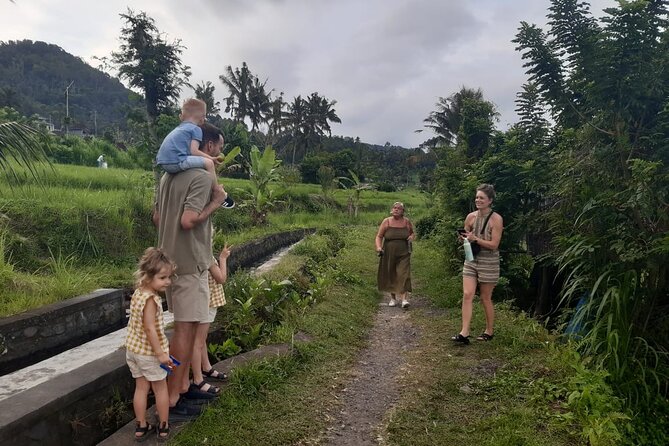
A standout part of this experience is that you pass through the Subak of Ogang. “Subak” is the traditional water management system that helps farmers coordinate irrigation. When you learn this while you are literally walking through the channels, it clicks fast.
This is one of those details that sounds abstract until it becomes physical. You can see the flow lines, the paddies arranged to receive water, and how paths and fields connect. Then your guide can explain what the system is for and how it shapes farm work.
In plain terms, you will come away thinking about rice terraces differently. Instead of “nice views,” you will get “how did they build and maintain this, and why does it work?” That is the kind of knowledge that makes the photos better afterward.
Rice work you might see: planting, plowing, and harvest timing
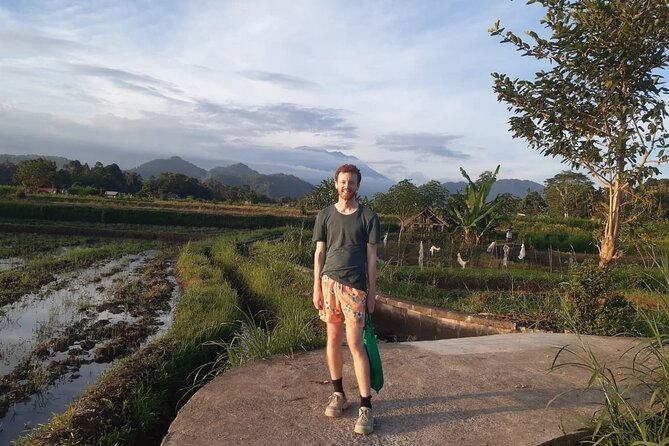
The trek is built around the idea of daily farming life. Along the way, you may see farmers plowing and planting. The description also references harvesting activities, which means your experience can look different depending on the exact season and the recent work schedule.
This is also where that main drawback can show up. If you arrive when most paddies are harvested, the scenery can look flatter or less lush than you expected. If that happens, you may still enjoy the walk and the learning portion, but the visual “wow” can drop.
So how do you plan around that? You cannot control the rice calendar, but you can set expectations. If you come to understand the rice cycle, the irrigation system, and village life, you will still get value even if the terraces are not at their peak green stage.
Views toward Mount Agung: practical photo spots
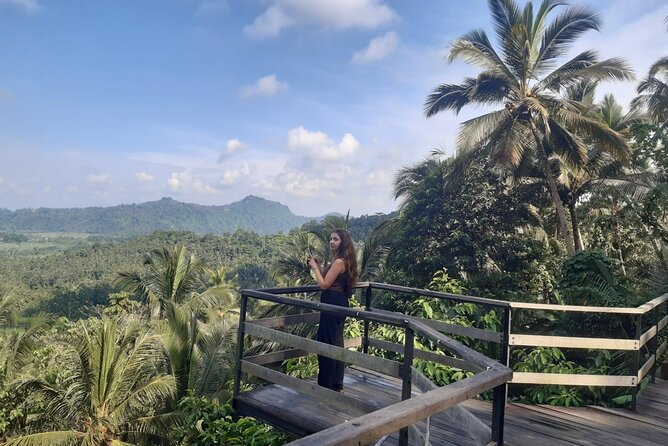
The route includes scenic viewpoints toward Mount Agung. This is helpful for two reasons. First, it gives your legs a mental break during the walk. Second, it helps you orient yourself, so the valley makes sense instead of just feeling like a continuous path of green.
Try not to race from view to view. If you move too fast, you miss the small things the guide is likely pointing out, like plants in the fields and how farmers use specific crops. One excellent experience described the guide as fun and super interesting to talk to, including fruit plants and local nature details.
Guide makes a difference, and Wayan is a name to remember
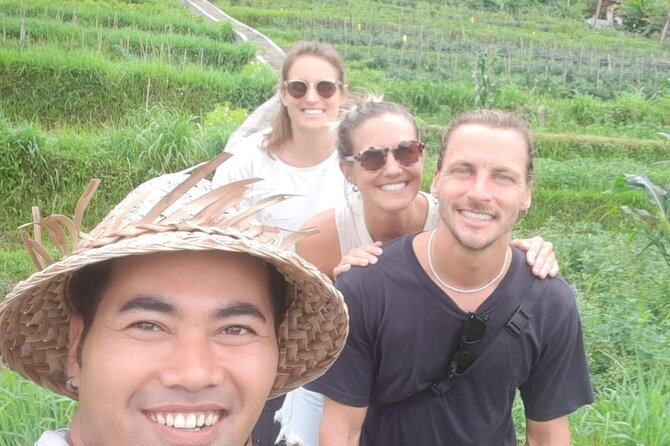
One recurring theme in the feedback is that the guide experience can be the whole reason to book this. Many people specifically praised Wayan for knowing the place perfectly, being friendly, and sharing a lot of practical context about rice culture.
If you care about learning, look for a guide who explains as you walk. Ask questions. The best value moments often happen when you ask, What does this plant do? How does the water get managed? Why is this field shaped this way?
A couple of people also highlighted that Wayan could handle different needs well, including being great with families and answering questions patiently. That matters if you are bringing kids or if your group prefers a calm pace with stops for photos and explanations.
Included basics, and what to bring for comfort
This is a straightforward package, and that is part of its charm. You get:
- Bottled water
- Guide trekking
- Hotel pickup and drop-off (optional)
And tips are not included.
What you should bring is mostly about comfort on rural ground:
- Shoes that handle mud if it rained before your walk
- A light rain layer if the weather looks unstable
- Sun protection, because morning hikes can still get bright once the cloud cover clears
Also, since the activity is private for your group, you can usually set a pace that fits your day. If you want more conversation, you can slow down. If you want more movement, you can keep it brisk while still taking in the irrigation and temple sights.
How long is it really, and how to plan your morning
The experience is listed at about 1 hour. One prior experience described a tour closer to 2 hours at a relaxed pace.
So plan like this: give yourself room for a shorter morning activity, then stay flexible in case the guide takes extra time for questions, photos, and explanation. The walk is not described as extreme, but it is a real rural path. Factor in a little margin so you do not feel rushed afterward.
If you are stacking it with waterfalls or other countryside stops, try to schedule the rest of your day with breathing room, especially in the wet season when paths can get slippery.
The value question: what you get for $9.80
For $9.80 per person, this trek is strong value if your goal is cultural + nature learning without a big price tag. You are paying for three things that matter in Bali:
1) a local guide, which turns the walk into a story you understand
2) access to working farmland areas that are hard to navigate on your own
3) a morning that is short enough to fit between bigger sightseeing plans
Optional hotel pickup adds convenience, though it is not forced on you. And because it is a private tour, you are not stuck with a random group dynamic.
If you only want sweeping views from a viewpoint and nothing else, you might feel like this is too “slow and learning-heavy.” But if you want to understand how the rice system works and see village routines alongside the terraces, the price feels fair fast.
Who this trek suits best
This is a great match if:
- you want an active, low-cost morning in rural Bali
- you care about how rice terraces are made and maintained
- you like learning from someone local who can point out plants and explain the irrigation logic
- you travel with a family and want a guide who can adapt (some experiences highlighted help with toddlers)
It may not feel perfect if:
- you are visiting during a period where many paddies are already harvested and your main goal is only lush terrace visuals
- you dislike walking on uneven or muddy ground, especially after rain
Should you book Sidemen trekking through rice terraces and villages?
I would book it if you want a morning that is more about understanding and real village life than only ticking off photos. The guide-driven learning, the focus on Subak irrigation, and the practical rural experiences like the shared wooden bridge are exactly the kind of details that make Bali feel grounded.
Book it especially if you are willing to accept that rice stages vary. If you come for the system, the daily routines, and the walk itself, you are unlikely to feel shortchanged even if the fields are not at maximum green.
If your trip is tight and you want just one countryside walk, this is a smart use of time. Start early, wear proper shoes, ask questions, and you will likely end the morning with a better picture of how Sidemen works than you will get from viewpoints alone.
FAQ
How long is the Sidemen rice terrace trek?
The duration is listed as about 1 hour (approx.). Some people have experienced it closer to 2 hours at a relaxed pace with the guide.
What time does the tour start?
The start time is 7:00 am.
Where does the trek start?
The meeting point is SIDEMEN RICE TERRACE (GCJP+77P) on Jl. Sidemen – Sangkan Gn., Sangkan Gn., Kec. Sidemen, Kabupaten Karangasem, Bali 80864, Indonesia.
Is hotel pickup included?
Hotel pickup and drop-off is optional. If you choose it, the tour includes pickup and then returns you back to the meeting point.
What is included in the price?
Included features are bottled water and guide trekking. Tips are not included.
Is this a private tour?
Yes. It is a private tour/activity, so only your group participates.
Is free cancellation available?
Yes. Free cancellation is available up to 24 hours in advance for a full refund. If you cancel less than 24 hours before the start time, the amount paid is not refunded.
More Walking Around Ubud
- Mount Batur Sunrise Hike and Natural Hot Spring Option
★ 5.0 · 1,927 reviews - Mount Batur Sunrise Hike with Breakfast
★ 5.0 · 1,757 reviews - Mount Batur Sunrise Trekking Private All Inclusive
★ 5.0 · 906 reviews - Private Mount Batur Sunrise Trekking Tour
★ 5.0 · 634 reviews
More Tour Reviews in Ubud
- All-Inclusive Ubud Private Tour
★ 5.0 · 14,344 reviews - Best of Ubud Full-Day Tour with Jungle Swing
★ 5.0 · 8,571 reviews - Ubud: Monkey Forest, Jungle Swing, Rice Terrace, and Water Temple
★ 5.0 · 7,160 reviews - Best of Ubud 1-Day Private Tour
★ 5.0 · 4,451 reviews
More Terrace Mornings
- Ubud: Monkey Forest, Jungle Swing, Rice Terrace, and Water Temple
★ 5.0 · 7,160 reviews - Full-Day Tour to Water Temples and UNESCO Rice Terraces in Bali
★ 5.0 · 2,539 reviews - Ubud: Downhill Cycling with Volcano, Rice Terraces and Meal
★ 5.0 · 536 reviews - Ubud eBikes Tour to Tegallalang Rice Terrace
★ 5.0 · 507 reviews
Fresh on the Ubud pages




Tegalalang Rice Terrace Trips from Kuta, compared.
 ★ 5.0Ubud: Monkey Forest, Jungle Swing, Rice Terrace, and Water TempleFrom $317,160 reviews
 ★ 5.0Full-Day Tour to Water Temples and UNESCO Rice Terraces in BaliFrom $392,539 reviews
Ubud: Monkey Forest, Water Temple, Rice Terrace, WaterfallFrom $28538 reviews
★ 5.0Full-Day Tour to Water Temples and UNESCO Rice Terraces in BaliFrom $392,539 reviews
Ubud: Monkey Forest, Water Temple, Rice Terrace, WaterfallFrom $28538 reviews
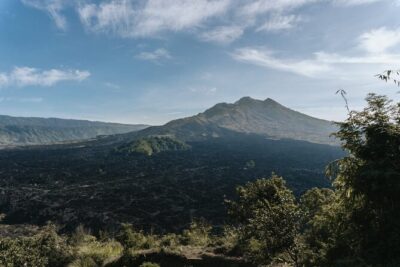 ★ 5.0Ubud: Downhill Cycling with Volcano, Rice Terraces and MealFrom $36536 reviews
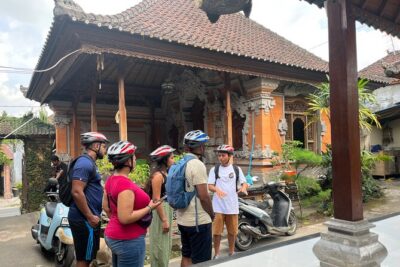 ★ 5.0Ubud eBikes Tour to Tegallalang Rice TerraceFrom $30507 reviews
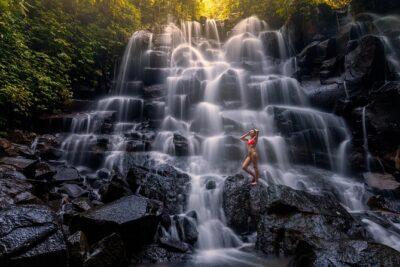 ★ 5.0Ubud Top Attractions: Waterfalls, Temples and Rice TerracesFrom $39460 reviews
Ubud Tour With Sacred Monkey Forest Sanctuary – Waterfall – Rice TerraceFrom $25385 reviews
★ 5.0Ubud Top Attractions: Waterfalls, Temples and Rice TerracesFrom $39460 reviews
Ubud Tour With Sacred Monkey Forest Sanctuary – Waterfall – Rice TerraceFrom $25385 reviews
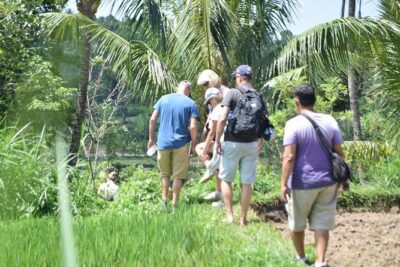 ★ 5.0Tetebatu Walking Tour – Rice Terraces, Waterfall & Monkey ForestFrom $68349 reviews
More Kuta tours like this one