
Review · CYCLING TOURS
Kintamani Down Hill Cycling
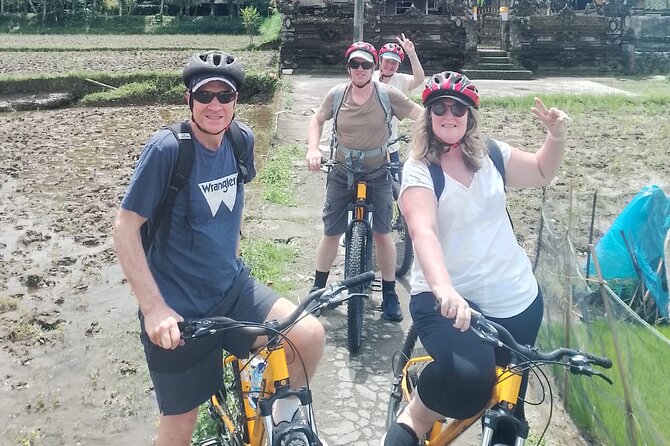
A downhill bike day in Bali with more than just views. You get village-life stops plus a downhill ride from the Kintamani area, with guides like Eka and Niko known for clear explanations and great photo spots. What I like most is how the route keeps you moving through real countryside while you also step into everyday Balinese routines, not just look at them.
The second big win is the balance of effort and experience. Many people describe the ride as beginner-friendly because it is downhill, and the pacing leaves time to enjoy the rice paddies and villages without feeling wiped out. The one thing to consider: you still need moderate physical fitness, and the route length can feel like a lot if you are expecting a totally effortless cruise.
Key things to know before you go
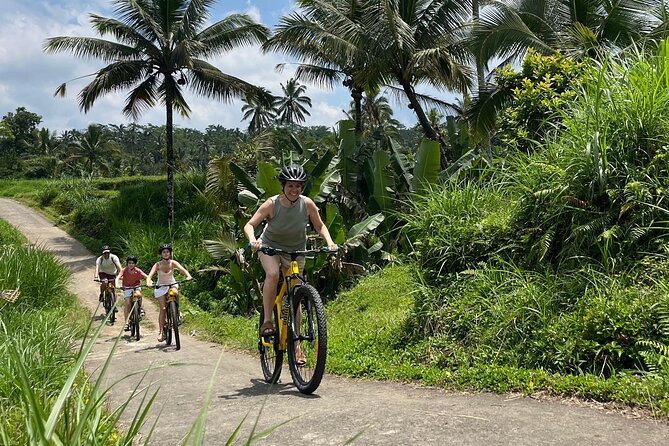
- Downhill focus, lower effort: The ride is designed for you to enjoy the scenery without a heavy workout.
- Real stops with real context: A local school visit and a traditional Balinese compound teach how life and beliefs connect.
- New bikes, helmets, and helpful guides: People specifically call out light, newer bikes and quality helmets, plus guides like Eka and Niko.
- Iconic rice field views on the way in: The cycling route finishes with some of the Ubud area scenery people come for.
- Lunch is part of the plan, not an afterthought: You get lunch with a view, plus small extras like coffee or tea tasting.
Other rides, mostly downhill
- ATV Quad Bike Through Tunnel and Waterfall in Bali★ 5.0 · 2,098 reviews
- ATV Quad Bike Bali with Waterfall Gorilla Cave and Lunch★ 5.0 · 1,925 reviews
- Electric Cycling Tour of Ubud with Free Hotel Transfer and Lunch★ 5.0 · 1,397 reviews
- Bali ATV Quad Bike Adventures★ 5.0 · 827 reviews
Downhill Cycling From Kintamani Toward Ubud
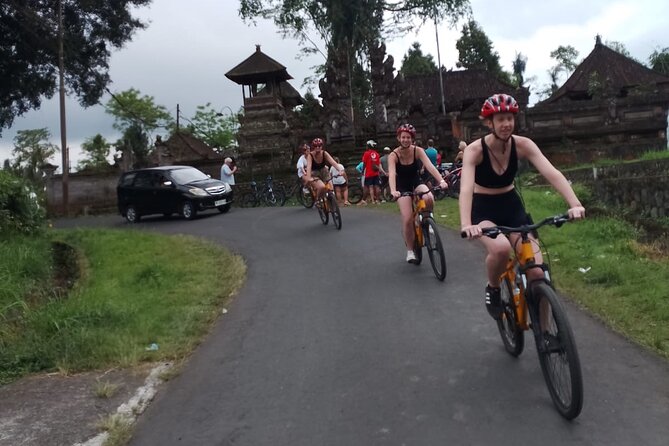
This is a classic Bali route idea, but with a twist: instead of only sightseeing by car, you move downhill by bike from the Kintamani side toward Ubud. That matters because it changes the feel of the day. You are not watching places go by. You are taking in the air, the turns, the small village details, and the slow shift in scenery as you get closer to Ubud.
The ride is repeatedly described as downhill, which is why many families and first-timers feel comfortable. One review mentioned a 26 km downhill ride, while another said they only cycled a short distance before the downhill motion did most of the work. The practical takeaway is simple: expect that the biking effort is manageable, but you will still need to pedal at times and stay alert for road moments.
Timing is about a half-day style adventure, around 6 hours total. That is long enough to get a full experience, but short enough that you still feel like you did something different without losing the whole day to logistics. You also get pickup, which helps a lot if you are staying in Ubud and want to avoid planning the out-and-back.
One small consideration: if you are hoping for lots of nonstop cycling with no stops, you might feel the day is broken into segments. That is the tradeoff for the culture stops and lunch, and it seems to be worth it for most people.
School Visit: Seeing Everyday Education in a Balinese Village
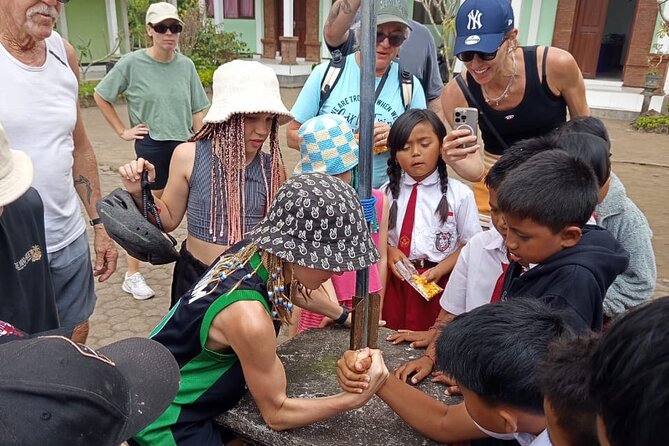
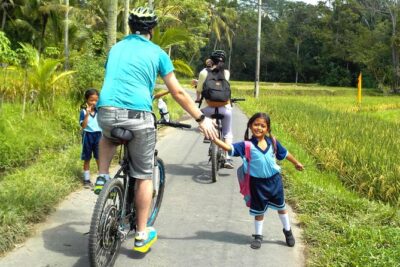
Your day starts with pickup and heads to the cycling start area in the Kintamani region. Once on the route, one of the most meaningful parts is the local school stop. This is not a quick photo break framed as a show. You get to see children in classes and learn what daily education looks like in a Balinese village.
Why this stop works: it anchors the day in human scale. Cycling Bali can turn into scenery first, people second. The school visit flips that. You see what the community is doing while you are passing through it, and you understand why the same villages keep showing up along Ubud’s routes.
The practical side: you should treat this like a respectful cultural pause. Dress neatly, keep your voice calm, and follow your guide’s cues for what is appropriate. If you are traveling with kids, this kind of visit can be a highlight because it feels real and close up, not staged.
I also like that it gives you a reason to slow down. Even on a downhill ride, your brain moves fast. The school stop lets your attention reset before the next cultural segment.
Traditional Balinese Compound: Philosophy, Architecture, Traditions
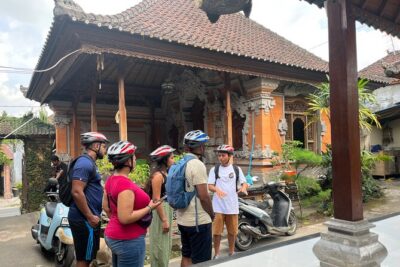
After the school visit, you head to a traditional Balinese compound. This is where the tour gets more than geography. You learn about Balinese living, including philosophy, architecture, and traditions tied to daily life.
What I think makes this stop valuable is the pairing with the bike ride. As you cycle through farms, villages, and rice paddies, you are not just watching agriculture. You are also seeing the cultural background that explains why the compound layout and belief system matter to villagers every day.
In plain terms, the guide is helping you connect dots:
- Why compound design is not random
- How beliefs influence daily routines
- Why traditions show up in architecture and behavior
There is another benefit too. Even if you are not a big “tour explanation” person, a compound visit gives context for what you are seeing outside the gate. You start noticing details you would otherwise miss, like how homes, worship spaces, and community life are tied together.
Potential drawback: some people find that certain stops along the way do not match their expectations as much as the ride itself does. If that sounds like you, just keep your expectations realistic. This tour is a blend, and the main star is still the cycling route and scenery.
The Rice Fields and Village Roads in Between
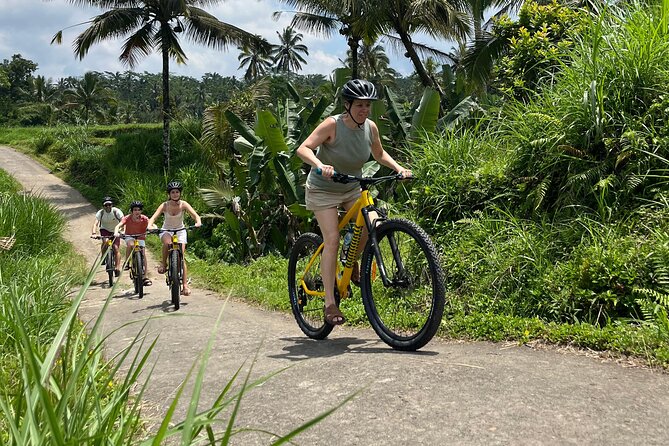
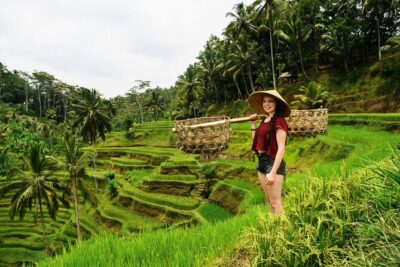
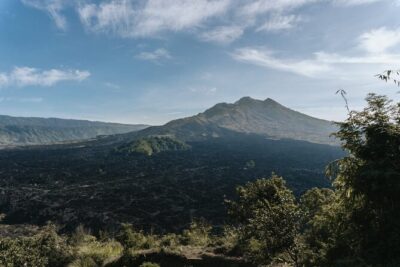
This is where the day earns its reputation. After the compound, you cycle through the countryside toward Ubud, with a strong focus on rice fields plus village roads, farms, and stretches that feel more jungle-like in parts.
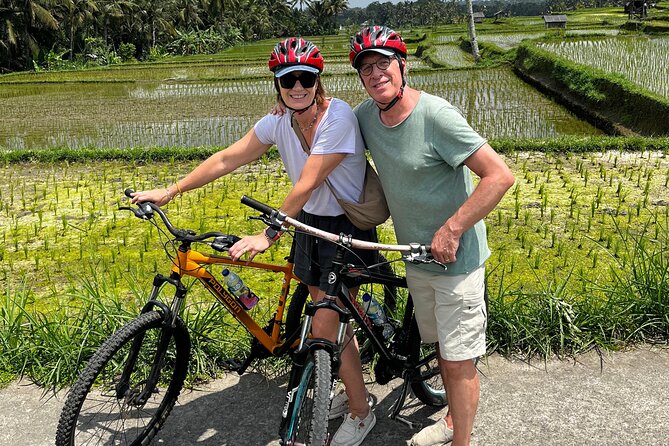
People describe the route as passing through villages, farms, and rice paddies, with lots of greenery and that “fresh air” feeling you only get when you are away from Ubud’s busiest streets. The most iconic part is the approach into rice field scenery as you get closer to Ubud.
How it feels matters more than the checklist. Downhill biking changes your pacing. You are not constantly pushing hard, so you can look around. You can also take photos more naturally. One review specifically praised a guide who took great pictures, which tells me the tour culture supports stopping and capturing moments without making you feel rushed.
What you should watch for: roads in rural Bali can be lively. Even when the ride is downhill, you need to stay focused on traffic and road conditions. This is one reason the tour’s helmet and newer bikes matter, and why a calm, attentive guide makes a difference.
Also, think of the ride as a full-day “story,” not just a photo line. You move from school to compound to rice paddies, and that arc makes the whole thing feel more coherent than a standard scenic ride.


Lunch With a View, Plus Little Extras That Add Up
When the ride ends, lunch is waiting. This is not just lunch in a generic restaurant. You eat with an incredible view, and the timing is built so you recharge right when you need it.
Lunch is included, and that is a big value factor because it removes one of the most annoying parts of day trips: finding food that fits your schedule. The same goes for water, which is also included. It sounds simple, but when you are biking for hours, included basics keep the day smooth.
Some people also mention extras like coffee or tea tasting. Those are not the main feature, but small add-ons like that can turn a good day into a memorable one. It gives you a local moment that feels part of the experience, not a souvenir stop.
If you are the type who likes to pace eating, you will like this format. You get a solid meal after the ride, not in the middle of it.
The only thing to plan for: personal expenses are not included. So if you want snacks beyond lunch, drinks beyond what’s provided, or any purchases, you will pay out of pocket.
Bikes, Helmets, and the Guides Who Keep the Day Fun
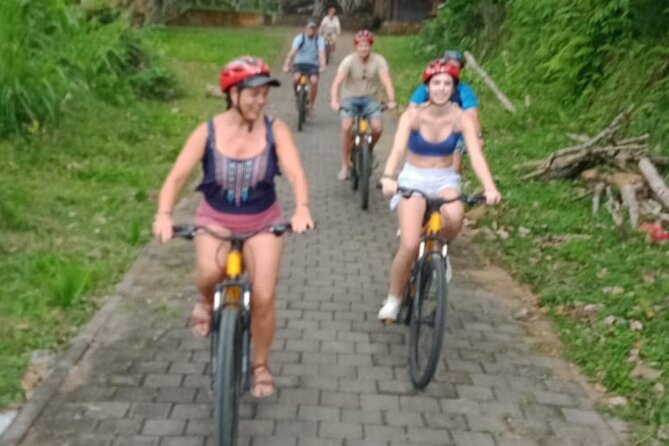
A lot of cycling tours live or die on the bike. This one scores well there. People call out new bikes and helmets, and they describe the bikes as light to ride. That combination matters on a downhill route because it makes the ride feel controllable and less tiring than you might expect.
The guide experience also gets praise for attitude and follow-through. Eka and Niko are both named in reviews, and both show up as people who:
- pick you up on time
- explain clearly
- take extra effort to make your day smooth
- help you get good photos
That is not just “nice.” It directly affects your comfort. When you understand what is coming next, you relax. When your guide helps with pictures, you stop thinking about your phone and start enjoying the moment.
Group size is capped at 30 travelers, which is another quiet quality point. Smaller groups usually mean fewer long waits and more chance to actually hear explanations.
Price and Value: Why This Cost Feels Fair
At $33.60 per person, this tour is priced like a practical adventure, not a luxury day. The value comes from what you get bundled in:
- pickup offered
- bottled water
- lunch
- entrance fees
- shuttle for the Ubud area
- bikes and helmets mentioned in reviews
- a full set of stops: school, compound, downhill cycling, and lunch
If you tried to recreate this on your own, the big cost would be time and coordination. Getting transport, finding entrance fees, planning route segments, and lining up a meaningful cultural stop is not free in money, but also free in brainpower.
Also, the ride is only part of the package. You are paying for access and context. That is why the cultural stops matter. They turn the day into more than transportation.
Group discounts and a mobile ticket are small perks, but they add convenience. It helps if you are coordinating with friends or family and want a simple checkout.
What I would budget for: personal expenses. Other than that, you are mostly covered.
Who Should Book This, and Who Might Skip It
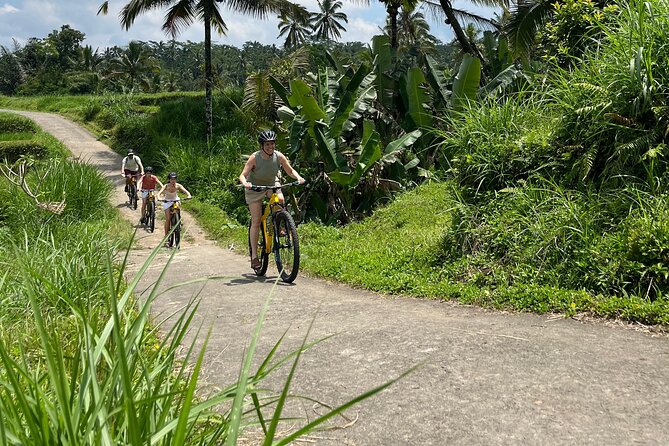
This tour is a strong match if you want an active day that still feels comfortable. Reviews highlight families and people who felt the downhill nature kept the energy level reasonable. If you are curious about Balinese daily life and architecture, the school and compound stops give you structure to the day beyond “ride and look.”
It is also a good fit if you like photography. The guides are praised for taking great pictures, and the rice fields and village scenes provide plenty of natural photo moments.
You might want a different option if:
- You have very low tolerance for cultural stop time. One comment suggests the stops were less exciting than the biking itself. You will still get the ride, but the day includes pauses.
- You expect purely nonstop cycling. This is a guided, multi-stop experience.
- You are worried about moderate fitness. The ride is downhill and described as easy for many, but you still need to be able to handle several hours outdoors with some biking and road attention.
Practical Tips for a Smooth Kintamani to Ubud Day
Here are the things I think help you get the best version of this tour, based on how the experience is set up.
First, plan for a 6-hour window. Even with downhill biking, you will be outside, walking a bit at stops, and sitting for lunch. Wear clothing you can move in.
Second, lean on the guide for your rhythm. The day moves from school to compound to rice fields. If you follow your guide’s cues on when to stop and what to pay attention to, you get more meaning from each place.
Third, take advantage of the bike and helmet quality. New bikes and helmets are included or provided, and reviews specifically mention them. That means you should focus on riding smoothly and enjoying the views rather than worrying about gear.
Finally, bring patience for a day that mixes culture and cycling. If you treat it as one combined story, you will enjoy it more. If you treat every stop like a detour from the ride, you might feel less satisfied.
Should You Book Kintamani Down Hill Cycling?
If you want a value-priced Bali day where cycling does not mean missing the human side of the island, I say book it. The standout strengths are clear: downhill biking that feels manageable, plus meaningful cultural stops at a school and a traditional Balinese compound, capped with lunch and great scenery.
The tour is also well reviewed, with a 4.9 rating and strong recommendation rate. That consistency matters because cycling logistics can vary wildly, and this experience seems to deliver on time pickup, solid gear, and guide support.
The one reason to pause is the balance. The stops matter, and the day is not only biking. If you want a pure ride with zero cultural pacing, look elsewhere.
But if you like the idea of rolling into rice fields while you also learn how Balinese life works day to day, this is one of the smarter choices from Ubud.
FAQ
How long is the Kintamani downhill cycling experience?
The duration is approximately 6 hours.
Where does the tour start and where do you end?
It starts at Bayung Gede, Kintamani, Bangli Regency, Bali, Indonesia. It ends back at the meeting point.
What’s included in the price?
The price includes bottled water, lunch, entrance fees, and a shuttle for the Ubud area.
Is hotel pickup available?
Yes, pickup is offered.
What physical level do you need?
You should have a moderate physical fitness level.
How many people are in a group?
The tour/activity has a maximum of 30 travelers.
Mostly Downhill from Here
- ATV Quad Bike Through Tunnel and Waterfall in Bali
★ 5.0 · 2,098 reviews - ATV Quad Bike Bali with Waterfall Gorilla Cave and Lunch
★ 5.0 · 1,925 reviews - Electric Cycling Tour of Ubud with Free Hotel Transfer and Lunch
★ 5.0 · 1,397 reviews - Bali ATV Quad Bike Adventures
★ 5.0 · 827 reviews
More Tour Reviews in Ubud
- All-Inclusive Ubud Private Tour
★ 5.0 · 14,344 reviews - Best of Ubud Full-Day Tour with Jungle Swing
★ 5.0 · 8,571 reviews - Ubud: Monkey Forest, Jungle Swing, Rice Terrace, and Water Temple
★ 5.0 · 7,160 reviews - Best of Ubud 1-Day Private Tour
★ 5.0 · 4,451 reviews
Fresh on the Ubud pages




Cycling Tours, compared.
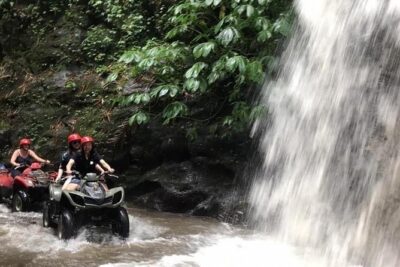 ★ 5.0ATV Quad Bike Through Tunnel and Waterfall in BaliFrom $332,098 reviews
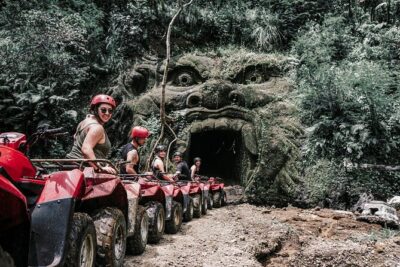 ★ 5.0ATV Quad Bike Bali with Waterfall Gorilla Cave and LunchFrom $321,925 reviews
 ★ 5.0Electric Cycling Tour of Ubud with Free Hotel Transfer and LunchFrom $411,397 reviews
 ★ 5.0Bali ATV Quad Bike AdventuresFrom $39827 reviews
Bali Quad Bike Pass by Waterfall Gorilla Cave Private TransferFrom $51638 reviews
★ 5.0Bali ATV Quad Bike AdventuresFrom $39827 reviews
Bali Quad Bike Pass by Waterfall Gorilla Cave Private TransferFrom $51638 reviews
 ★ 5.0Bali ATV Quad Bike Through Tunnel, Waterfall, White Water RaftingFrom $26610 reviews
 ★ 5.0Ubud: Downhill Cycling with Volcano, Rice Terraces and MealFrom $36536 reviews
 ★ 5.0Ubud eBikes Tour to Tegallalang Rice TerraceFrom $30507 reviews
More Kuta tours like this one