
Review · UBUD DAY TRIPS FROM KUTA
Bali Ubud Paon Cooking Class
A morning market, then cooking. That is the sweet spot.
This Ubud class feels special because you shop with a local market rhythm and cook at Paon Bali with a pro, in a small group. I also like that hotel transfers in Ubud are included, so you waste less time figuring things out. One thing to consider, if you are outside Ubud, pickup and drop off may cost extra.
You will spend about 5 hours learning practical techniques you can repeat at home, not just watching from the sidelines. The food hits classic Balinese notes too, like banana-leaf fish and minced chicken satay. And if you want the full culture mix, choose the morning session so you actually get the market time, not just the cooking.
Key Points You’ll Want to Know Up Front
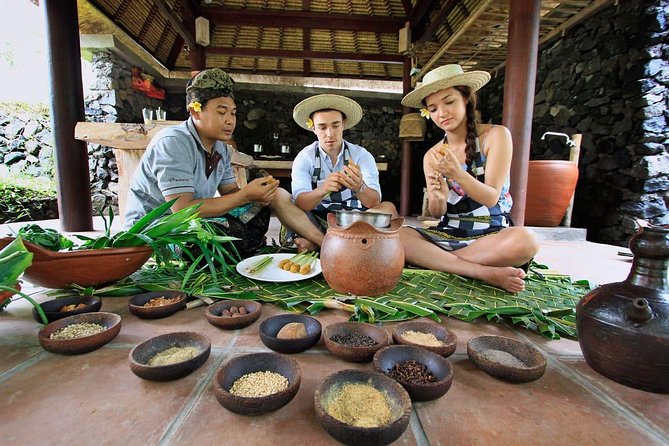
- Morning market is the value add, and it is only included on the morning session
- Max group size is 15, which keeps the class hands-on instead of lecture-style
- Classic Balinese dishes like banana-leaf fish and minced chicken satay are part of the meal
- Lunch is included, plus you leave with a cooking class certificate
- Ubud hotel transfers are included only within Ubud area, with extra charges outside that zone
Other ways to do the Ubud run from Ubud
- All-Inclusive Ubud Private Tour★ 5.0 · 14,344 reviews
- Best of Ubud Full-Day Tour with Jungle Swing★ 5.0 · 8,571 reviews
- Ubud: Monkey Forest, Jungle Swing, Rice Terrace, and Water Temple★ 5.0 · 7,160 reviews
- Best of Ubud 1-Day Private Tour★ 5.0 · 4,451 reviews
A Ubud Cooking Class That Starts With Real Ingredients
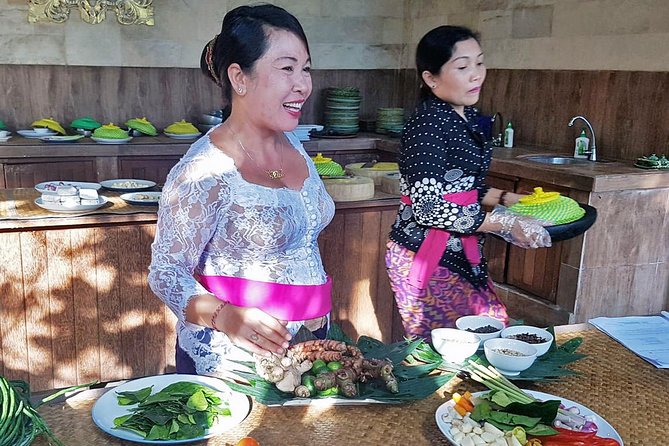
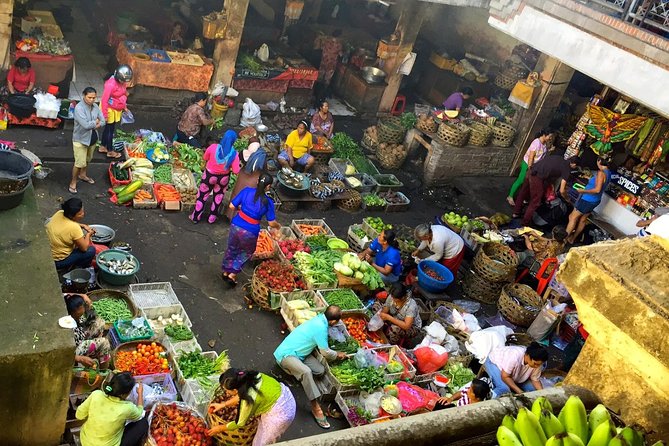
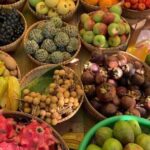
If you only want the cooking part, the afternoon session can work. But the morning option is the one that makes the whole experience feel grounded. You start at the Ubud traditional market, then you shop for ingredients you will cook with later. That means you are not just learning recipes, you are learning why certain spices and produce show up in Balinese dishes.
Ubud markets have a specific pace. You will see and compare fruits, vegetables, herbs, and spice staples that are not the same as what you usually find in a regular supermarket. You also get the chance to ask questions about what things are used for, which helps when you try to recreate the flavors back home.
A small but important detail: the market visit is listed as part of the morning session only. So if you book the wrong time slot, you might skip the ingredient shopping that makes the class feel extra authentic.
Ubud Traditional Art Market: Get Your Bearings Fast
The first stop is the Ubud Traditional Art Market. Even if you are not the type who loves shopping, this part is useful. You learn how cooks think, because you are building your future meal from what is available that morning.
Here is what makes this market stop more than a quick photo stop:
- You are shopping with context, not just buying items
- You get exposure to Bali-specific ingredients and spice types
- You can pick up hard-to-find spices if you want to keep experimenting later
The market is also where you get the cultural tone of Ubud. The smells, the products, the vendor chatter, all of it teaches you that Balinese cooking is about balance and sourcing. That sets you up well for the next step, when the class moves from ingredients to technique.
Paon Bali Cooking Class: A Home-Style Kitchen With Structure
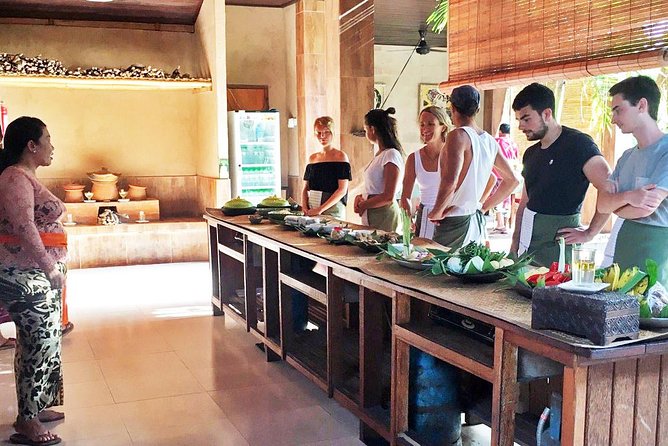
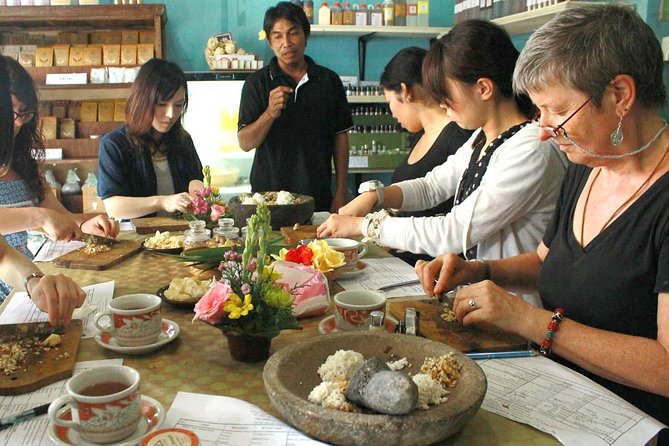
After the market, you head to Paon Bali Cooking Class. The format is small group, and that matters. In a group of up to 15, you have a better chance to actually participate, not just watch someone else cook. You are learning from a professional Balinese cook, with support staff who keep the pace organized.
Many cooking classes in Bali feel like a performance. This one is more like guided teamwork. You get hands-on demonstrations, then you get to do the steps yourself. You also eat what you make, so you immediately connect ingredient to flavor.
One detail I like from participant descriptions: the cooking space is set up in a way that feels like a real home, and there are often views toward forest greenery. That creates a calmer mood than a bare classroom. The setting also makes it easier to relax and focus on technique.
And yes, the instructors tend to keep things upbeat. You are there to learn, but it does not feel stiff.
What You’ll Cook, and Why Those Dishes Make Sense
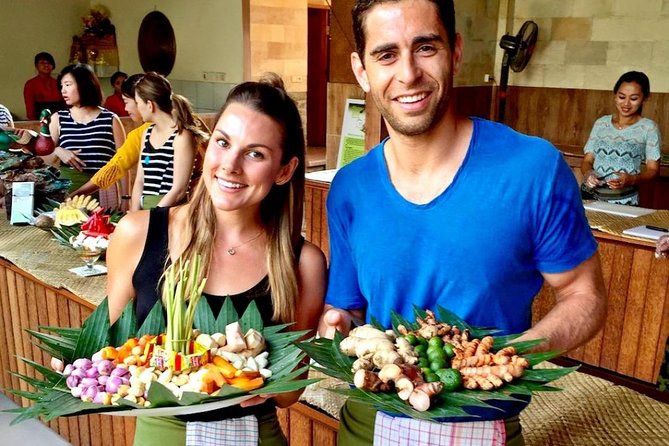
This class includes several Balinese favorites, including banana-leaf fish and minced chicken satay. You will also enjoy the meal from your work at the end, with lunch included.
Why those dishes are a smart choice:
- Banana-leaf cooking teaches you about flavor transfer, not just seasoning
- Satay teaches you about spice mixing and texture, and it is easier to recreate later than complex, one-off specialties
- The overall menu gives you a balance of aromatic spices and familiar protein-based meals
What I find helpful is that the class approach supports learning. You do not just get a list of ingredients. You learn techniques and the purpose behind key steps, so you can adjust at home when your pantry or brands differ.
Also, the class structure is described as efficient and clean. That matters because good instruction means less waiting and fewer chances to get lost mid-recipe.
More kitchens that start at the market



The Flow of Your 5 Hours in Plain Terms
Even though class times vary by schedule, you can expect a simple rhythm:
- Market stop (only morning session)
- Head to the cooking location
- Cooking instruction and hands-on prep
- Eat the dishes you prepared
- Wrap-up, with a cooking class certificate
For the morning session, the market adds a full layer of context. For the afternoon session, you skip the market ingredient shopping. You still cook and eat, but the class becomes more about technique and less about sourcing.
Your time also matters. At about five hours, you are not stuck for a full day. You can still enjoy Ubud afterward, whether that means a stroll through central Ubud or planning a temple visit.
Transfers in Ubud: Worth It, But Know the Limits
Hotel pickup and transfer services within the Ubud area only are included. This is a big practical win. Ubud traffic can be unpredictable, and it is easier when someone handles the timing and routing.
But here is the consideration: if your accommodation is outside the included zone, pickup and drop-off outside Ubud may come with an additional charge. If you are staying in a more rural area or closer to outskirts, check the exact pickup coverage before you book.
If your hotel is in central Ubud, you can usually expect a smooth start. The class also includes a mobile ticket, which is handy if you prefer less paperwork.
Small Group Size Means More Hands-On Time
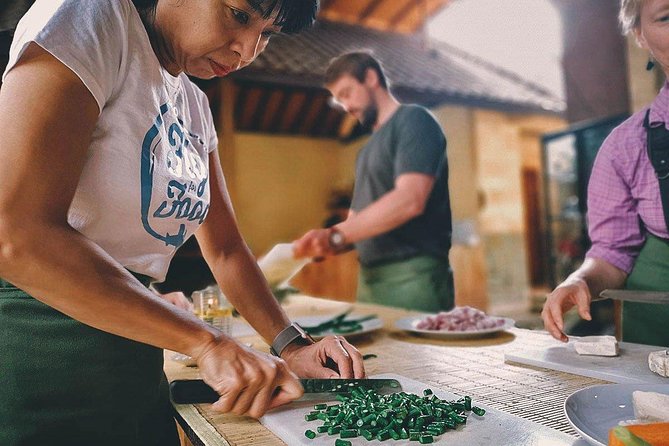
The maximum group size is 15 travelers. I like this because it helps keep instruction interactive. In a larger class, someone always gets left behind. With a small group, you can ask questions while cooking, and you are more likely to taste and compare your work in real time.
The instructors and support staff are part of that equation too. From participant descriptions, the staff keep the steps clear and the cooking area organized, which makes the class feel efficient even when you are learning multiple dishes.
If you are a beginner cook, this is a strong format. If you already cook at home, it still works because you learn Bali-specific methods and spice handling, and you get a meal out of it.
Lunch, Certificate, and the Part People Actually Remember
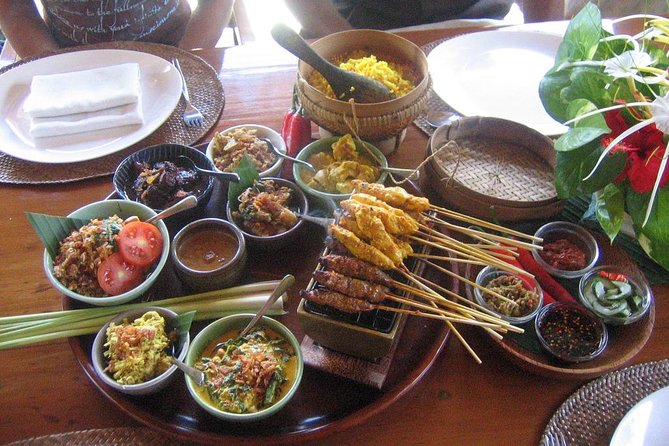
Lunch is included, and you get a cooking class certificate. Those are the basics, but the memory part is usually the meal itself. When you eat what you cooked, you learn what you got right, what tasted different, and how the ingredients behave together.
A couple of dishes are specifically highlighted: banana-leaf fish and minced chicken satay. Those are memorable flavors, and they are also good anchors for what you want to recreate later.
You might also find that after class, there is an option to get recipes sent by WhatsApp if you ask. That is not listed as a hard inclusion, but it has shown up as a helpful extra for some people. If you care about taking the learning home, ask during the class.
Price and Value: What $44 Really Buys
At $44 per person, this class is priced like a mid-range Bali activity, but it is not only a “cook and eat” deal. You also get:
- A market visit on the morning session
- Lunch included
- A cooking class certificate
- Hotel transfers within Ubud area only
- A small group cap of 15 travelers
When you add it up, the value comes from combining multiple parts that separately cost money and time. Market access, organized instruction, and transport usually take a bigger chunk of your day and budget if you try to DIY it.
The one place value can wobble is if you are outside the included transfer zone. If you have to pay extra for pickup or transport from farther out, the total cost goes up. Still, for most people staying inside Ubud, it is a solid deal for a full, structured food experience.
Who Should Book This Paon Bali Cooking Class
This is a great fit if you want a real Balinese food experience without turning it into a research project.
You will probably enjoy it most if:
- You are staying in Ubud and want the class to fit your schedule
- You want hands-on cooking, not just watching
- You like the idea of learning spices and techniques you can use at home
- You want a meal you can remember, with specific dishes you cooked yourself
It is also a fun choice for couples and friends because the small group keeps the social vibe friendly, and everyone works together at the station.
If you are the type who hates early starts, choose the afternoon session. Just know you will miss the morning market ingredient shopping that many people feel is the most culture-rich part.
Practical Tips to Get More From the Class
A few small choices can help your results at home, too.
1) Pick the morning session if you want the full learning loop.
Shopping for ingredients first helps you remember flavors and spice choices.
2) If you buy spices at the market, buy with a plan.
Bring small containers if you can, and think about what dishes you actually want to cook later. If a spice is hard to find at home, treat that as a souvenir with a job.
3) Take notes on techniques, not just ingredients.
Ingredients are easy to copy. Technique, like how spices are used and how cooking steps are timed, is what actually makes your dish taste right.
4) Ask questions during prep.
In a small group, you have time. Use it to clarify the steps you care about.
Should You Book This Ubud Paon Cooking Class?
If you want a structured, hands-on Ubud cooking class with real Balinese flavor, I would book it. The combination of a small group, lunch, and included transfer within Ubud makes it feel efficient and fair priced. And if you pick the morning session, you get the extra value of a traditional market stop where you learn what ingredients matter and how they are used.
If you are staying outside central Ubud or you strongly prefer not to start with a market, consider the afternoon option, but go in knowing you will lose that sourcing step. Either way, this is a food-focused outing that is designed to leave you with both a great meal and practical cooking memories.
FAQ
How long is the Bali Ubud Paon cooking class?
The duration is about 5 hours.
What does it cost?
The price is $44.00 per person.
Is hotel pickup included?
Hotel transfer services are included within the Ubud area only. Pickup and drop-off outside Ubud may have an additional charge.
Do I visit the traditional market?
Yes, but only with the morning session. The morning tour includes visiting the traditional market.
Is lunch included?
Yes, lunch is included.
Do I get a certificate?
Yes, you receive a cooking class certificate.
How large is the group?
The class has a maximum of 15 travelers.
When will I receive confirmation after booking?
Confirmation is received within 48 hours of booking, subject to availability.
Is this booking refundable?
No. This experience is non-refundable and cannot be changed for any reason.
Is there a mobile ticket?
Yes, the tour includes a mobile ticket.
More Tour Reviews in Ubud
- All-Inclusive Ubud Private Tour
★ 5.0 · 14,344 reviews - Best of Ubud Full-Day Tour with Jungle Swing
★ 5.0 · 8,571 reviews - Ubud: Monkey Forest, Jungle Swing, Rice Terrace, and Water Temple
★ 5.0 · 7,160 reviews - Best of Ubud 1-Day Private Tour
★ 5.0 · 4,451 reviews
Cook Another Balinese Lunch
- Ubud Cooking Class Bali with Balinese Chef
★ 5.0 · 1,609 reviews - PRIVATE Authentic Balinese Cooking Class in Ubud at Putu’s Home
★ 5.0 · 644 reviews - Balinese Ubud cooking school (9 Dish Cooking and Market Tour)
★ 5.0 · 540 reviews - Balinese Farm Cooking Class by Pemulan Bali
★ 5.0 · 410 reviews
Ubud, Three More Ways
- All-Inclusive Ubud Private Tour
★ 5.0 · 14,344 reviews - Best of Ubud Full-Day Tour with Jungle Swing
★ 5.0 · 8,571 reviews - Ubud: Monkey Forest, Jungle Swing, Rice Terrace, and Water Temple
★ 5.0 · 7,160 reviews - Best of Ubud 1-Day Private Tour
★ 5.0 · 4,451 reviews
Fresh on the Ubud pages




Ubud Day Trips from Kuta, compared.
 ★ 5.0All-Inclusive Ubud Private TourFrom $10014,344 reviews
 ★ 5.0Best of Ubud Full-Day Tour with Jungle SwingFrom $568,571 reviews
 ★ 5.0Ubud: Monkey Forest, Jungle Swing, Rice Terrace, and Water TempleFrom $317,160 reviews
 ★ 5.0Best of Ubud 1-Day Private TourFrom $544,451 reviews
 ★ 4.4Ubud Palace Legong Dance Show TicketFrom $63,979 reviews
 ★ 5.0Body Massage Experience in Ubud Traditional SpaFrom $213,506 reviews
 ★ 4.4Ubud Kecak and Fire Dance Show TicketsFrom $62,631 reviews
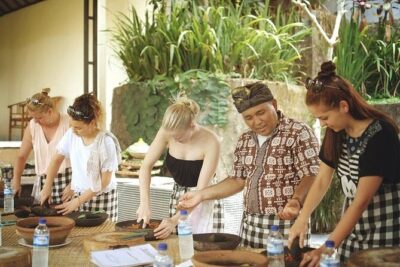 ★ 5.0Ubud Cooking Class Bali with Balinese ChefFrom $351,609 reviews
More Kuta tours like this one