
Review · 3-DAY EXPERIENCES
3-Day Freediving Level 1 Course
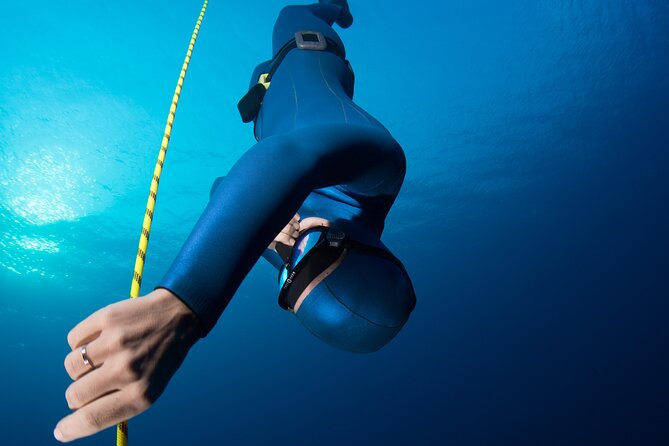
Breath-hold training, without the scary surprises. This 3-day Level 1 course on Nusa Penida is built for safe progress, with small groups (max 4 per instructor) and a clear coaching structure from morning to afternoon. You’ll learn the basics on land, practice in a swimming pool, then move into open water for real-world conditions.
I really like that the course is performance-focused, not just theory, because most students finish able to hold their breath for over 2 minutes and descend to 15 to 20 meters. One thing to consider: it’s a full-day commitment, running about 8:30 AM to 4:30 PM for three days, and lunch is not included, so plan around that long schedule.
Key things that make this course work
- Max 4 students per instructor for faster feedback and calmer practice
- Pool + open ocean training (2 confined sessions, 3 open-water sessions) so you build confidence step by step
- Gear and essentials included (equipment, fees, certification, digital learning materials)
- In-water photo keepsakes so you can see your progress, not just practice it
- Instructors with strong beginner coaching, including Sabli, Artem, Roberto, Seva, Hamza, and Gaston
Other ways to spend a day out of Nusa Penida:
- ️Nusa Penida by Private Boat – Snorkeling 4 spots, Swim with Mantas + Land Tour★ 5.0 · 6,424 reviews
- Bali to Nusa Penida: Premium Private Full Day Tour-All Inclusive★ 5.0 · 764 reviews
- One Day Nusa Penida Island West with Snorkeling★ 4.5 · 560 reviews
- One Day Nusa Penida Island West & East★ 4.5 · 425 reviews
Nusa Penida Level 1 breath-hold training: what you actually learn in 3 days
This is a true starting point course. You don’t need prior water experience, and you only need to be able to swim to join. The goal is a smooth introduction to breath-hold underwater training in a way that feels structured, not random.
Over three days, you’ll combine land-based learning with guided practice. You’ll also spend time in a swimming pool (confined water), then transition into the open ocean where conditions feel less controlled. That progression matters because the biggest obstacle for many beginners is comfort, not bravery.
By the end, most students are able to hold their breath for more than 2 minutes and reach around 15 to 20 meters (about 50 to 65 feet) on a single breath. That kind of realistic outcome is why I think this course is good value: it’s short, intense, and built around measurable progress.
Small groups, real instructors, and a safety-first pace
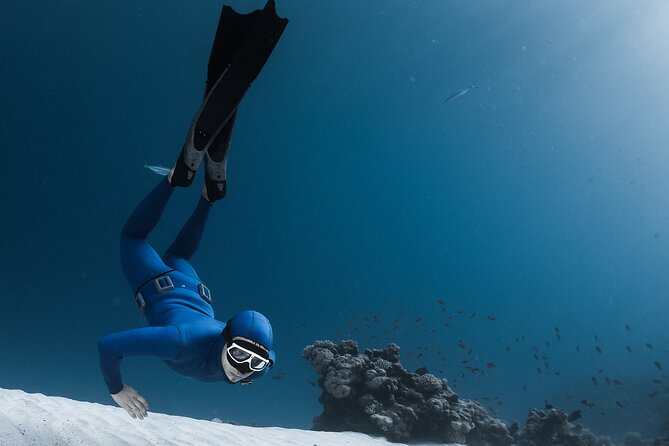
The biggest quality-of-life factor here is the group size. You’re capped at four students per instructor, which means less waiting and more direct coaching. In practical terms, that leads to quicker corrections and faster learning, because someone is watching you and adjusting what you do next.
What stands out in the instructor feedback is consistency. People praised teachers like Sabli, Artem, Roberto, Seva, Hamza, and Gaston for being clear, patient, and supportive, while still nudging students in the right direction. There’s a repeat theme of coaching that feels both safe and encouraging, not overly strict or confusing.
Even the course organization came up more than once. One review noted the instruction was super clear, the gear felt good quality, and the setup was well organised compared with other freediving courses. For you, that translates to fewer uncertainties, better equipment time, and more focus on learning the breath-hold rhythm.
Day schedule from 8:30 to 16:30: how the time block is set up
Plan to spend most of your day in structured sessions. The course runs from about 8:30 AM to 4:30 PM, with a break for lunch included in the day’s schedule. The important catch: the break is included, but lunch itself is not, so you’ll want to budget for food.
This is not a quick half-day taster. It’s a full three-day rhythm of theory plus practice, including two confined-water sessions and three open-water sessions. If you like learning by doing, that format is a good fit, because you’ll build familiarity and then immediately test it in the next session.
You should also be ready for a moderate physical fitness level. That doesn’t mean you need to be an athlete, but you do need the stamina to handle repeated practice across multiple sessions in one day.
Pool sessions: how confined water helps beginners get over the first fear
The course includes two confined water sessions in a swimming pool. That’s a big deal for first-timers because you can get used to the feeling of being in the water without rushing into open-water exposure.
A common beginner anxiety is the thought of being underwater without breathing. The good sign here is that the course structure is gradual. In that first controlled environment, you get repeated chances to practice the same basics while your instructor can spot what’s working and what’s not.
This is where you also learn the mental side of breath-hold work: staying calm, controlling your pacing, and building trust in the process. Even if you think you’re okay with water, this step is still valuable because it turns fear into familiarity.
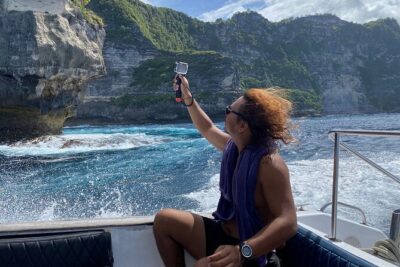
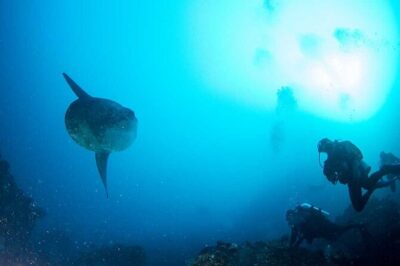
Open-water sessions around Nusa Penida: real conditions, real progression
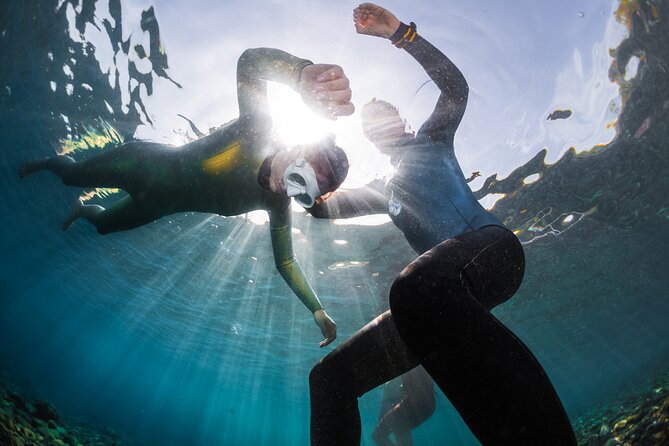
After the pool practice, you’ll move into three open-water sessions. This is where the course becomes more than a classroom experience and becomes actual underwater training in a natural setting.
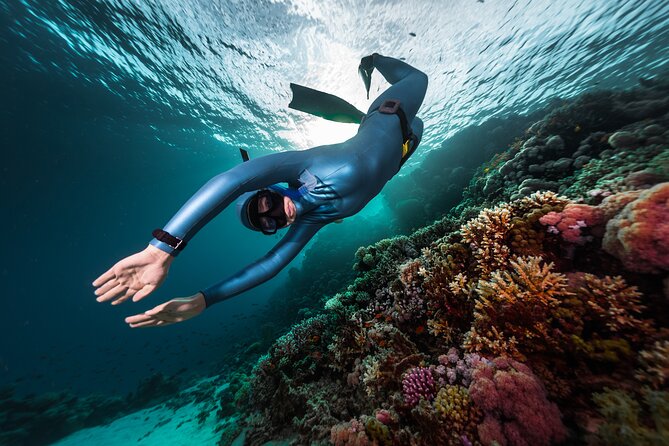
Nusa Penida is a strong match for this type of course because it’s known for colorful coral and tropical fish. The course highlight specifically notes that you’ll take home underwater photos of yourself diving amid coral and tropical fish. That means you’re not just chasing technique, you’re also getting a visual record of your underwater time.
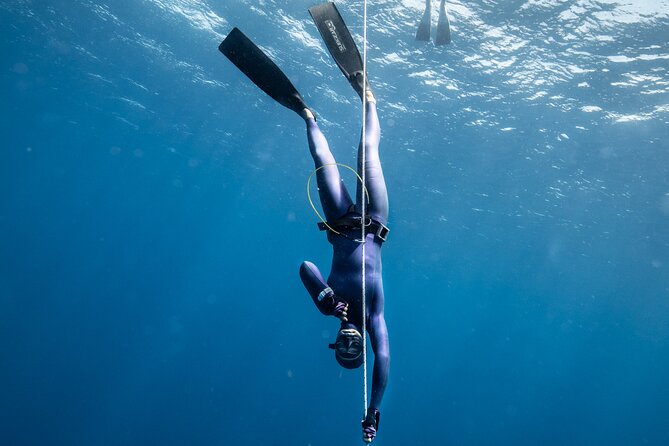
The course also sets expectations for performance. Most students can descend to about 15 to 20 meters by the end, holding their breath for more than 2 minutes. That’s not a promise of identical results for everyone, but it gives you a realistic ceiling for what Level 1 training can accomplish in a short timeframe with the right coaching.
One practical note for you: open-water sessions add variables you don’t see in a pool. Even when instruction is excellent, your comfort level depends on how you handle the transition. If you’ve ever gotten nervous in new water conditions, you’ll appreciate that you build up through the confined sessions first.
What you take home: certification, digital materials, and underwater photos
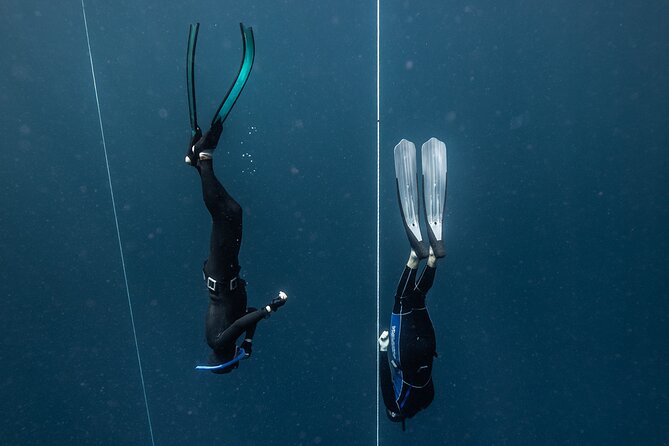
This course includes freediving certification plus digital learning materials. That’s helpful because it gives you something to study after the course and a credential that signals you finished a structured Level 1 program. If you plan to keep training later, that background work matters, because you’ll review what you practiced instead of guessing what to do next.
The highlight also promises underwater photos of yourself. That’s a smart benefit for beginners. Technique progress can feel invisible in the moment, especially when you’re focused on breath control and staying calm. Having photo proof gives you an easy way to remember posture, comfort, and how your training looked in real conditions.
And because the course includes equipment use, you’re not juggling gear choices. You just show up and learn.
Price and value: is $450 reasonable for Bali breath-hold Level 1?
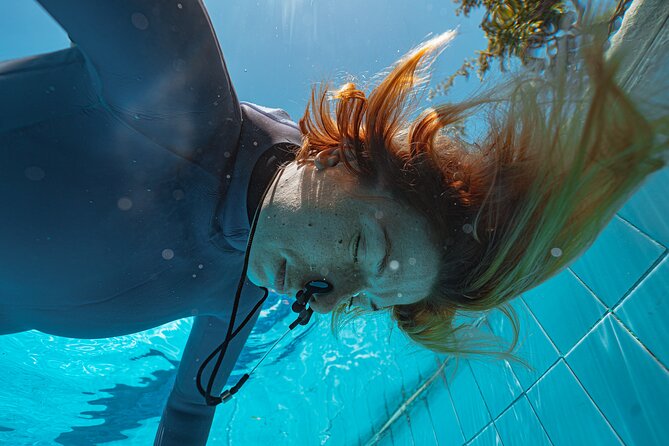
At $450 per person, this course sits in the midrange for a premium short training program on a destination island. What makes it feel like good value is what’s wrapped into the price.
Included items:
- Use of freediving equipment
- All fees and taxes
- Certification
- Digital learning materials
Plus, the course highlights include underwater photos. Also, the small group size (max four per instructor) is usually where you get real training value, because more individual attention means faster progress and fewer wasted sessions.
What’s not included:
- Private transportation
- Accommodation
- Lunch
So your true trip cost depends on how you handle those gaps. If you already planned a Nusa Penida stay and don’t need private transport, you’ll feel the value more strongly. If you need to arrange transportation and pay for lunch daily, your total budget will climb a bit.
The good news is that you’re not required to buy special gear to participate, which removes a common beginner cost and stress point. Also, you’ll get a mobile ticket, which typically makes last-minute logistics easier.
Where the course starts and ends, and what that means for your day
The meeting point is at the Freedive Nusa school in Nusa Penida, located at:
Jl. Ped – Buyuk No, Desa, Ped, Kec. Nusa Penida, Nusa Penida, Bali 80771, Indonesia
The activity ends back at the same meeting point. That matters because you don’t need to plan a long commute after each day of training. It also helps you structure your other island activities around a consistent base.
Opening hours are listed as daily 8:30 AM to 4:30 PM, which matches the course timing window. In other words, you’re likely to spend your mornings and afternoons in the program rather than trying to squeeze it around scattered appointments.
Who should book this course, and who should rethink it
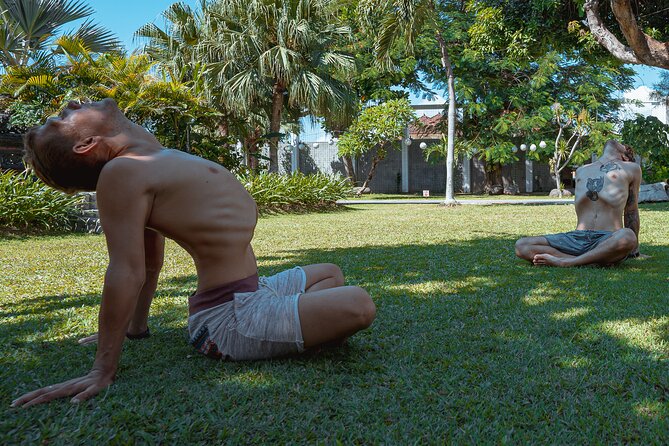
This course fits best if you want a structured introduction and you like learning through repetition. It’s a great option for beginners because you don’t need prior experience, and the format is intentionally smooth: land theory, pool practice, then open water.
You’ll also like it if you appreciate small-group instruction. Reviews repeatedly praise instructors for care, clarity, and support, including named teachers like Artem, Roberto, Seva, Hamza, and Gaston. If you’re the type who learns better when someone gives direct feedback while you practice, the max four-student limit is a big advantage.
You might want to rethink it if:
- You don’t want a full three-day time commitment (the schedule is long)
- You’re worried about moderate physical fitness demands
- You’re trying to avoid paying for lunch and transport on top of the course fee
Should you book this 3-day Level 1 breath-hold course in Nusa Penida?
I’d book it if you want a short, serious intro that actually aims for measurable progress, and you value safety through small groups. The combination of theory plus pool plus open-water sessions makes it less likely you’ll end the course with only vague understanding. And the included gear, certification, and digital materials reduce the hidden hassle that often comes with learning a new sport.
I wouldn’t book it if you’re looking for a super casual, short activity. This is a learning course with a full schedule, and lunch and transportation are extra planning items. Also, while many students can reach strong breath-hold results by the end, your personal outcome depends on how you handle the practice and the transition from pool to open water.
If you’re willing to commit for three full days and you can swim, this is one of the more practical ways to start breath-hold training on Bali.
FAQ
Do I need prior experience to join the Level 1 course?
No previous experience is required. The course is designed as a smooth introduction, and you can join even if it’s your first time with water activities.
Can I participate if I can swim?
Yes. You only need to be able to swim to take part in the course.
What’s included in the $450 price?
The price includes use of freediving equipment, all fees and taxes, freediving certification, and digital learning materials. The course also includes underwater photos as part of the experience highlights.
How are the three days structured?
The training runs from about 8:30 AM to 4:30 PM each day, with a break for lunch. It includes land theory, two confined water sessions (pool), and three open-water sessions.
What results can I expect by the end of the course?
Most students can hold their breath for more than 2 minutes and descend to around 15 to 20 meters at the end of the training.
Is lunch and transportation included?
No. Lunch, private transportation, and accommodation are not included. The schedule includes a break for lunch, but you’ll need to plan meals separately.
More Tour Reviews in Nusa Penida
- ️Nusa Penida by Private Boat – Snorkeling 4 spots, Swim with Mantas + Land Tour
★ 5.0 · 6,424 reviews - Bali to Nusa Penida: Premium Private Full Day Tour-All Inclusive
★ 5.0 · 764 reviews - One Day Nusa Penida Island West with Snorkeling
★ 4.5 · 560 reviews - One Day Nusa Penida Island West & East
★ 4.5 · 425 reviews
Fresh on the Nusa Penida pages

3-Day Experiences, compared.
 ★ 5.0Best of Bali 3-Day Packaged TourFrom $179503 reviews
 ★ 5.0All inclusive Private 3 day tours package : Bali highlightsFrom $190348 reviews
 ★ 5.0More Complete: Discover Bali In 3 Days Private Tour PackageFrom $223167 reviews
 ★ 5.0From Bali : Bromo & Kawah Ijen – 3-Day AdventureFrom $348147 reviews
 ★ 5.0Mount Ijen Bromo Tour from Ubud Bali (3 days 2 nights)From $420104 reviews
 ★ 5.03 Days and 2 Nights Summit Via SembalunFrom $22091 reviews
 ★ 4.5Rinjani Trekking 3D2N SummitFrom $24385 reviews
 ★ 5.0Rinjani Trekking 3 Days 2 Nights (Sembalun – Senaru)From $38984 reviews
More Kuta tours like this one